riderinstinct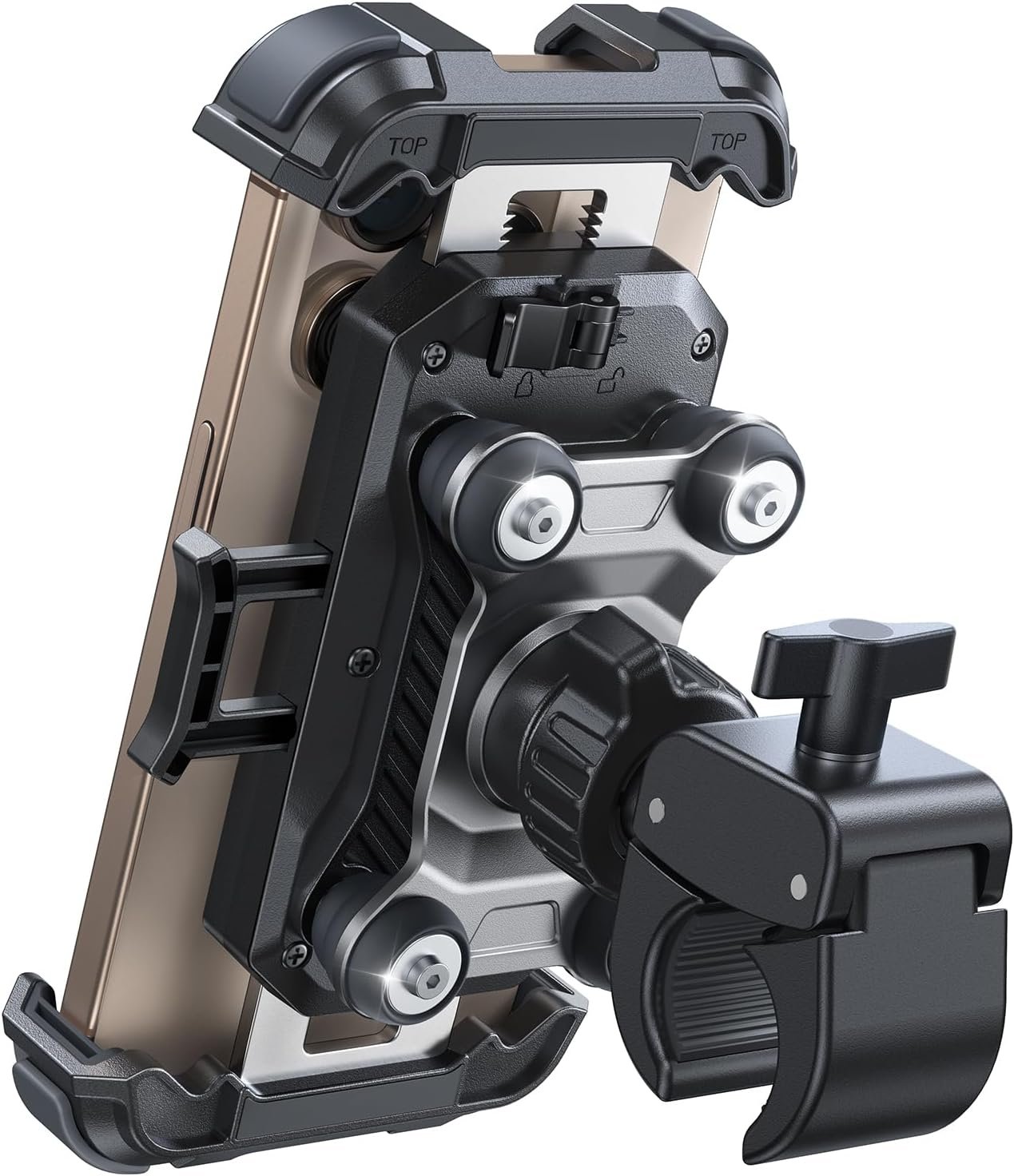
Why a good mount matters (beyond 'hold your phone')
At speed or on rough roads a phone is surprisingly fragile: vibration can damage the camera stabilizer or blur navigation inputs, a loose clamp can let the phone bounce free, and a poorly placed screen becomes a distraction. A well-chosen mount keeps your phone stable, protects the lens and battery from excessive shock, and lets you glance for navigation without moving your head. The right mount doesn’t eliminate risk — it reduces it when combined with proper positioning, secure installation and responsible use.
Before you look at product names, decide the mount’s primary job: stable navigation on smooth city roads, secure long-distance touring with a big phone in a case, or surviving off-road trail chatter? Your use case dictates which trade-offs make sense.
Decision framework: the six criteria that should drive your choice
Use this checklist to compare mounts:
- Fit: phone screen diagonal + case thickness and handlebar diameter. If either doesn’t match, the mount won’t work.
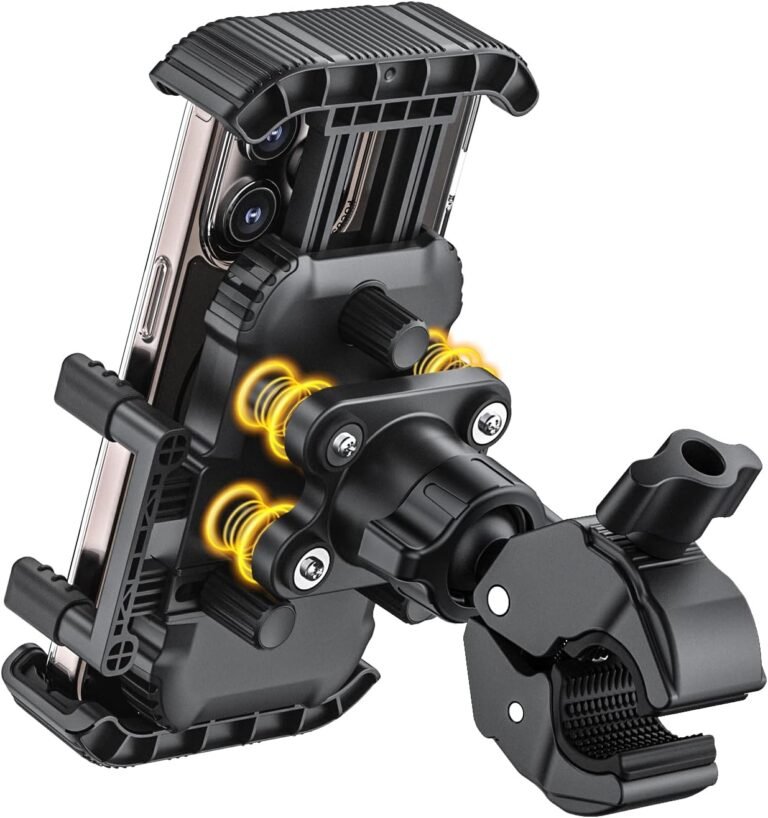
- Vibration control: dampers (pneumatic springs, metal springs, silicone pads) matter for rough roads.
- Mount type & location: clamp-on handlebar base, mirror mount, U-clamp or double-socket arm — each offers different security and fit flexibility.
- Locking & convenience: one-handed press-to-lock vs. tool-required anti-theft screws. Faster is handier; tool-locks are more secure.
- Materials & durability: aluminum and steel parts resist wear better than cheaper plastics but add weight and cost.
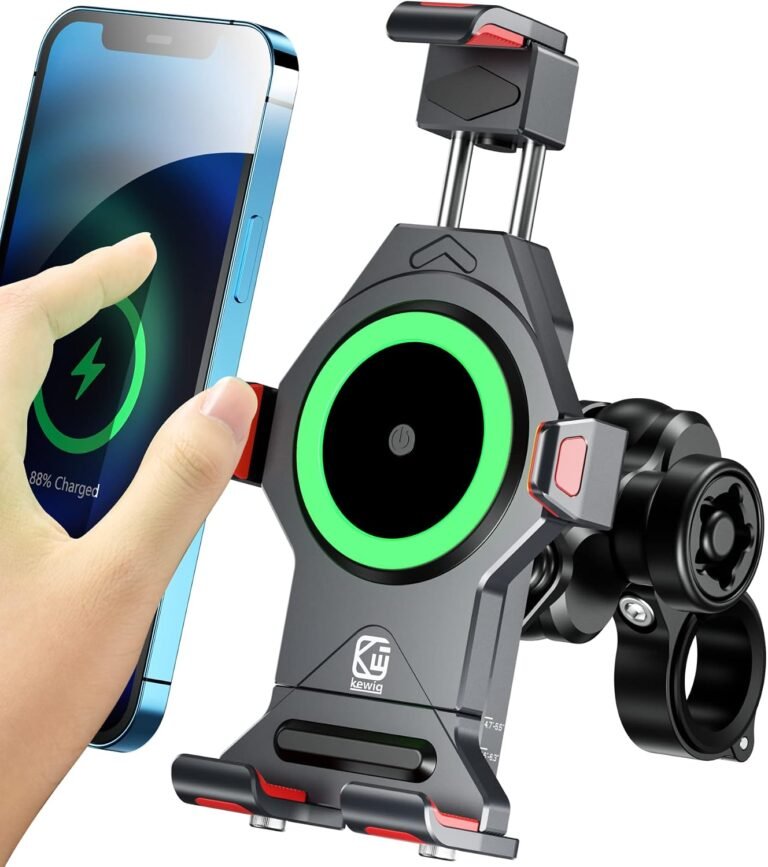
- Extras: integrated charging, wireless power, or weather covers — useful, but not essential for a basic stable mount.
Apply these criteria in order: if it doesn’t fit your phone or bars, nothing else matters; if it fits, prioritise vibration protection and locking that match your riding style.
Measuring your phone and handlebars — practical steps
Before you buy:
- Remove the phone from any expandable mounts or bulky grips and measure diagonal screen size (manufacturer’s spec is fine).
- Measure phone thickness with the case on if you’ll ride with it; many mounts list a maximum case thickness (examples below).
- Measure handlebar outside diameter where you intend to mount the holder with a caliper or tape. Common fit ranges in our product examples include:
- JOYROOM dual-dampener: phone 4.7–7.0″, case ≤0.71″, handlebar 18–34 mm.
- JOYROOM 1s Auto Lock model: phone 4.7–7.0″, case ≤0.71″, handlebar 0.7–1.34″ (≈18–34 mm).
- Lamicall examples: phone 4.7–6.7″ or 4.7–6.8″; handlebar approx. 20–35 mm or 15–40 mm depending on model; max case thickness often ~0.59″.
- BRCOVAN models: ranges include 12–32 mm handlebars and phones 5.4–7.2″ with thickness limits in the 16–20 mm area.
- If your phone or bar sits outside these limits, consider adapters (bar sleeves, mirror mounts) or a different mount style. Always verify the exact figures from the mount’s manufacturer listing and your motorcycle manual before purchase.
Mount types, anti-vibration methods and real trade-offs
Common mount architectures and how they behave:
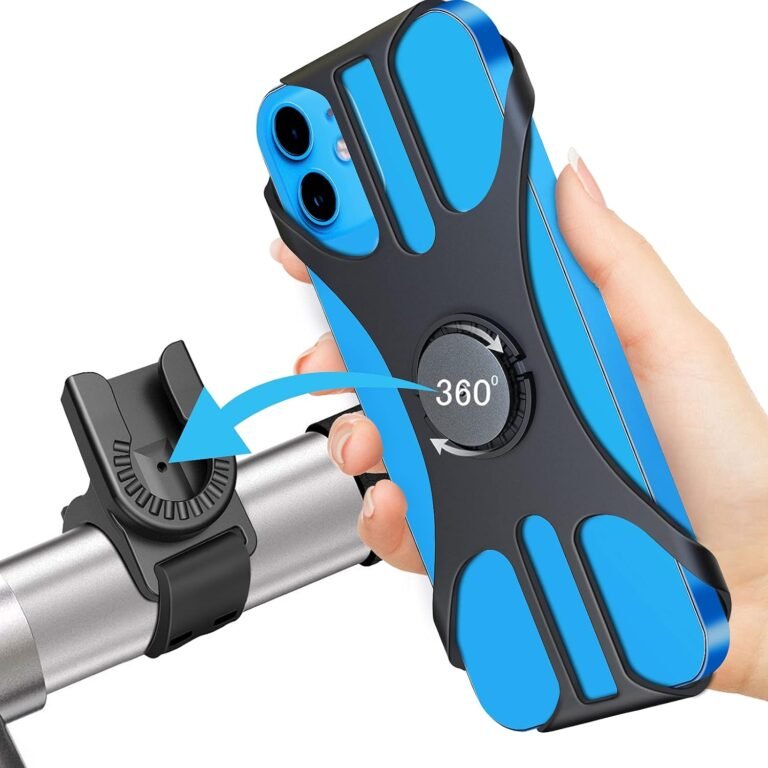
- Direct clamp-on with silicone pads: simple, light and often tool-free. Good for city riders. May transmit more vibration than heavier setups.
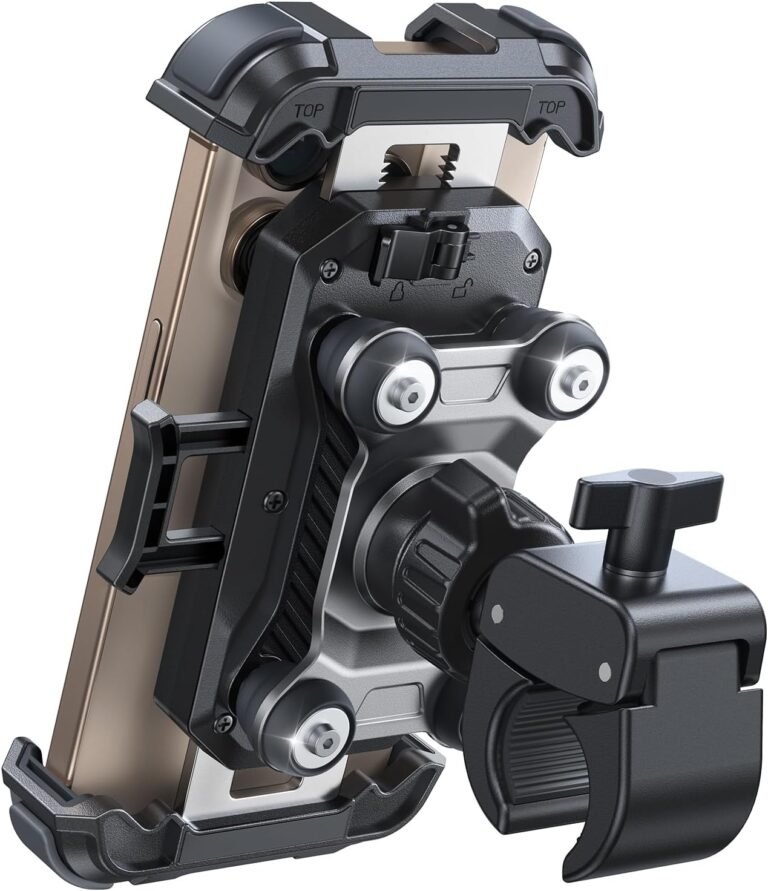
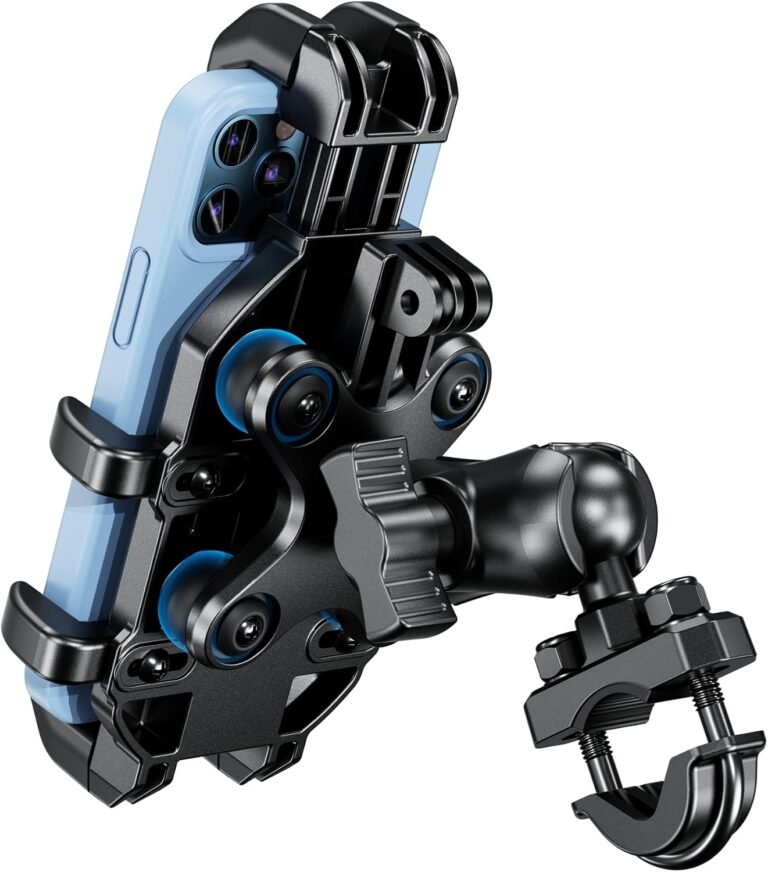
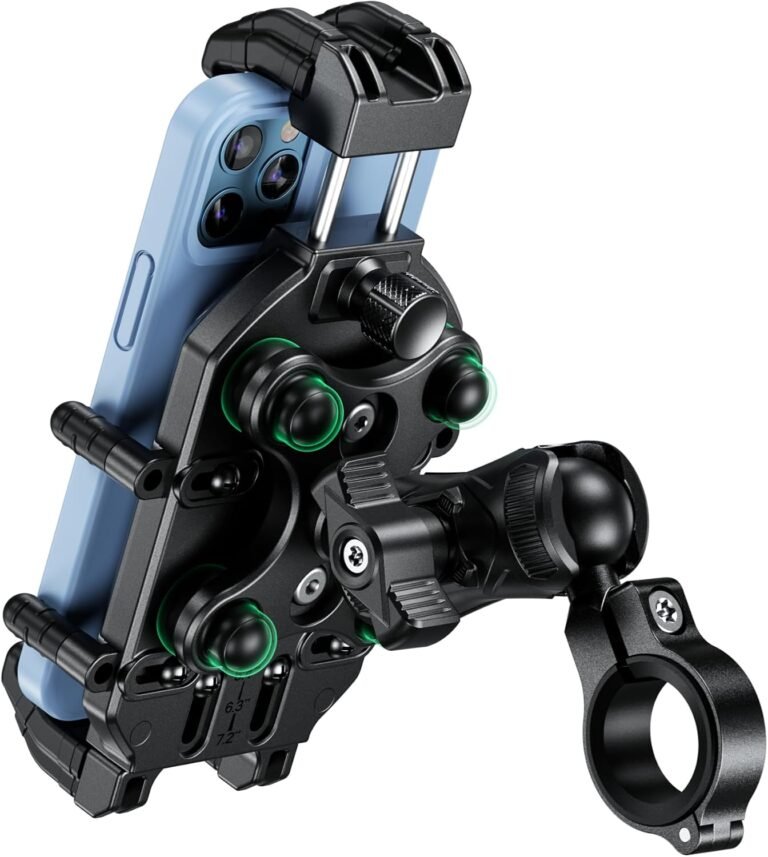
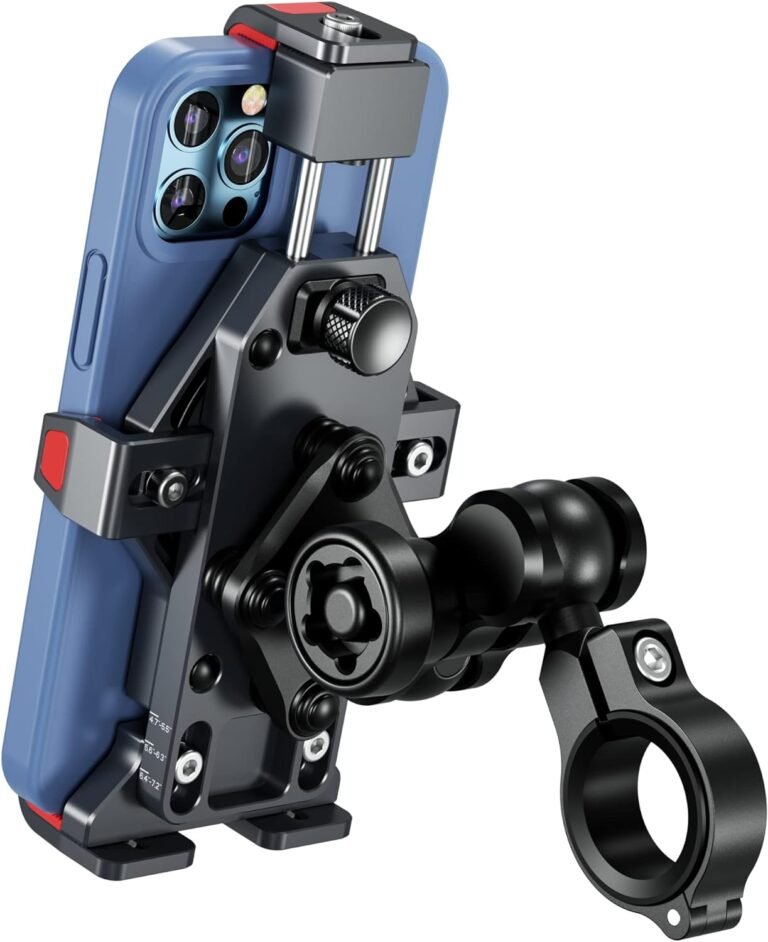
- U-shaped metal clamp or metal base: sturdier attachment to the bar and less flex; examples include BRCOVAN’s U-shaped metal base. Better for higher speeds and heavier phones.
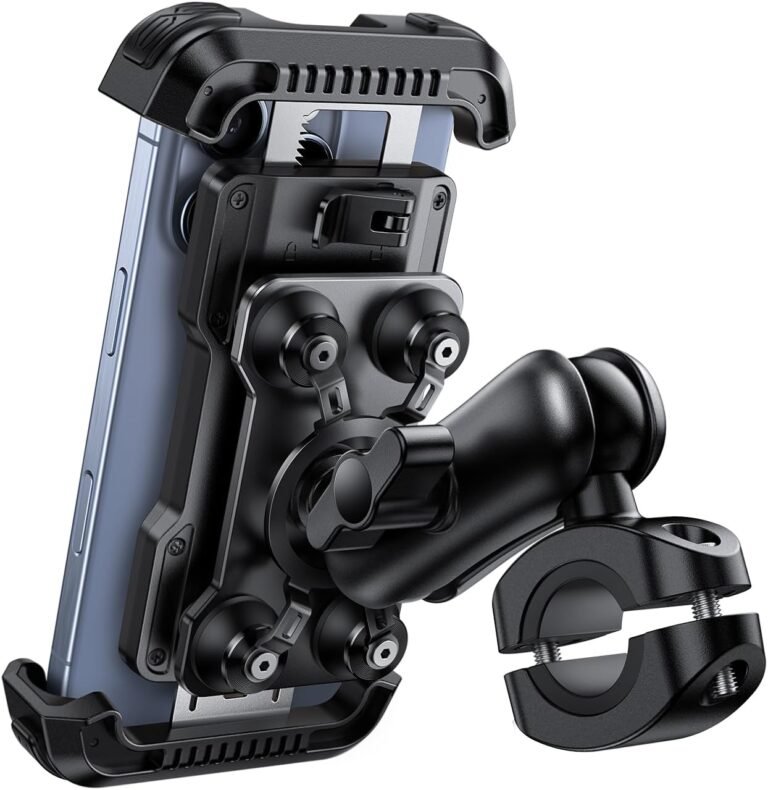
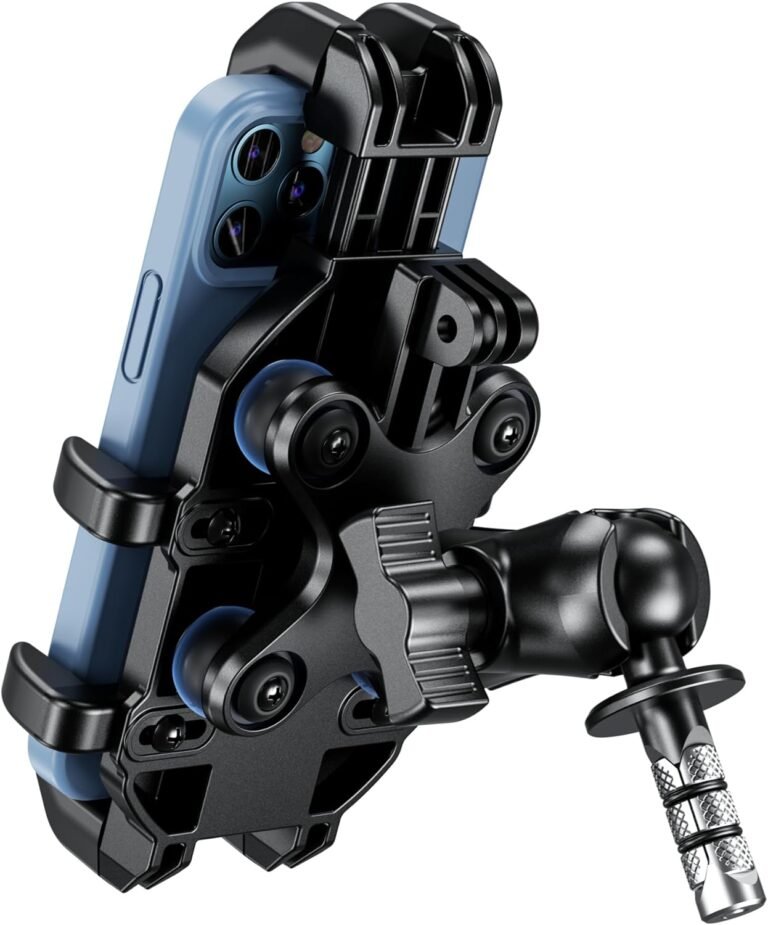
- Double-socket arm / mirror mount: allows flexible positioning and mirror mounting. BRCOVAN offers mirror-base options — useful if your handlebars are crowded or oversized.
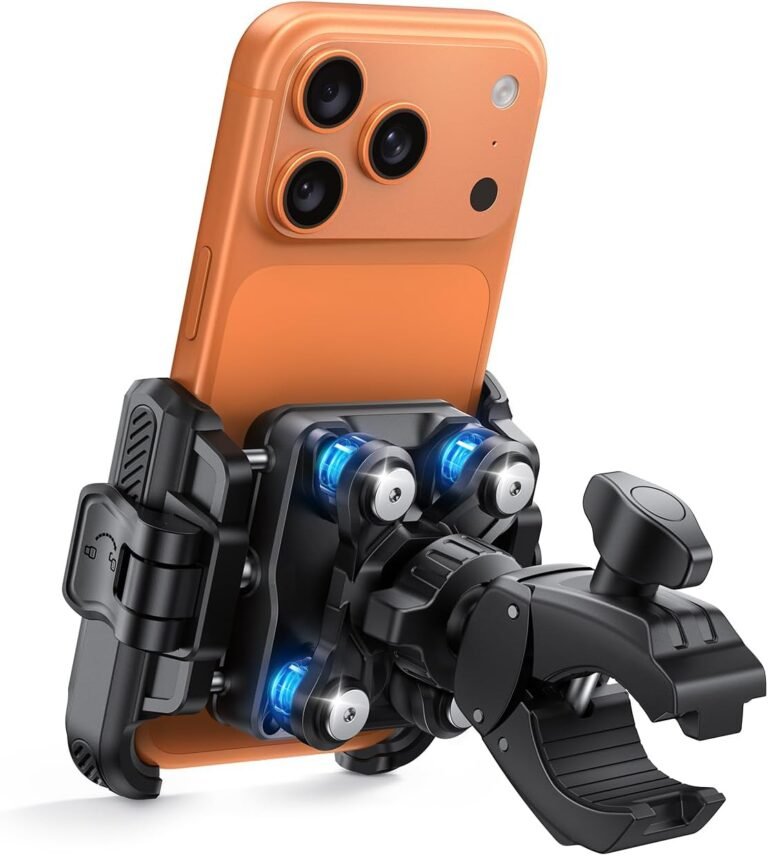
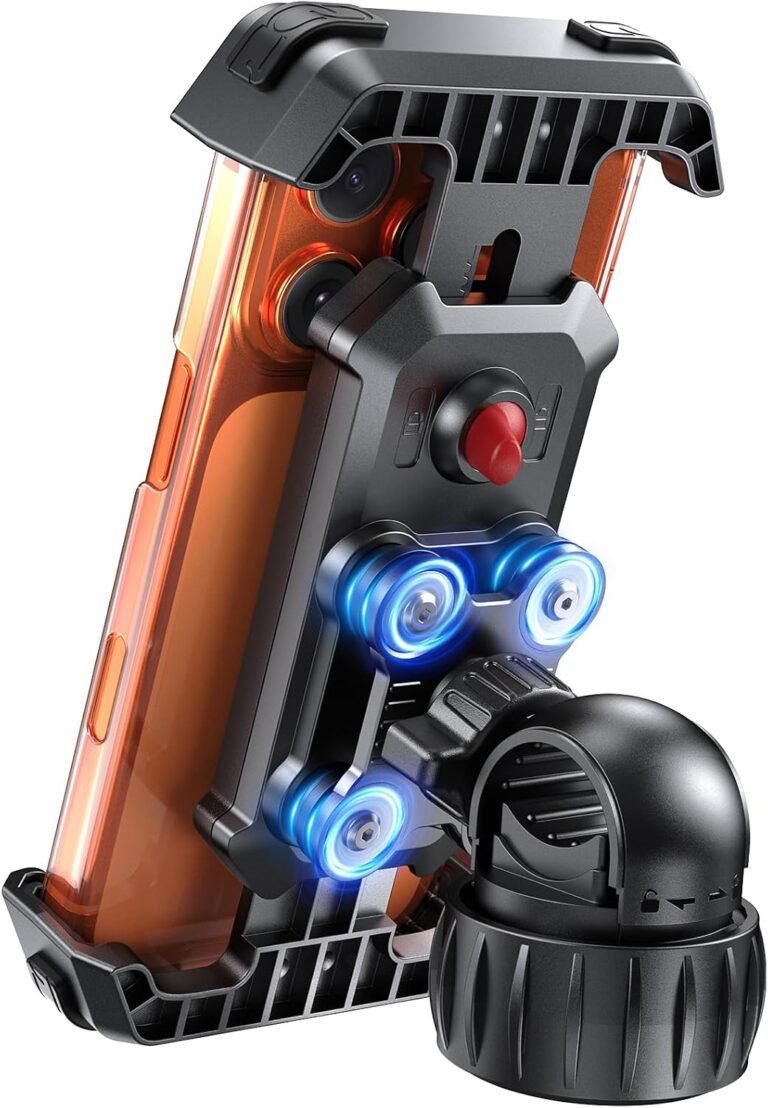
- Pneumatic springs or dedicated dampeners: reduce transmitted vibration to the phone (JOYROOM’s dual pneumatic dampener is an example). These help on bumpy roads but add moving parts that can wear or require tuning.
- Reinforced metal arms and CNC aluminum bodies: more durable and less likely to creep under load; BRCOVAN’s aluminum alloy model is an example. Heavier and usually pricier.
Trade-offs to expect:
- More damping and metal means better protection and stability but more weight, complexity and cost.
- Tool-free quick-release is convenient but usually less theft-resistant than mounts with security screws or supplied wrenches.
- Highly adjustable arms increase mounting options but add joints that can loosen — look for reinforced ball-joints or thread locking features.
Safety and rider-focused installation considerations
Phone mounts are accessories — they must be fitted and used so they don’t create new hazards.
- Positioning: mount your phone where you can glance at it with minimal head movement and where it does not block controls or sightlines. Never place a mount where it interferes with the throttle, brake lever, or mirror line-of-sight.
- Tightening and torque: tighten clamps and ball joints until secure, but don’t overtighten threads. For exact torque values and installation steps, consult the mount manufacturer and your motorcycle’s service manual — those documents will list recommended torque or clamp pressure where relevant.
- Regular checks: after the first ride, re-check every fastener and the angle; vibration can settle fasteners. Periodically inspect rubber inserts, silicone pads and dampeners for wear.
- Weather and electrical safety: most mechanical mounts are not waterproof housings. If you plan to charge while riding, use weather-rated cables and keep connectors away from direct road spray.
- Distraction risk: use voice navigation and keep interaction to a minimum. A secure mount reduces the temptation to fumble with your phone while riding.
Which mounts suit which riders — match by riding style
Here are practical pairings based on the supplied product facts and reviews:
- Commuters and urban riders: favour quick one-handed mounts with good vibration padding. JOYROOM models with press-to-lock or 1s auto-lock provide rapid mounting and broad phone fit — good for short trips and frequent stops. See the JOYROOM 1s Auto Lock review for details.
- Long-distance touring: choose robust metal construction with secure locking and larger case compatibility. The BRCOVAN Anti-Theft Aluminum Cradle and the BRCOVAN Anti-Theft Secure Cradle are built from stronger materials and include anti-theft features and mirror-base options, making them sensible for touring where security and durability matter.
- Off-road and adventure: prioritize anti-vibration dampening and a secure locking method. BRCOVAN’s double-socket arm and vibration dampening solutions and JOYROOM’s dual-dampener models call out performance on rough roads; both are worth considering depending on your fit needs.
- Scooters, e-bikes and strollers: many plastic clamp mounts fit smaller bars and are lightweight — check handlebar diameter carefully (some models accommodate 12–32 mm or 15–40 mm).
- Riders who park in public or use shared bikes: anti-theft mounts with safety screws (BRCOVAN anti-theft designs) add protection at the cost of needing a wrench to remove the holder.
All of these recommendations assume you verify your phone and bar dimensions against the product specifications before buying.
Shortlist — examples and why they might work for you
Below are representative mounts from the supplied product facts. Each entry highlights the features that make it a fit for a certain rider, plus important limitations to check before buying.
- JOYROOM Motorcycle Phone Mount — Dual Vibration Dampener (ID 1935)
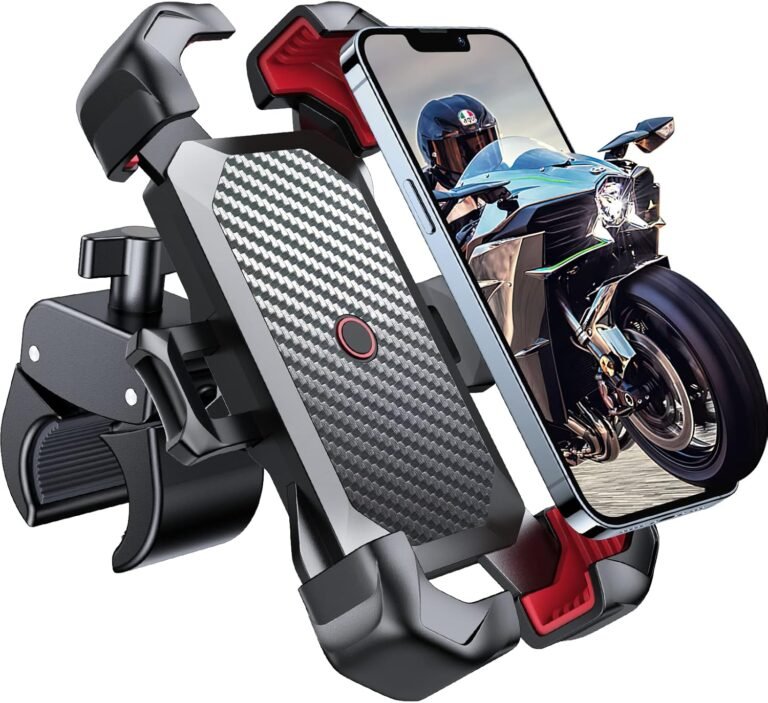
Why it fits: pneumatic dual-dampener claims strong vibration reduction, press-to-lock one-handed operation and all-metal tie rods for improved strength. Good for commuters and recreational riders who want better vibration control without a premium price.
Verify: whether your phone (especially large “Ultra” models) fits — the listing warns some Galaxy Ultra phones may not. Confirm handlebar diameter (listed as 18–34 mm) and case thickness (≤0.71″).
Full JOYROOM dual-dampener review - JOYROOM 1s Auto Lock & Anti-Shake (ID 1147)
Why it fits: true one-handed auto-lock, reinforced ball joint and 360° adjustability for quick mounting and secure clamping on standard bars. Good value for riders wanting fast operation.
Verify: case thickness limits and whether foldables (e.g., Galaxy Z Fold when unfolded with a case) will fit. Handles 4.7–7.0″ phones and bars ~0.7–1.34″.
Full JOYROOM 1s Auto Lock review - Lamicall Dual Vibration Dampener / Lamicall One-Hand Lock (IDs 1668 & 1412)
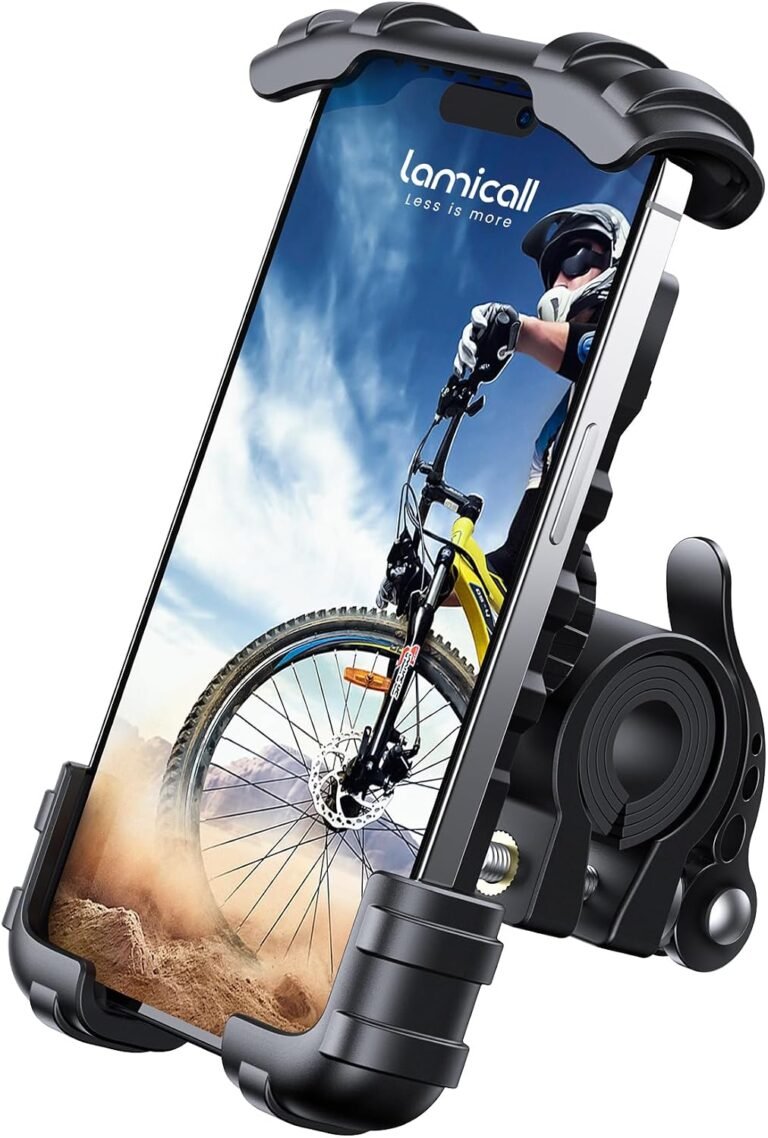
Why they fit: Lamicall models typically combine metal adjustment arms, dual dampeners and one-hand operation with varying bar fit ranges. Good middle-ground options for riders who want adjustability with some vibration control.
Verify: which Lamicall model matches your phone size and the maximum case thickness (some list 0.59″ maximum).
Lamicall dual-dampener review and Lamicall one-hand model - BRCOVAN Anti-Shake / Anti-Theft series (IDs 890, 607, 368)
Why they fit: these models present a spectrum from affordable anti-shake U-clamp cradles to heavy-duty CNC aluminum anti-theft cradles with mirror-base options and supplied wrenches. Best where theft-resistance, mirror mounting or very secure clamping over rough terrain matters.
Verify: phone thickness limits (often 16–20 mm), handlebar diameter compatibility and mirror thread fit for mirror-mounted variants.
BRCOVAN anti-shake review and BRCOVAN anti-theft review
These products are examples — use the decision framework above and verify the manufacturer’s specifications before buying.