riderinstinct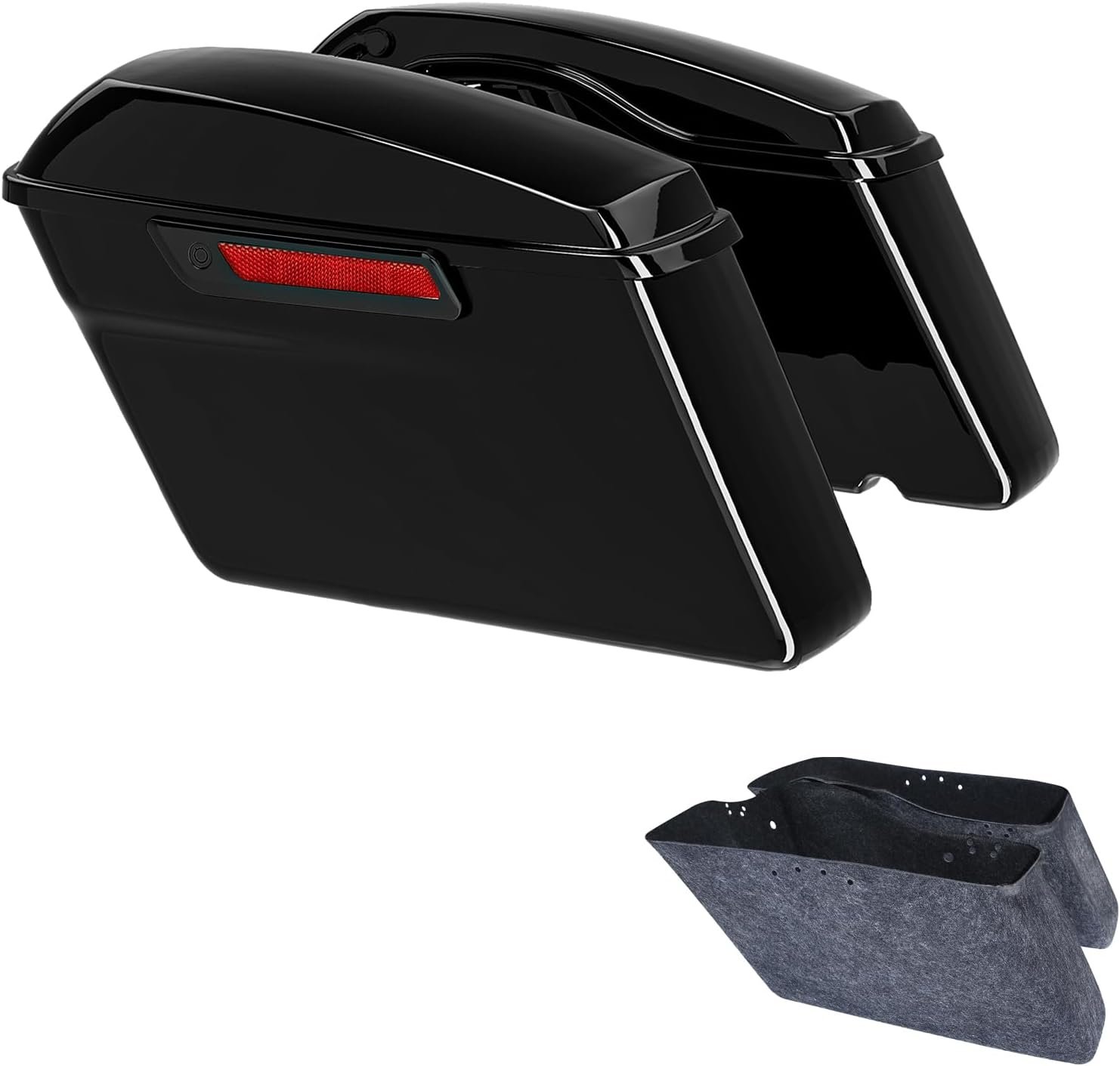
Start with a clear decision framework (before you buy)
Touring equipment is not one-size-fits-all. The right setup depends on three basic choices you must make up front: what kind of riding you do, whether you ride solo or two-up, and how often you expect to encounter bad weather or rough surfaces. Answering those lets you prioritize capacity, security, waterproofing and mounting compatibility.
- Define the ride: day trips, city-to-city overnighters, extended multi-day tours, or mixed off/on-road adventure. Each favors different luggage types and protection.
- Decide on two-up vs solo: two-up touring usually needs more organized luggage and passenger-friendly racks or tour packs.
- Set your weather tolerance: if you live or tour where it rains often, prioritize sealed hard luggage, waterproof tank bags and a good rain suit rather than relying only on dry sacks.
Only after you’ve answered those should you look at specific bags, racks and gear. This prevents the common trap of buying the biggest bag first and discovering it won’t mount, creates dangerous handling, or forces expensive retrofit hardware.
Who each luggage and accessory type actually suits
Match the equipment type to the rider and mission—here are practical pairings:
- Hard saddlebags / tour packs: Best for long paved tours and riders who want lockable, weather-protected storage and a factory look. Expect higher weight and the need for correct docking hardware or bag-specific mounts.
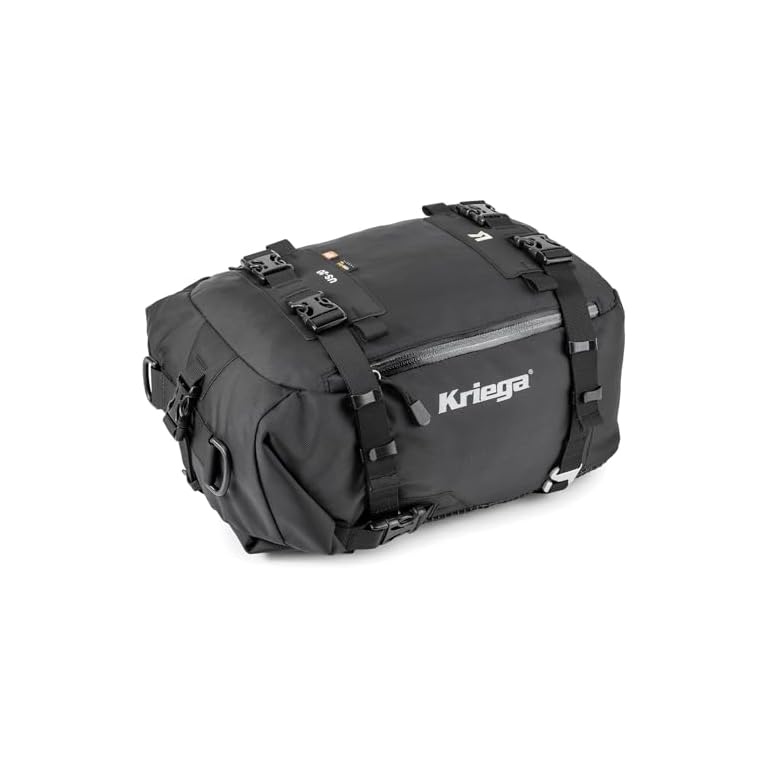
- Soft saddlebags / tail bags / duffels: Good for lighter travel, flexible packing and bikes without docking points. Easier to remove and usually cheaper, but generally less secure and less weatherproof unless used with waterproof liners.
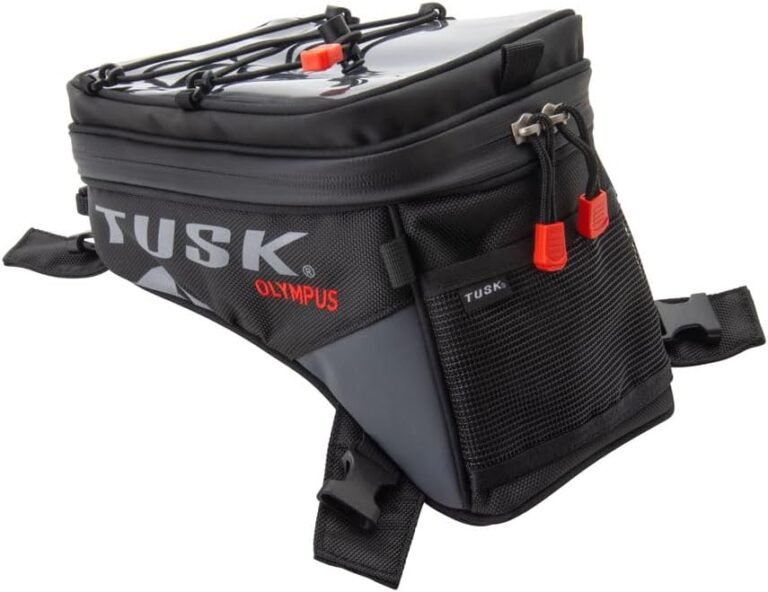
- Tank bags: Ideal for day rides, navigation, and quick access to phone, wallet or documents. The TUSK Olympus Tank Bag Large in the supplied products is an example of an 8L bag with a touch-friendly phone pocket and USB routing—good for day riders and ADV/touring bikes.
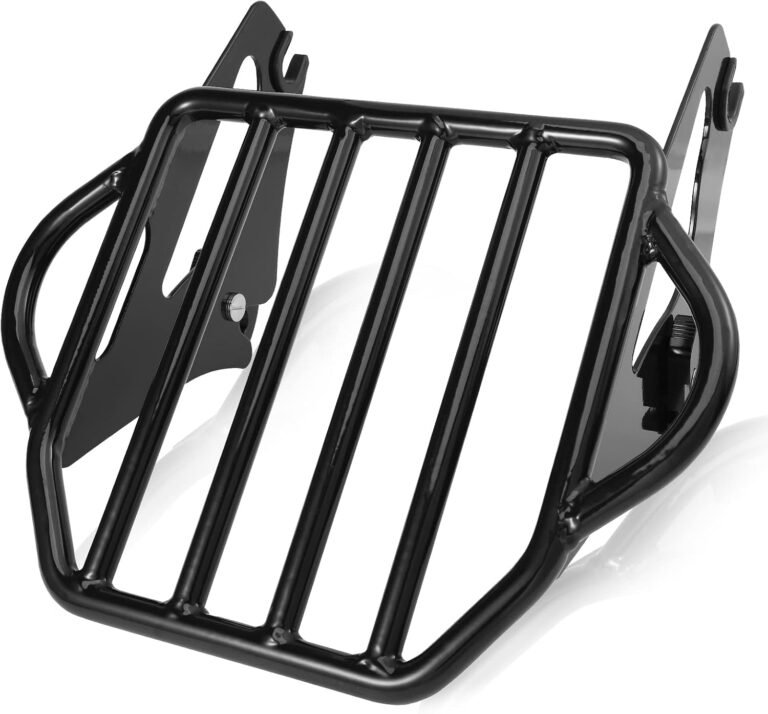
- Luggage racks & top racks: Provide a flat platform for tail bags or a base for a top case. Stainless or welded racks are robust, but verify fitment and docking hardware needs. The supplied detachable two-up luggage rack is built for many Harley touring models and claims stainless construction and quick install/removal.
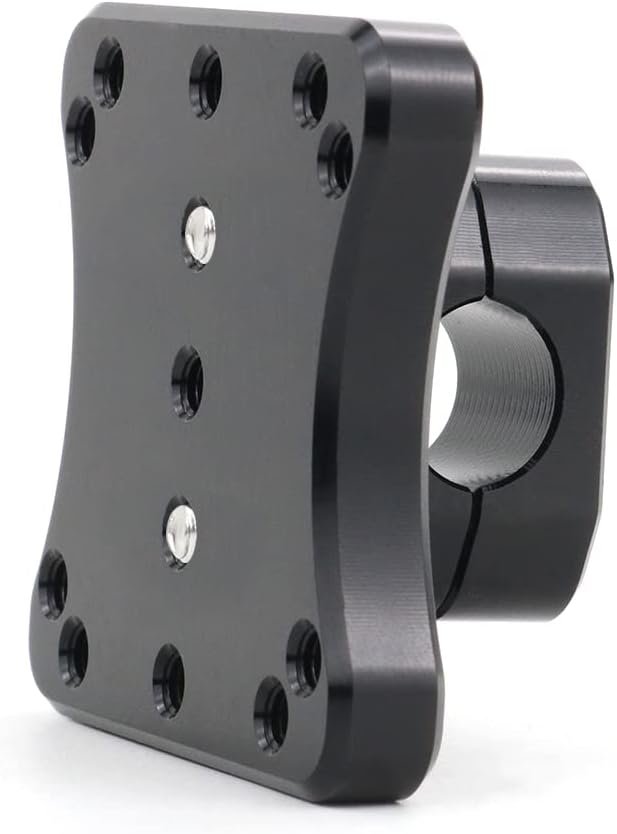
- GPS mounts and tech: Choose mounts that match your cradle standard. The Xitomer AMPs 12mm clamp provides an AMPs-pattern mounting point—useful if you already have an AMPs cradle.
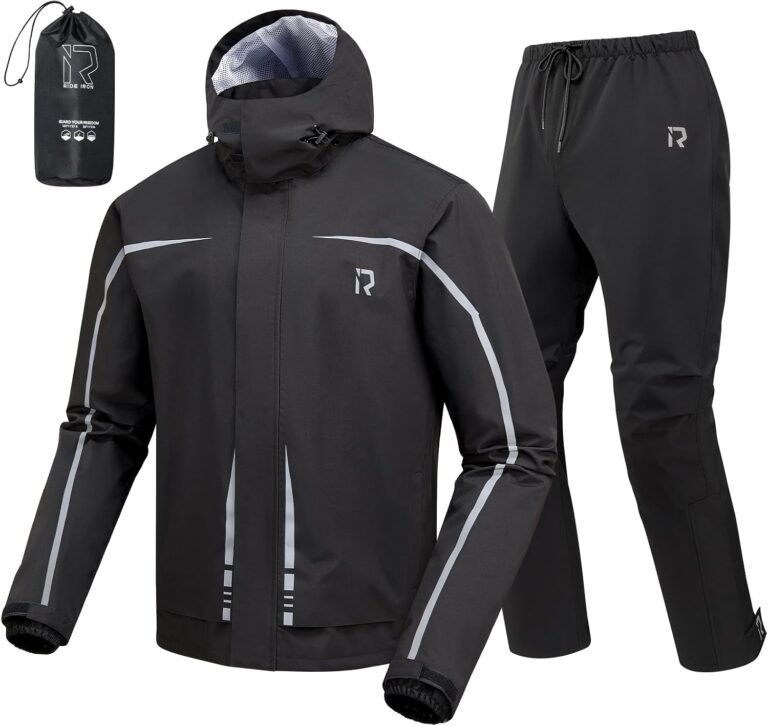
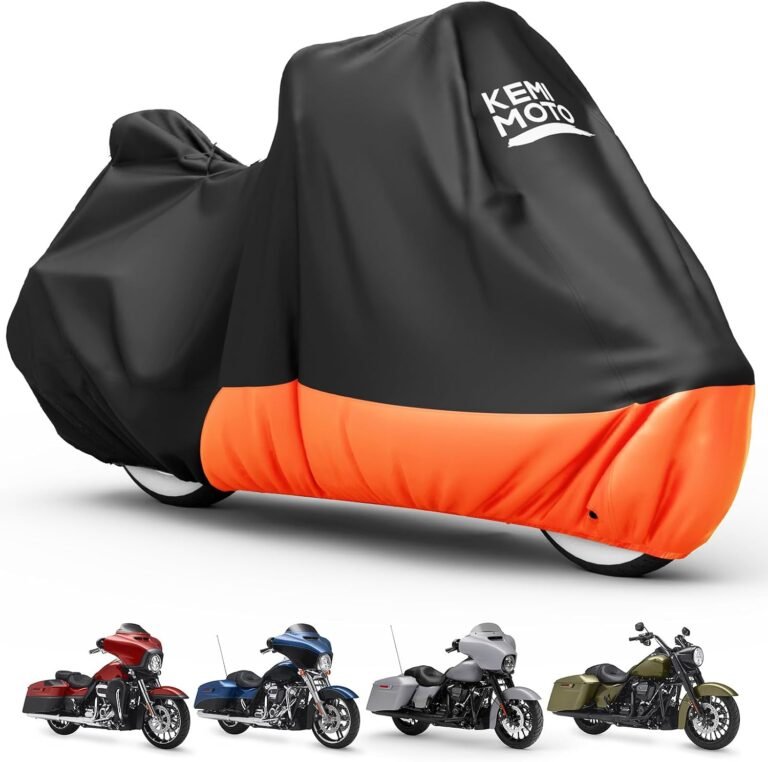
- Covers and rain suits: Covers keep a bike protected while parked (the KEMIMOTO 420D cover uses heavier Oxford fabric and claims hydrostatic resistance), while a dedicated rain suit like the RIDEIRON suit (15,000 mm waterproof rating stated) protects the rider on the move.
Each choice carries trade-offs—security for weight, accessibility for waterproofing, and fitment for price. Balance based on your most common rides.
What matters most: capacity, fitment and mounting compatibility
Capacity is visible, but fitment is the limiting factor. Example: a pair of well-made saddlebags is useless if they don’t mount to your docking hardware or interfere with exhaust routing.
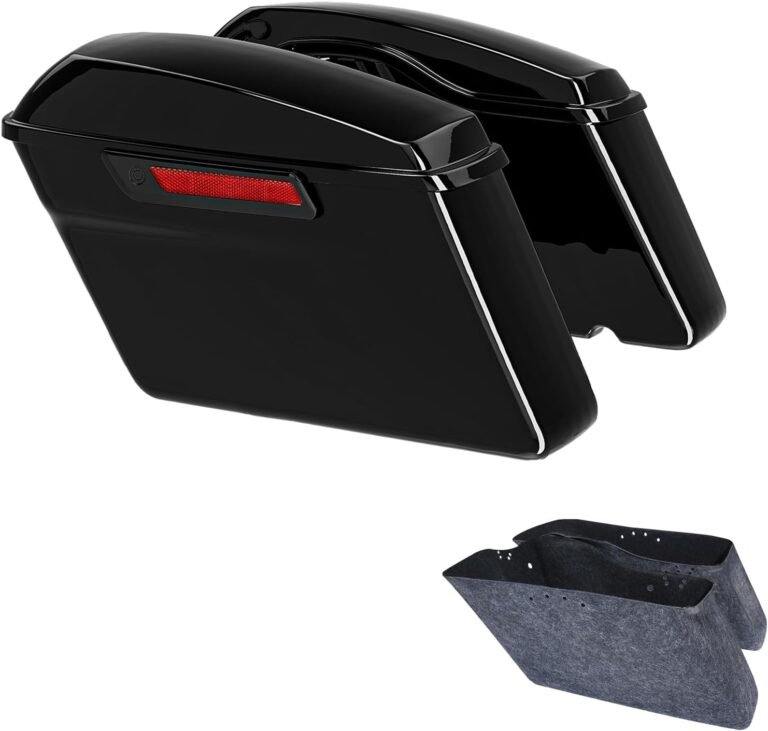
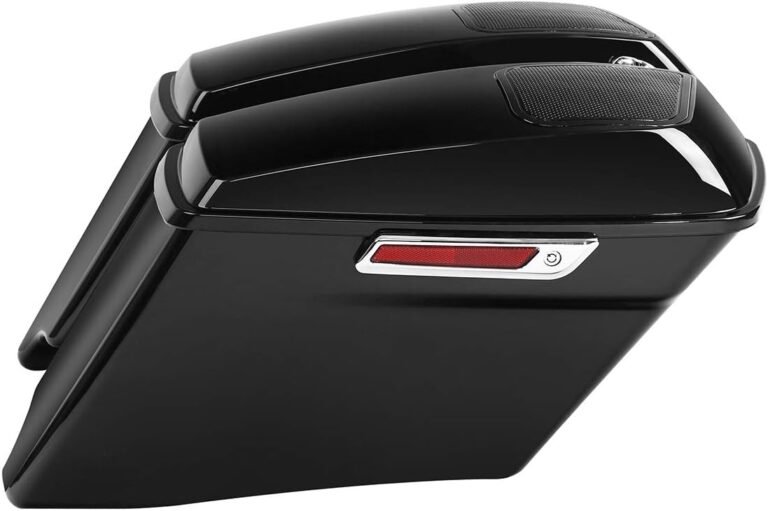
- Verify model-year fitment: Use manufacturer or seller fitment notes. The supplied XFMT ABS saddlebags list fitment for Harley Touring Road King, Road Glide, Street Glide and Electra Glide 2014–2024 but explicitly exclude some 2023–2024 model variants—double-check your exact model before ordering. The stretched 4″ sacks similarly list model exclusions.
- Check docking hardware and conversion needs: Many aftermarket racks and luggage require the OEM 4-point docking kit or a conversion bracket. The supplied two-up luggage rack notes that it fits ’09-up Touring models equipped with 4-point docking hardware and that rigid-mounted tour packs may need a separate conversion kit.
- Watch for clearance and interference: Measure exhaust, shock/suspension travel and passenger footpeg positions. Aftermarket saddlebags sometimes require conversion brackets for non-Touring frames (Softail/Dyna/Sportster).
- Mounting security: Look for included hardware and keyed locks where security matters. The XFMT saddlebags list included keys and latches; still, check whether you need additional bolts or anti-theft hardware.
If in doubt, contact the accessory seller with your VIN and model-year or consult the motorcycle manufacturer’s accessory compatibility charts.
Hard vs soft luggage: trade-offs and real-world impacts
Choosing hard or soft luggage is one of the biggest decisions for touring setups. Both have clear pros and cons that affect comfort, security and handling.
- Hard luggage (ABS, metal):
- Pros: lockable, typically better weather protection (sealing strips or integrated liners), cleaner aesthetics on cruisers and touring bikes, and often designed to accept speakers and mounts.
- Cons: heavier, can change handling and rear suspension setup, usually requires correct mounts or docking hardware, and can be more expensive to repair or replace if damaged.
- Soft luggage (textile, roll-top):
- Pros: lighter, more forgiving for odd-shaped items, often cheaper, easier to strap on and remove, and useful when you don’t have factory docking points.
- Cons: less secure, variable weatherproofing unless used with drybags, and can flap or rub if not secured correctly.
Example from the supplied facts: the XFMT ABS saddlebags use a full-cover design with a sealing strip to help keep contents dry; that’s a practical weatherproofing measure you won’t find on many budget soft options. The 4″ stretched ABS set adds a clean, muffler-covering look but also increases shell length and weight—affecting luggage balance and possibly requiring adjustments to mounts.
Assessing weatherproofing and rider protection
Weather protection has two parts: protecting your gear and protecting you.
- On-bike waterproofing: Look for sealing strips, waterproof zippers, liners and stated materials. The XFMT ABS saddlebags describe a sealing strip and liners; the TUSK tank bag advertises waterproof zippers and a phone pocket with internal routing for a USB cable. For covers, the KEMIMOTO 420D cover uses higher-density Oxford fabric and lists a 2000 mmH2O hydrostatic pressure rating in the product facts—useful for parked protection.
- Rider waterproofing: A dedicated rain suit is usually preferable to cheap spray-on covers. The RIDEIRON suit quotes a 15,000 mm waterproof rating and sealed seams; these are credible features for riding in heavy rain, though breathability and detailed membrane specs weren’t supplied in the product facts—if you sweat heavily, check for venting or choose a membrane with tested breathability numbers.
Practical tip: even with sealed hard luggage, carry small waterproof drybags for electronics and clothing layers. For rider comfort, verify the rain suit’s sizing and look for calf zips that fit over boots—this is specifically called out in the RIDEIRON facts.
Navigation, power and tech: what to plan for
Navigation and device power make long rides safer and more convenient, but they require planning.
- Mount standard and cradle: Many GPS cradles use the AMPs pattern. The Xitomer GPS Mount gives you an AMPs-pattern clamp (12mm diameter) but does not include a cradle—buy a matching AMPs cradle if you don’t already own one.
- Tank bag routing and USB: The TUSK Olympus Tank Bag includes a front-facing external USB cable port with internal routing to the phone pocket—convenient for powering a phone or dashcam, but remember the bag does not include an internal battery. Plan wiring from your bike’s accessory power or use a power bank.
- Integrated wiring vs quick-connects: Hard-mounted accessories sometimes require permanent wiring. If you expect to remove your accessories frequently, plan quick-disconnects or inline fuses so electrical work is safe and reversible.
Always fuse any accessory power at an appropriate value and reference your motorcycle’s electrical limits in the service manual before adding multiple devices.
Weight, handling and safety considerations
Luggage affects handling. Even a modest increase in unsprung or rearward weight changes cornering, braking and suspension sag. Three practical rules:
- Prefer low, centralized loading: Keep heavy items low and close to the bike’s centerline (saddlebag base or low tail bag). Avoid heavy, high topcases unless required for two-up comfort—higher weight raises the center-of-gravity and can make the bike feel tippy at low speed.
- Balance left and right: Pack equally left/right in saddlebags to prevent pull in corners. If one side must be heavier, stash denser items near the center and lighter items outboard.
- Respect weight limits: Check tire load ratings, rear suspension preload limits and any manufacturer-specified luggage capacities—these are safety-critical. If exact numeric limits aren’t in the accessory facts, verify with your motorcycle manufacturer or an authorized dealer.
When installing heavy or structural racks, tighten fasteners to the torque values specified by the part or the motorcycle manufacturer—don’t guess torque values from third-party sources.
Installation, theft prevention and long-term maintenance
Buy accessories that include the hardware or clearly list what you’ll need. Consider maintenance and security up front.
- Included hardware and keys: The XFMT saddlebags include keys and latches—an advantage for basic security. The 4″ stretched set also includes keys and hardware, though conversion brackets are not supplied for non-Touring frames.
- Racks and mounting bolts: The supplied Black Detachable Two-Up Luggage Rack arrives with hardware and claims easy install/removal; still, verify whether your bike needs a separate 4-point docking kit or conversion pieces—those are sometimes sold separately.
- Anti-theft measures: Use lockable cases, bolted brackets, or cable locks. Also consider insurance and VIN-marking of high-value luggage.
- Maintenance: Check latches, locks and seal integrity after long rides. For hard luggage, inspect mounting points and fastener torque periodically. For textile gear, follow manufacturer washing and care guidance to maintain waterproof coatings.
If a product’s installation instructions aren’t included (some listings omit them), ask the seller for documentation or check community forums for confirmed install notes before you start cutting wires or drilling holes.