riderinstinct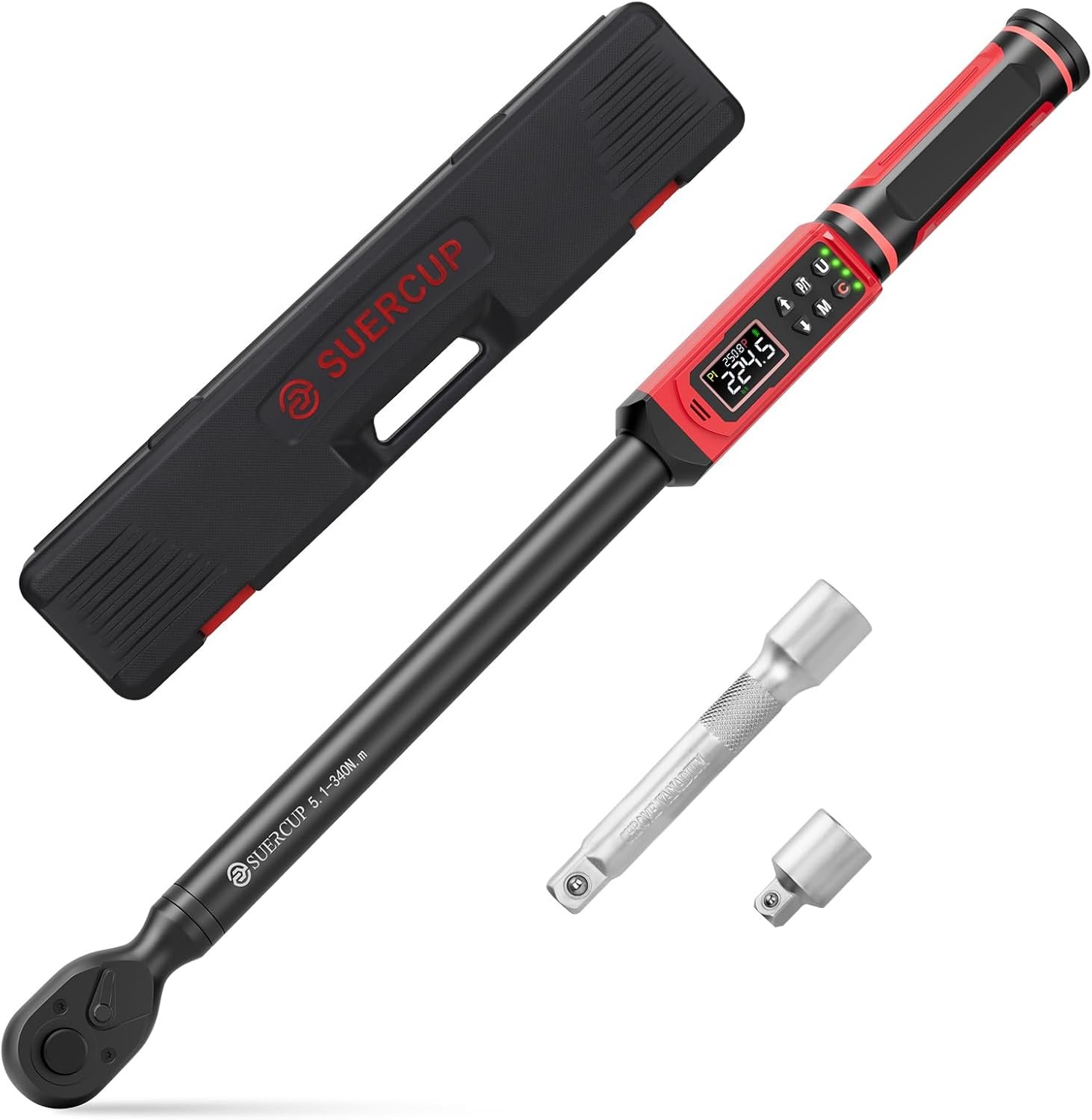
Start with a decision framework: how to match tools to your riding style
Before you buy, stop and answer three questions: What riding do I do most (commute, touring, adventure, track)? How far from help will I typically be? And how mechanically capable do I feel? Those answers determine whether you prioritize weight and portability or torque capacity and comprehensiveness.
Think of tool choice as balancing three axes: capability (what jobs the tools can complete), portability (size and weight to carry on the bike), and durability/environmental resistance (how the tools survive rain, mud, vibration). A lightweight roll-up kit trades capability for portability; a big 1/2″ workshop set trades portability for the ability to tackle high-torque jobs. Decide which axis matters most to you and accept the trade-offs.
Also factor in upgradeability. If you plan to do more maintenance later, buy a solid ratchet and socket series first and add a torque wrench and larger drives later, rather than buying a cheap complete kit you’ll replace soon.
Who needs what: matching tools to common riding styles
Different riders face different failures and maintenance needs. Match your carry and workshop tools to realistic scenarios.
- Commuters: Short rides, often close to help. Carry a compact tool roll, multi-bit driver or 1/4″ socket kit, spare fuses, and a compact tire plug kit for quick fixes.
- Touring and sport-touring riders: Farther from help, often carrying luggage. Add a 3/8″ socket set (covers most engine and chassis fasteners), a torque wrench (or plan to torque correctly at a garage), and robust waterproof storage.
- Adventure/off-road riders: Face mud, vibration and remote recovery. Carry a mix: screwdriver/multi-tool, tire repair plugs (temporary fixes), a compact 3/8″ set for onsite repairs, and recovery gear. Prefer durable, sealed storage like a waterproof tube and rugged tool roll.
- Track riders and DIY home mechanics: Need precision and repeatability. Invest in a torque wrench (read on for drive-size guidance), a full 1/2″ socket set for wheels and suspension, and quality ratchets/wrenches for frequent use.
These are starting points. If you ride a small-displacement commuter bike, you’ll rarely need 1/2″ drive tools; if you ride heavy touring bikes or adventure bikes you will.
Essential tools every rider should consider carrying
No matter your style, a minimal roadside kit reduces the chance of a day-ending problem. Consider these core items:
- Compact multi-bit screwdriver or 1/4″ drive bit kit — for plastics, panels, battery terminals and fairing bolts.
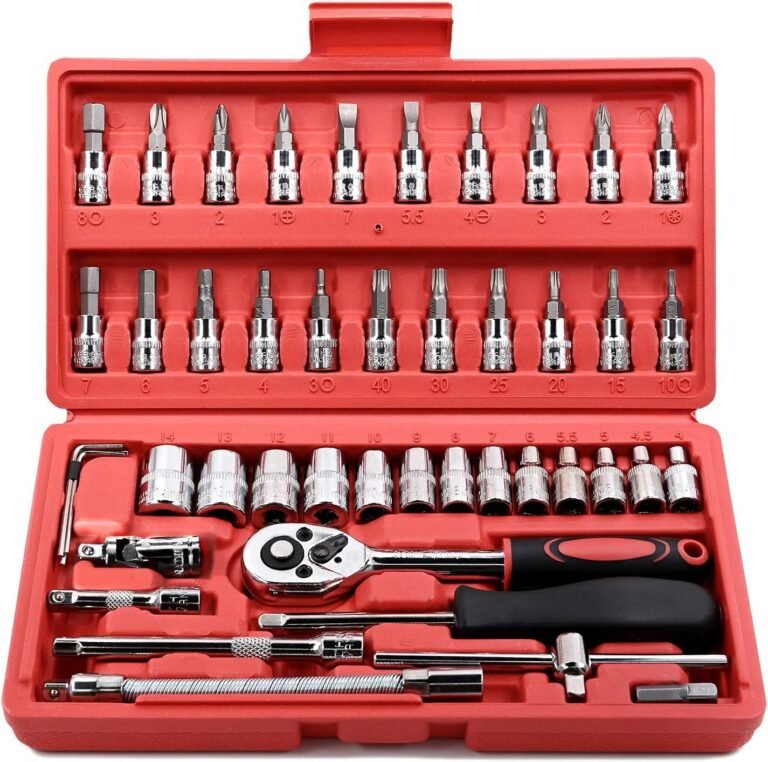
- Small socket set (1/4″ drive) with common metric sizes or bit sockets — lightweight and covers many small fasteners. The Egofine 46-piece 1/4″ drive kit in our product facts is an example of a compact value kit with multiple bits and extensions suited to light motorcycle work.
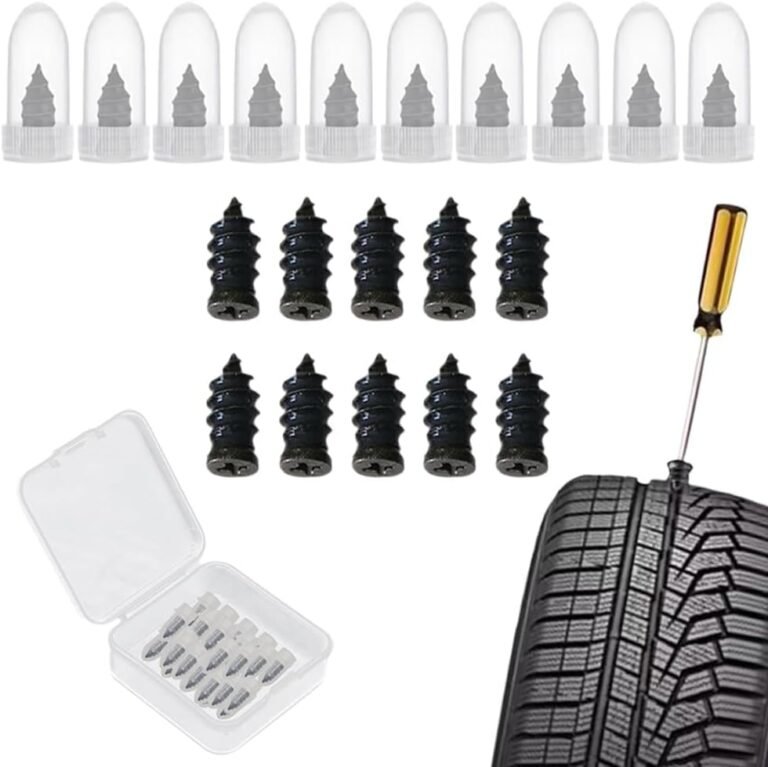
- Tire plug/repair kit — for tubeless tires only; use plugs as an emergency measure and get professional repairs later. The supplied spiral rubber plug kits are inexpensive and compact, but their product facts warn they lack independent certification and should be treated as temporary roadside fixes.
- Compact adjustable wrench or small set of combination wrenches — for things a socket can’t reach.
- Weatherproof storage — a small waterproof tool tube or sealed pouch keeps tools dry. The waterproof tool tube in the product facts is a practical universal mount option for frame or luggage-bar attachment.
This minimal list keeps weight low but gives you the essentials to get you to a garage or home base.
How to choose a torque tool: digital vs click and which drive size to own
Torque matters for safety-critical fasteners: wheels, axle nuts, suspension and some engine covers. Two common styles are mechanical click torque wrenches and electronic (digital) torque wrenches. Each has strengths and limits.
Click-style (mechanical) torque wrenches: simple, battery-free and generally robust. They give a tactile and audible “click” when the set torque is reached. They’re a good choice if you work in dirty, wet conditions and prefer a low-maintenance tool.
Digital torque wrenches: provide readouts, presets, data logging and multi-mode alerts (vibrate/buzzer/LED). They can be easier to use for exact values and repeated work, but require batteries and are more sensitive to impacts and harsh environments.
Examples from the supplied products:
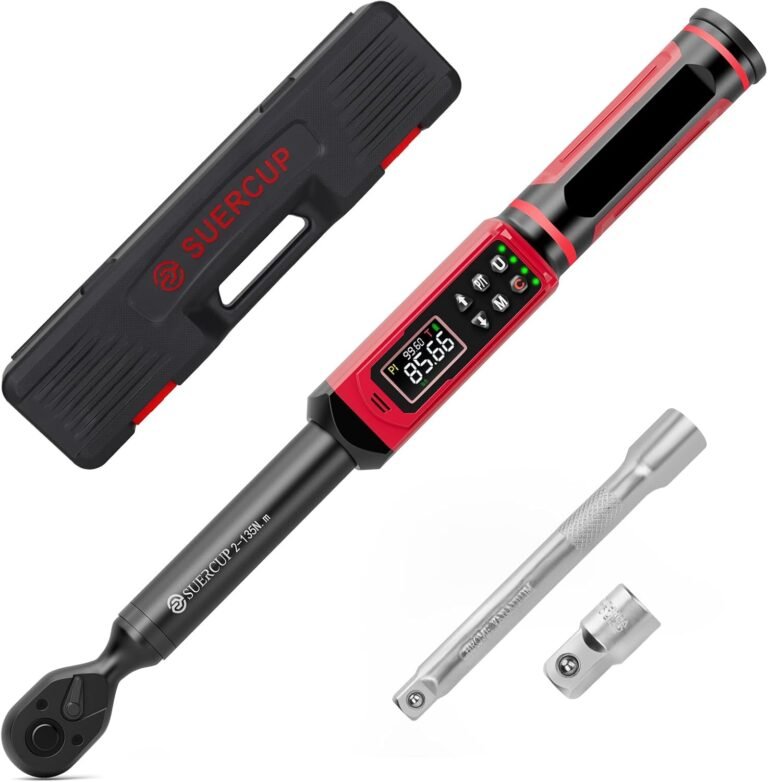
- The SUERCUP 3/8″ digital torque wrench offers a large color LED, ±1% accuracy across 1.5–99.6 ft·lb, track/peak modes, and data logging (up to 500 sets). That makes it attractive for riders who want repeatable torque with visual/audio/haptic guidance — but it needs AA batteries and has no published environmental protection rating in the product facts.
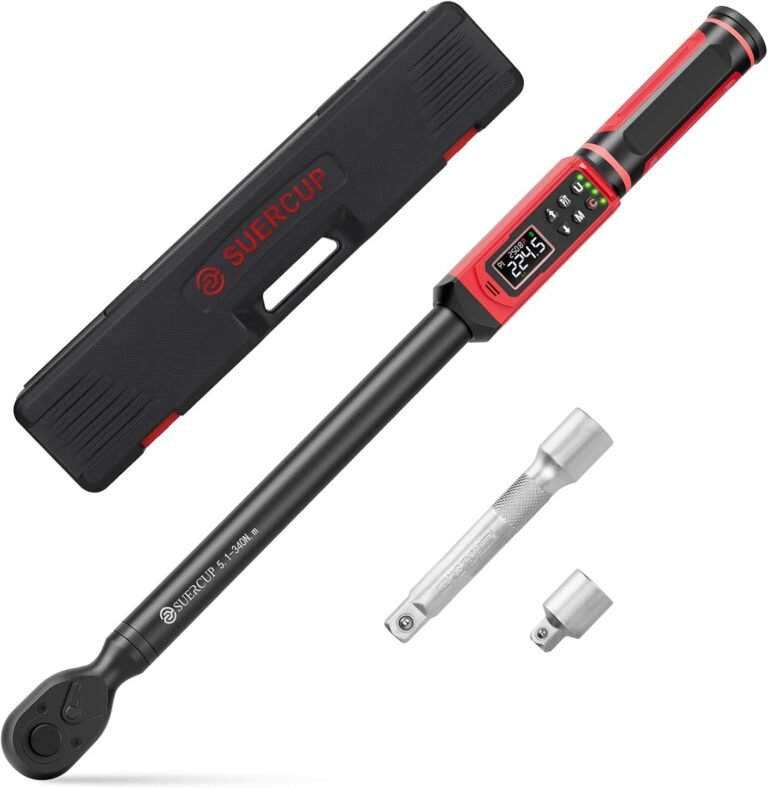
- The 1/2″ SUERCUP digital torque model covers a higher torque range (3.8–250.8 ft·lb / 5.1–340 Nm) with ±1% accuracy, multiple presets and overload protection — useful for lug nuts and suspension work that exceed smaller drives’ limits.
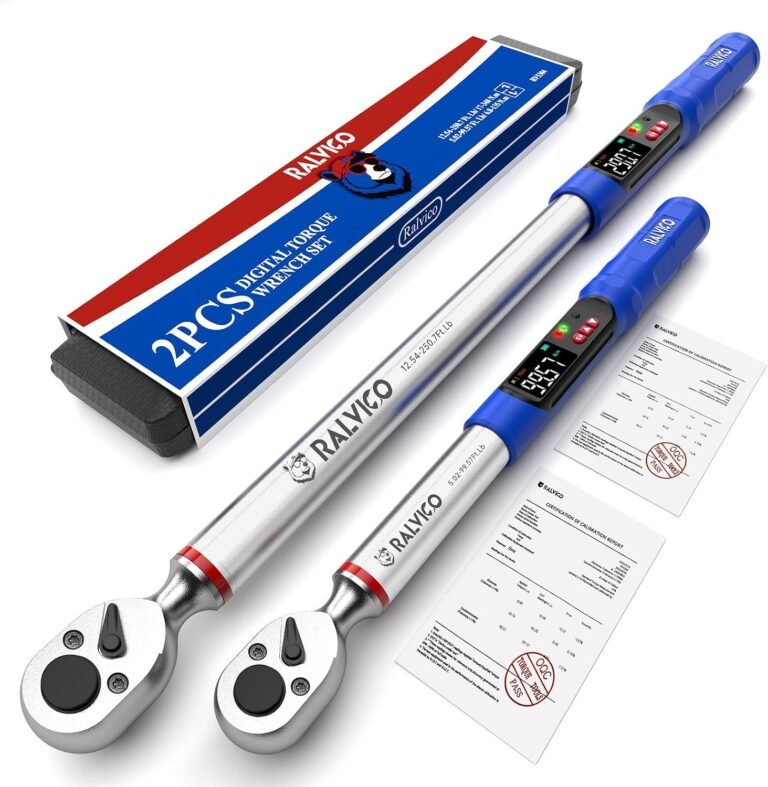
- The Ralvico digital set includes both 1/2″ and 3/8″ drives with ±2% accuracy, a clear LED/audio alert system and data storage. It’s positioned as a convenience-packed combo for both engine and wheel work.
Drive-size guidance:
- 1/4″ drive — best for low-torque work (fasteners under light preload like body panels, electronics). Compact and ideal for roadside kits but torque-limited.
- 3/8″ drive — the best all-around compromise for engine bay, brakes, and many chassis fasteners. Most motorcycle owners who do regular maintenance will find a 3/8″ torque wrench useful.
- 1/2″ drive — required for wheel lug nuts, heavy suspension bolts and high-torque work. If you service wheels or suspension yourself, you should own a 1/2″ torque wrench or have access to one in a workshop.
Important safety note: Always verify the exact torque values for your motorcycle’s fasteners from the manufacturer’s manual. When the product facts don’t state precise environmental ratings, plan for protected storage and battery management for digital wrenches.
Sockets, ratchets and materials: what matters and what to avoid
Quality sockets and ratchets matter. Cheap sockets can round bolt heads; small-drive sockets can fracture under high torque. Key selection points:
- Material: Chrome-vanadium steel (CR-V) is the common standard noted in several supplied products (for example the Egofine 1/4″ set) and is acceptable for general motorcycle maintenance. For heavy-duty and impact use, look for impact-rated sockets made of chrome-molybdenum (often black oxide finished) specifically marked as “impact” sockets.
- Drive size: match socket series to your ratchets. 1/4″ for light work, 3/8″ for medium, 1/2″ for heavy. Avoid using 1/4″ sockets on high-torque bolts; use the correct drive size or adapters cautiously.
- Ratcheting teeth and swing arc: Higher-tooth-count ratchets (72-tooth or more) need less swing arc and are valuable in tight engine bays. Several digital torque wrenches advertise 72-tooth reversible ratchets for confined spaces.
- Quick-release and organization: Quick-release heads speed socket changes. A good organized case or blow-molded box reduces lost parts — the supplied Egofine set and some digital torque kits include organized cases.
In short: buy the best ratchet you can afford, choose sockets sized to the work you do, and prefer impact-rated sockets for use with impact tools.
Roadside tire repairs and recovery: practical limits and safe use
Tire plug kits and spiral rubber plugs are common for roadside fixes. The supplied plug kits are portable and affordable, and many riders carry them. But understand their limits.
- Use plugs only on tubeless tires and as a temporary repair. The product facts for supplied spiral plug kits emphasize they are a convenient emergency measure and lack independent certification for long-term performance.
- Do not rely on plugs for sidewall tears, large punctures, or where the vehicle is heavily loaded at sustained high speeds. After a plug repair, have the tire inspected and serviced professionally as soon as practical.
- Carry a hand pump or CO2 inflator and a pressure gauge — a plug without proper inflation won’t get you far. Also carry protective gloves and eye protection when working roadside in traffic.
If you regularly ride remotely or carry heavy loads, consider a spare tube (for bikes with inner tubes), a more comprehensive tire repair kit, or a portable tubeless inflator and plug kit plus the competence to judge repair suitability safely.
Organizing and protecting your tools: storage options that make sense
How you store tools affects usability and longevity. The supplied product facts describe several real options:
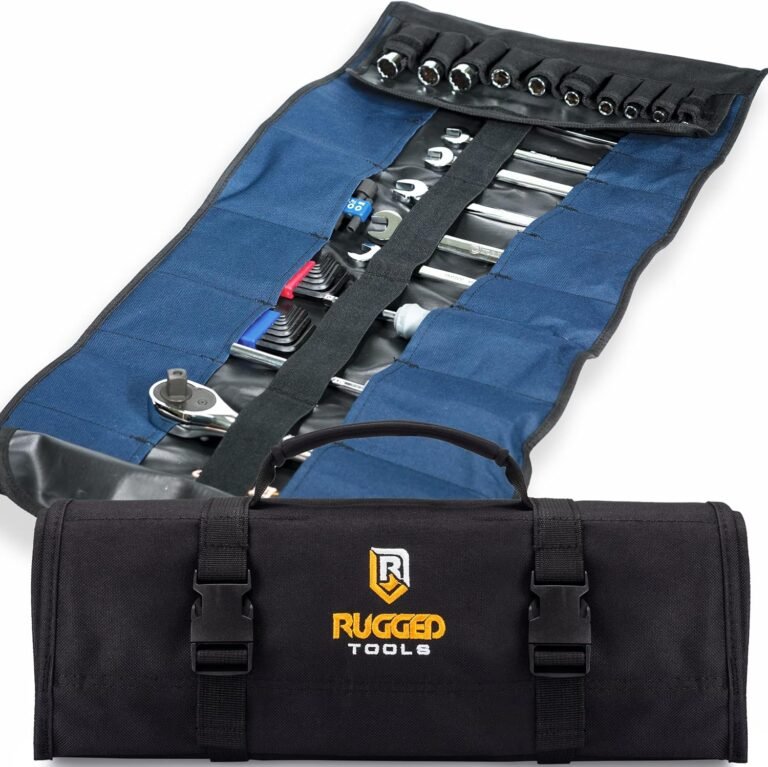
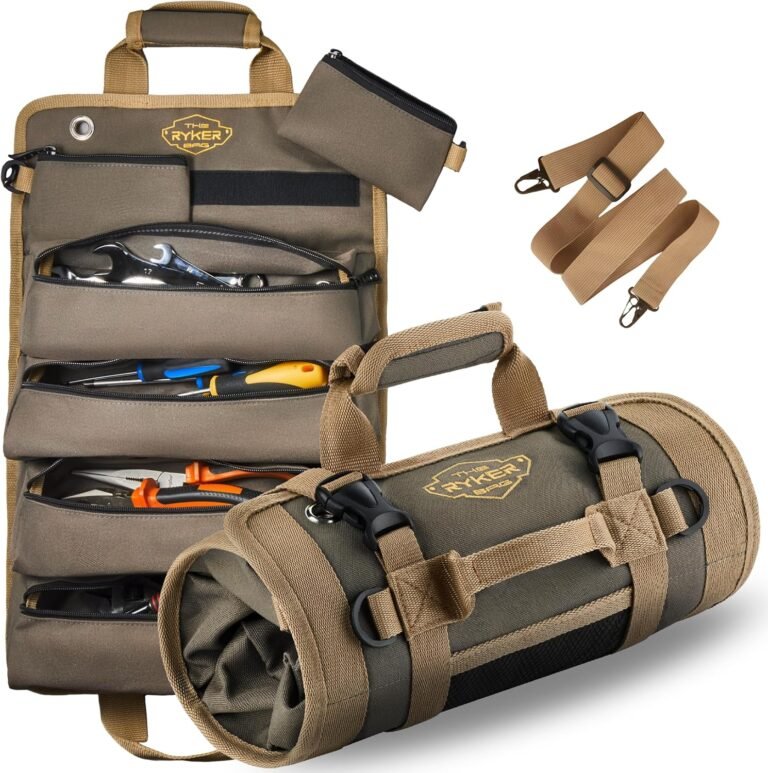
- Roll-up tool bags and organizers: Lightweight and compact. Examples include the Ryker heavy-duty roll-up tool bag and basic 32-pocket tool rolls. They’re great for carrying hand tools and quick access but usually lack rigid protection against sharp impacts.
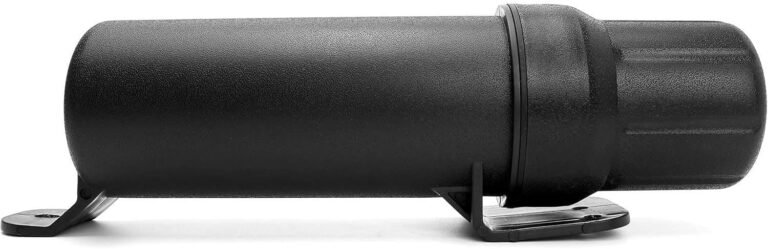
- Waterproof storage tubes: Handy for mounting under-seat or on the frame. The supplied waterproof tool tube advertises an O-ring seal, universal mount brackets and dimensions — practical for protecting a compact tool set and documents from rain on commuting and off-road rides.
- Blow-molded cases: Provide better protection and organization for torque wrenches and larger socket sets. Several digital torque sets come with blow-molded cases that keep tools secure in transit and protect sensitive electronics.
Practical tip: keep two bags — one compact roadside roll on the bike for quick fixes and one full workshop case at home. Always secure sharp tools to prevent damage to other items and to reduce injury risk when reaching into the bag.
Budget and buying strategy: incremental purchases that scale with your needs
Tools are cumulative. Rather than buying the largest kit first, build a toolset around high-use, high-quality core pieces and add specialty items as needed.
- Start with a trustworthy ratchet (3/8″ is a versatile choice) and a core set of metric sockets covering sizes listed in your bike’s service manual.
- Add a torque wrench sized to the work you do: a 3/8″ torque wrench covers most engine work; add a 1/2″ if you service wheels and suspension yourself. Consider a digital model if you want presets and data logging — examples in our product facts include SUERCUP and Ralvico digital wrenches.
- Buy a compact 1/4″ kit (like Egofine 46-piece) for roadside and small fasteners; it’s inexpensive and portable but don’t use it for high-torque jobs.
- Invest in storage and weatherproofing early — a waterproof tube or good roll keeps tools usable and reduces replacement frequency.
Spending more on a few quality items (ratchet, one good torque wrench, impact-rated sockets) often gives better long-term value than buying a low-cost, complete kit you’ll outgrow quickly.
Common mistakes riders make when choosing tools
Buy decisions are often driven by price rather than matching capability. Avoid these common traps:
- Buying a compact 1/4″ kit and expecting it to handle wheel or suspension fasteners. Torque limits exist — use the correct drive size for heavy work.
- Skipping a torque wrench entirely for wheel and suspension jobs. Over- or under-torqued fasteners are safety hazards. Always reference the manufacturer’s torque specs.
- Carrying plug kits but no inflator or gauge. A repaired tire needs correct pressure to be safe to ride; bring a portable pump or CO2 inflator and a gauge.
- Ignoring storage and environmental protection for electronic torque wrenches. If you choose a digital wrench, store it dry and carry spares for batteries; product facts for digital models don’t always list IP ratings.
- Not checking compatibility and sizes (metric vs SAE). Most modern motorcycles use metric fasteners — confirm sizes before buying a kit dominated by SAE sockets.
Correct the mistakes above and you’ll have a set that keeps you safe and productive.
Practical checklist: what to buy based on riding style
Use this checklist to assemble a starting kit. Tailor quantities and sizes to your motorcycle and service manual.
- Essential roadside kit (commuter): compact 1/4″ bit/socket set, multi-bit driver, spiral plug tire kit, small pressure gauge and inflator, compact tool roll, waterproof storage tube.
- Touring/everyday maintainer: 3/8″ ratchet and socket set, a 3/8″ torque wrench (or access to one), extension and universal joint, quality roll or blow-molded case, tire plug kit and inflator, spare fuses and small electrical tools.
- Adventure/off-road: rugged 3/8″ kit, a 1/2″ torque wrench if you plan wheel work, heavy-duty waterproof tube or sealed case, comprehensive tire repair and recovery gear, and spare batteries for electronic tools.
- Track/serious home mechanic: full 1/2″ drive socket set including impact sockets if you use impact tools, 3/8″ for detailed work, high-quality torque wrench (digital or click with calibration), organized workshop toolbox and service manuals.
Always verify torque numbers and service intervals from the motorcycle manufacturer when doing safety-critical maintenance.