riderinstinct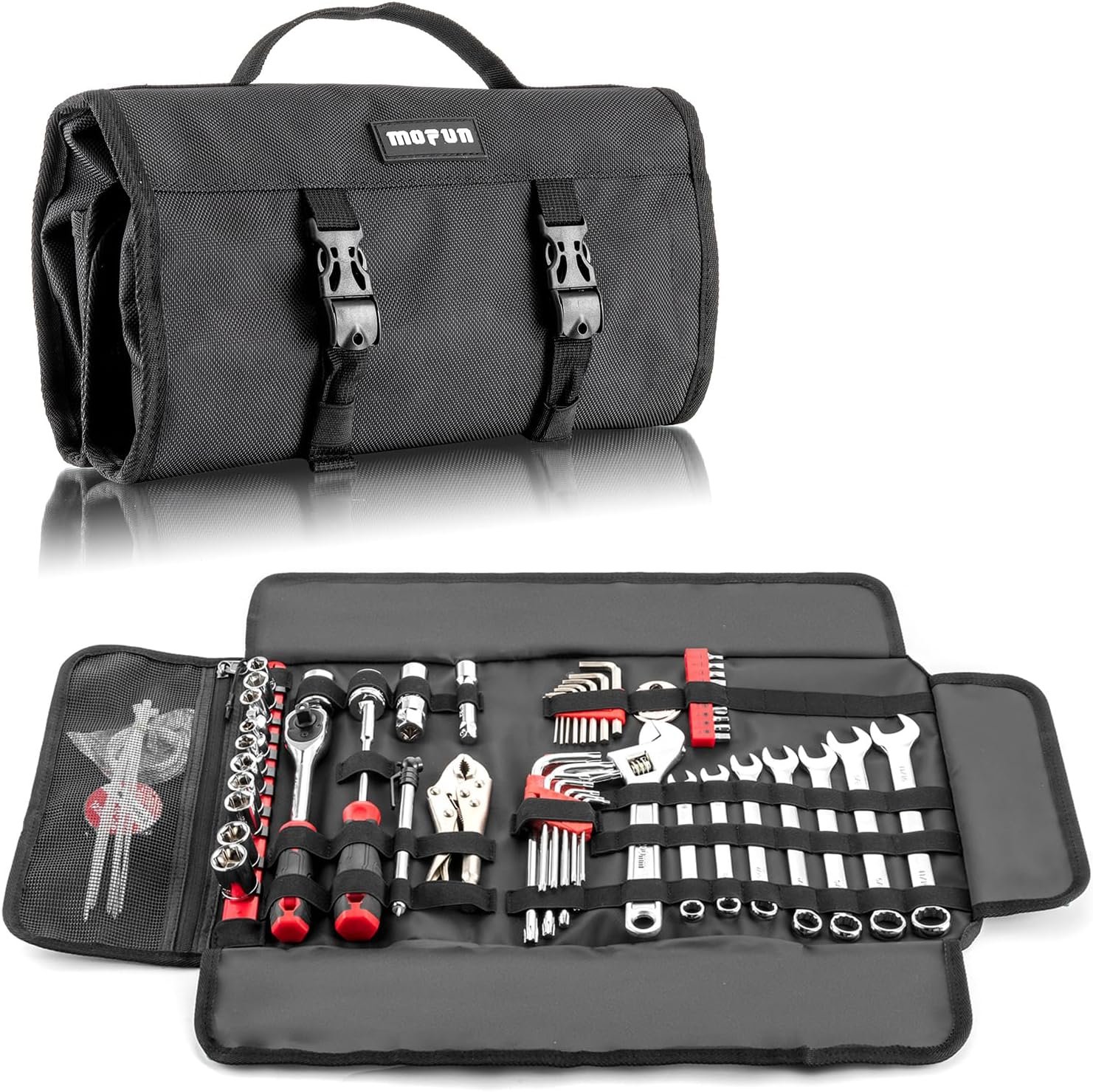
Why start with a decision framework (before you buy)
Tools aren’t one-size-fits-all. The right collection depends on where you ride, who will do the work and how permanent you want repairs to be. Begin by asking three concrete questions: 1) Will you carry tools on the bike or store them at home? 2) Do you plan to do routine maintenance (oil change, chain adjustment), or just roadside quick-fixes? 3) Are you comfortable using a torque wrench and performing safety-critical work?
Answering those determines the trade-offs you’ll face: portability versus coverage, lower cost versus long-term durability, and compact roll-up pouches versus full tool chests. Choosing a kit without this framework often results in unnecessary weight on the bike or missing the single tool you need for a repair.
If you’re new to tools, start with a compact, well-chosen set that covers common fastener sizes and add specialty tools (torque wrench, digital testers, heavier sockets) as your skills and needs grow. For guidance on caring for the tools you buy, see our Tools Maintenance Guide for Motorcycle Owners.
Core tools every rider should own and why they matter
Whether you carry them on the bike or keep them in the garage, these are the practical essentials:
- Socket set and ratchet(s) – Workhorse for most fasteners. Sockets let you tackle bolts cleanly and efficiently compared with adjustable wrenches.
- Open-end/combination wrenches – Useful where a socket won’t fit or to hold a nut while you turn the bolt from the other side.
- Screwdrivers and bit set – For plastics, electronics, and small fasteners; a compact bit set multiplies capability while saving space.
- Pliers (needle-nose and standard) – Pulling cotter pins, electrical work, and gripping small parts.
- Torque wrench – Non-negotiable for wheel, head, and suspension fasteners. Use the torque spec from your motorcycle’s manual.
- Tire repair and inflator options – A compact plug kit or tubeless repair kit and a pump/CO2 source can get you home in many cases, but understand their temporary nature.
- Storage and organization – Tool roll, blow-molded case or a waterproof tube to protect and quickly access tools.
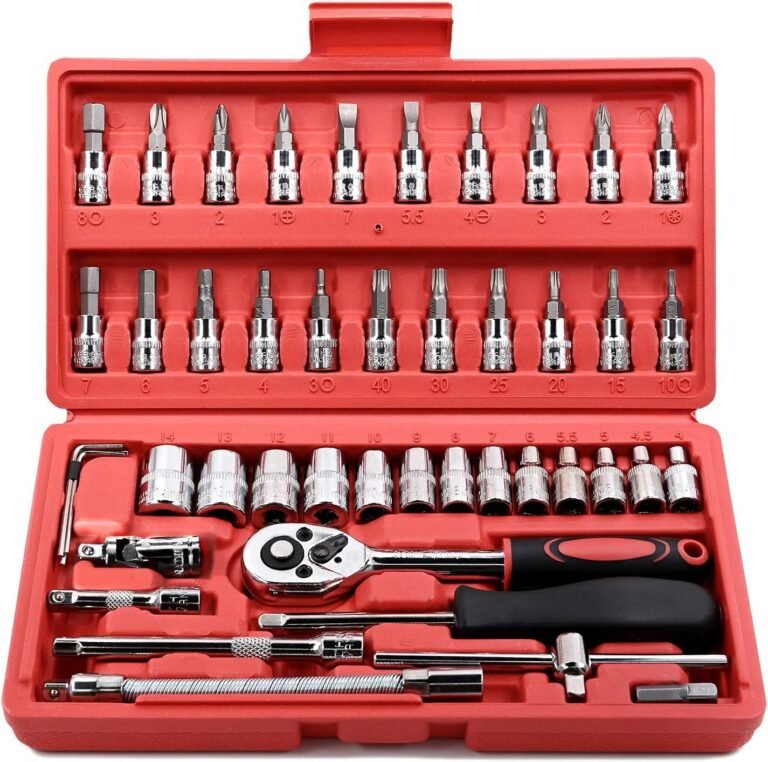
For riders focused on lightweight, portable solutions, a 1/4″ drive socket set with a broad bit selection is a practical starting point. The Egofine 46-piece 1/4″ drive set is an example of a compact, value-minded kit geared to light-to-medium maintenance and roadside use, though its 1/4″ drive limits torque capacity for heavier fasteners.
Drive sizes, torque capability and how to choose
Socket drive choices directly affect which jobs you can complete and how safely you can do them:
- 1/4″ drive – Small, light and great for fasteners on fairings, electrical work and small fittings. Not intended for high torque applications like axle nuts or large suspension bolts.
- 3/8″ drive – The best all-around choice for many motorcycle owners: handles most engine, brake and chassis fasteners while remaining reasonably compact.
- 1/2″ drive – Required for heavy-duty jobs such as wheel lug nuts, axles and some suspension hardware. High torque capability but bulkier and heavier.
Example tools from our product list illustrate this trade-off: the Egofine 46-piece set is a 1/4″ drive kit that offers wide bit coverage and portability but is explicitly limited by its small drive size for high-torque tasks. If you plan to service wheels or suspension, you’ll need at least a 3/8″ ratchet and often a 1/2″ set or dedicated torque tools.
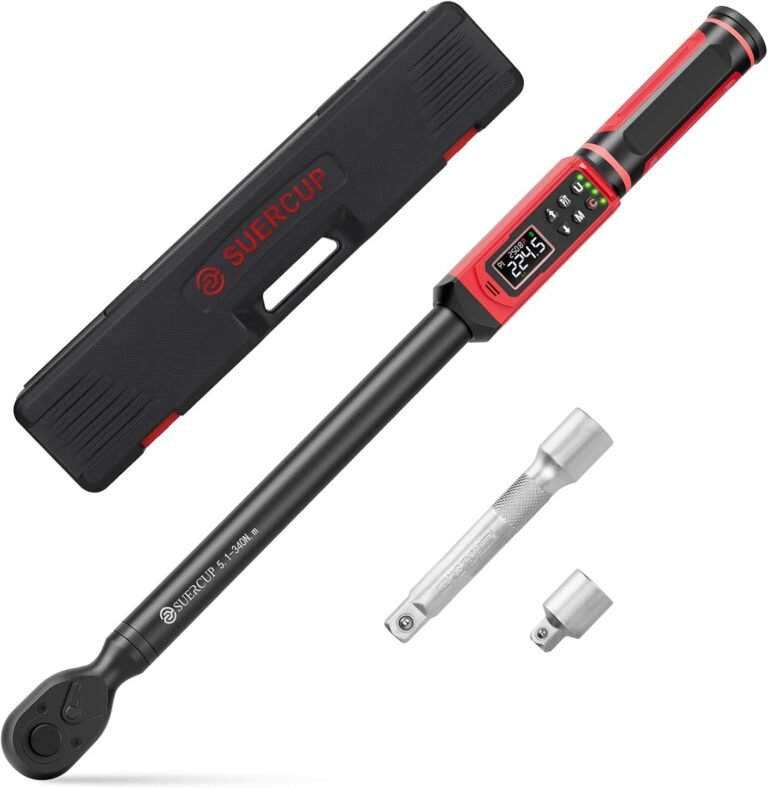
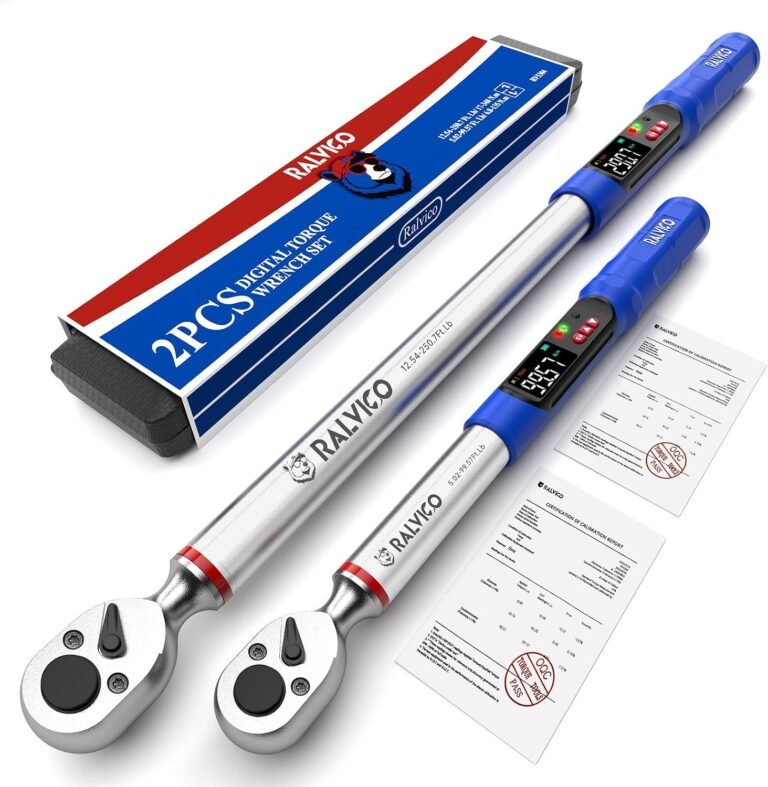
When tightening safety-critical fasteners, always verify the torque values from your motorcycle manufacturer documentation and use a torque wrench with an appropriate, calibrated range. Several digital torque options in our product facts provide a broad range: SUERCUP’s 1/2″ drive digital torque wrench (3.8–250.8 ft·lb / 5.1–340 N·m) with ±1% accuracy, and multi-drive digital sets that include both 1/2″ and 3/8″ models (e.g., the Ralvico two-wrench set covering 12.54–250.7 ft·lb and 5.02–99.57 ft·lb respectively). These give clear example ranges — choose a wrench whose range includes the highest torque spec you’ll need, and consider a second smaller drive for low-torque repeatability.
Portable kits and roadside essentials: what to carry on the bike
If you’ll carry tools on the bike, every ounce matters. Pack items that solve the most common problems you can reasonably fix on the roadside:
- Compact socket/bit set (1/4″ or small 3/8″) for common fasteners
- Multi-tool or small pliers and screwdrivers
- Tire plug kit and small inflator or CO2/mini-pump
- Zip ties, electrical tape and a small flashlight or headlamp
- Waterproof storage, like a tube or small roll pouch
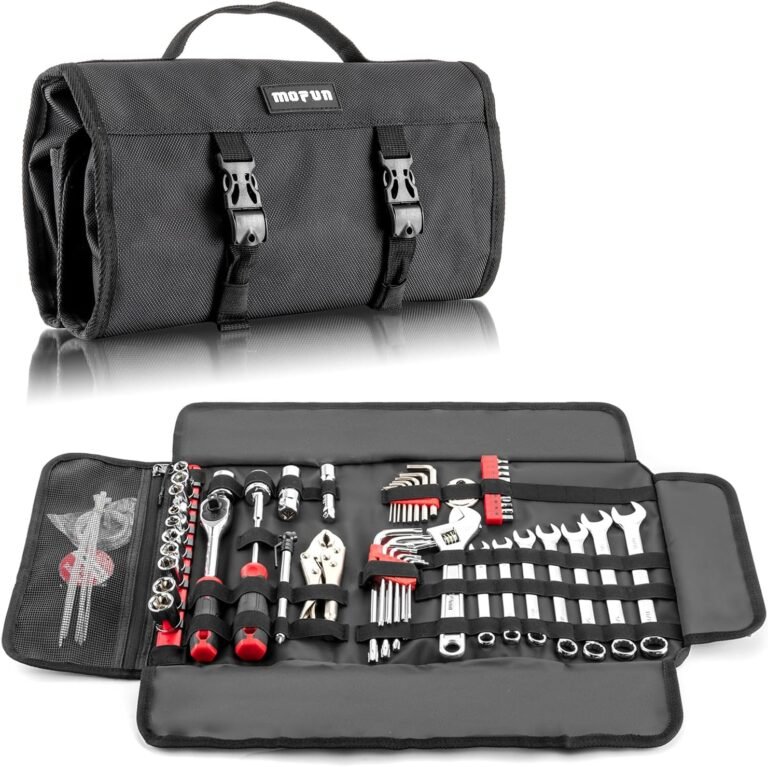
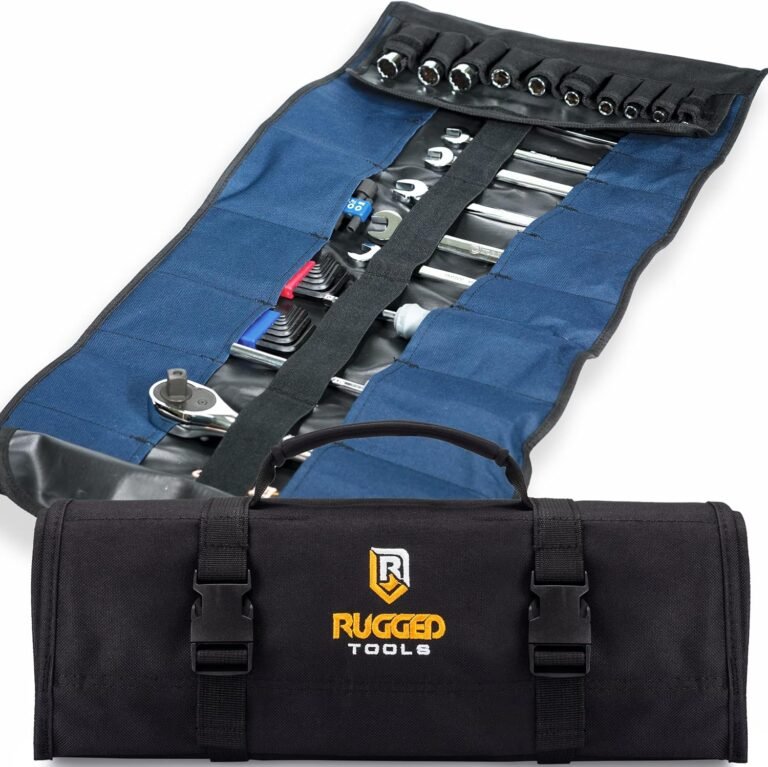
Products to consider: the Mofun 64-piece Motorcycle Tool Kit is sold as a universal roadside set with a roll pouch made from 1680D Oxford fabric, chrome-vanadium tools, MOLLE webbing and D-rings for hanging—good if you want more coverage without a heavy toolbox. For ultralight organization, the Rugged Tools 32-pocket tool roll provides an affordable roll-up organizer for minimal kits and keeps tools visible and quick to grab.
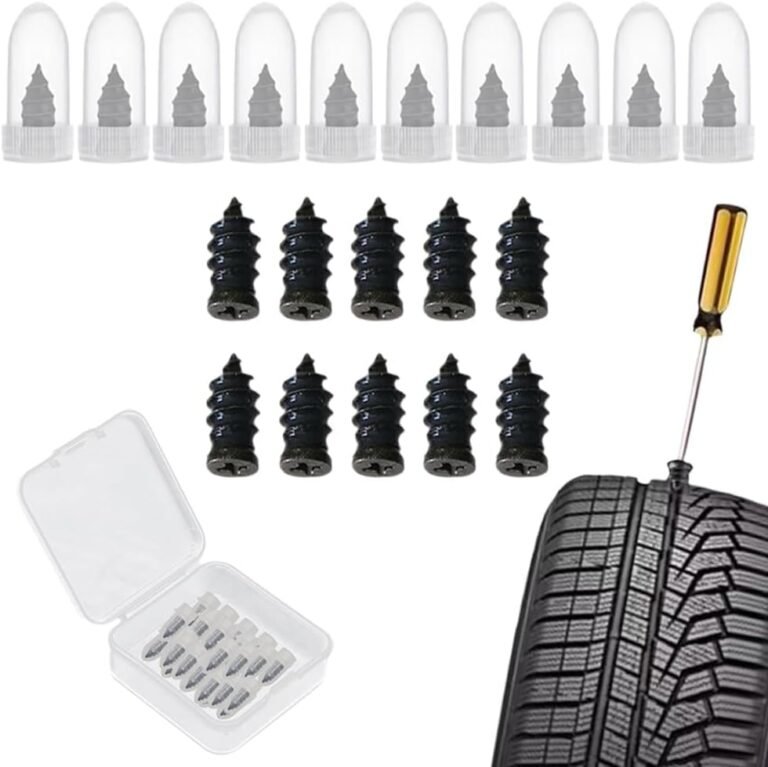
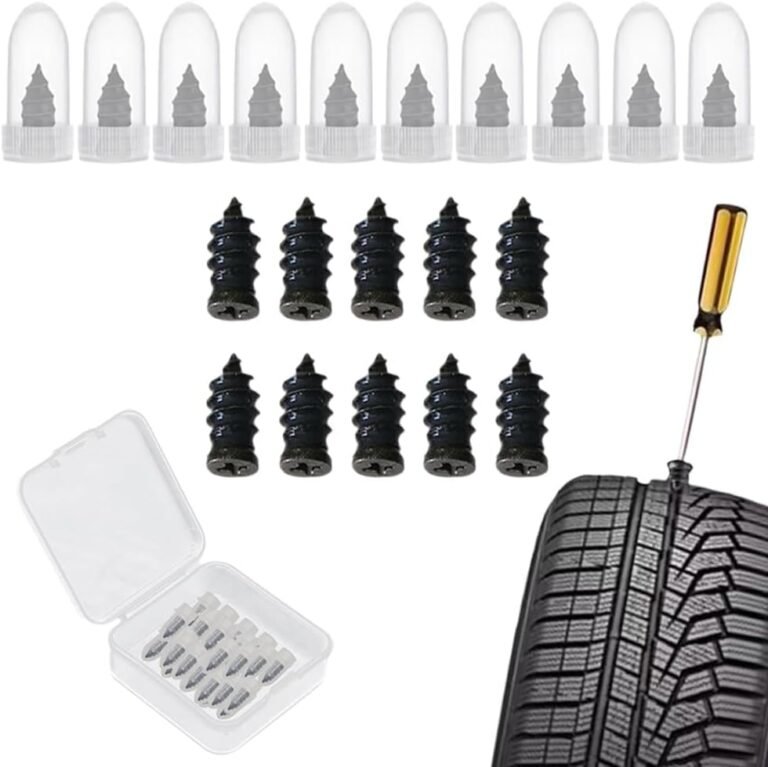
Tire repair plug kits (two similar spiral-plug kits are included in our product facts) are useful emergency items. They can allow you to re-seal many tubeless punctures without removing the tire. However, product facts for the plug kits stress that these are temporary repairs and that specifications (plug size, certified limits, speed/load suitability) are often not detailed—use them to get to safety, then have the repair professionally inspected.
Specialized tools worth investing in (and when to skip them)
After the essentials, invest in tools that increase safety and capability:
- Torque wrench – Buy one that is traceable to a calibration standard or includes a calibration certificate when possible. The SUERCUP 1/2″ digital torque wrench and the Ralvico 1/2″+3/8″ pair both cite calibration certificates and standards compliance in their product descriptions—features to prefer for accuracy-sensitive work.
- Tire tools – Tire irons for tube removal, a reliable inflator and a tubeless repair kit for adventure riders. Remember: plug kits can be a quick fix, not always a permanent solution.
- Chain tools – Master links and a chain breaker are essential if you plan to fix or adjust drive chains on the road.
- Multimeter – For electrical troubleshooting beyond fuses and bulb checks.
When to skip: Avoid buying large impact sockets or heavy air tools unless you regularly work on big bikes or have a permanent garage setup. For one-off roadside work, a lighter, well-organized kit and a good torque wrench deliver more practical value than heavy pneumatic tools.
Storage and organization: keep tools protected and accessible
Organization matters more than you expect—at the roadside a messy toolbox wastes time and increases frustration. Three storage approaches each have advantages:
- Tool roll or pouch – Lightweight and compact. The Mofun roll pouch and the Rugged Tools 32-pocket roll keep tools visible and strap down easily to luggage racks. Look for durable fabric (1680D Oxford is a solid option) and secure closures to stop tools from falling out.
- Blow-molded or hard cases – Protect tools in a garage or trunk and keep small pieces from rattling free. Many socket sets (like the Egofine 46-piece kit) use blow-molded cases for neat storage.
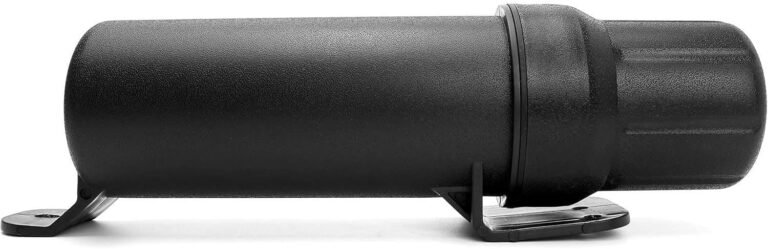
- Waterproof tube or canister – For items that must stay dry while mounted externally, a waterproof tool tube with an O-ring seal protects documents, tools and spares. The product facts describe a universal-fit waterproof tube designed for off-road durability and universal mounting.
Match storage to mounting points on your bike: MOLLE straps or D-rings on a roll pouch make for secure attachment; a hard case belongs under a seat or in a topbox; an external waterproof tube suits frames or crash-bar mounts but check dimensions and mounting bracket spacing to ensure compatibility.
Budget, value and long-term considerations
Beginner buyers often prioritize price, but false economy can cost more if a socket lets go under load or a torque wrench reads inaccurately. Practical rules:
- Prioritize quality for torque-critical and load-bearing tools (sockets, torque wrenches, ratchets).
- For low-use small tools, value kits (e.g., Egofine 46-piece 1/4″ set) offer good coverage; the Egofine set is specifically noted as a value-packed kit suited to light motorcycle maintenance and travel use, but remember its 1/4″ drive limits heavy-duty work.
- For roadside versatility, a mid-sized kit such as the Mofun 64-piece roll kit increases coverage while remaining portable.
- Check warranty and calibration documentation if you buy a torque wrench—products that reference ISO/ASME standards and provide calibration reports (as some digital wrenches in our product facts do) are preferable for critical fasteners.
Finally, maintain tools: keep sockets clean and dry, store torque wrenches at zero when not in use (follow manufacturer instructions), and replace damaged bits. See our Tools Maintenance Guide for Motorcycle Owners for step-by-step care tips.
Step-by-step plan to build your first motorcycle tool kit
- Decide the role — roadside-only, home-workshop, or both.
- Start with essentials — a compact socket/bit set, combination wrenches, pliers, screwdrivers and zip ties.
- Add a torque wrench — pick one that covers your bike’s highest torque spec; if in doubt, a 3/8″ or 1/2″ calibrated digital wrench is a safe choice.
- Choose your storage — tool roll for on-bike carry, hard case for garage, waterproof tube for external mounting.
- Include a tire plan — plug kit + pump or pump + roadside assistance plan if you won’t do permanent tire repairs.
- Practice at home — try removing/reinstalling a wheel or adjusting chain tension in your driveway so you’re familiar with tools and process before you need them roadside.
This process keeps purchases focused and cumulative—buy the smallest set that covers your immediate needs, then add high-quality torque tools and specialty items as you gain confidence.