riderinstinct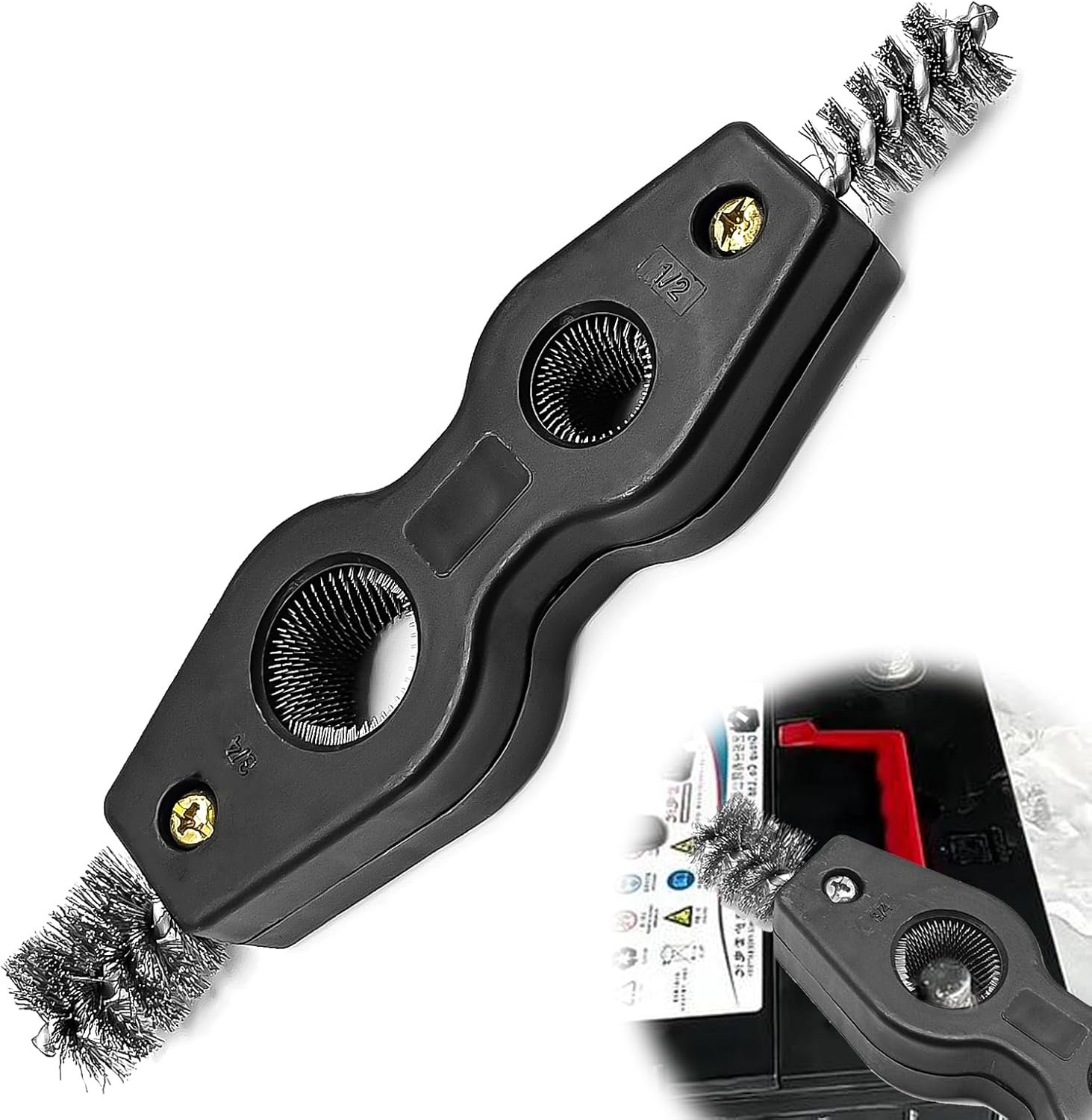
Why battery care choices matter (the decision framework)
Battery care is not one-size-fits-all. Decide first what you need the charger or maintainer to do: keep a battery topped during winter storage, recover a run‑down battery, provide fast recharges between long rides, or act as a roadside backup. Each goal demands different features and creates trade-offs.
- Storage/maintenance: A low‑current smart maintainer that switches to float mode and can be left connected is the safest choice for seasonal storage.
- Recovery/fast recharge: Higher current chargers (amps) shorten bulk charge time but produce more heat and need monitoring or temperature compensation.
- Roadside reliability: Portable jump starters or multi‑function packs add peace of mind, especially for remote riding.
- Hands‑on maintenance: Cleaning tools and terminal pullers prevent high resistance connections that kill starting performance.
Start by identifying your battery type and what you want the charger to do, then use that to filter features and power levels. We’ll cover the technical trade‑offs next and then show product examples for common rider profiles.
Know your battery chemistry and why it matters
Motorcycle batteries are typically 12V but use several chemistries: flooded (wet), sealed lead‑acid (SLA), AGM, gel, and increasingly LiFePO4 or other lithium variants. Each chemistry has different voltage, charging algorithm and safety requirements.
- If your battery is marked 12V and lists AGM/GEL/WET, a charger that specifically supports 12V lead‑acid types is appropriate.
- If the battery is LiFePO4 / Lithium, you must use a charger that explicitly supports that chemistry — using a lead‑acid program can damage lithium cells or create a safety risk.
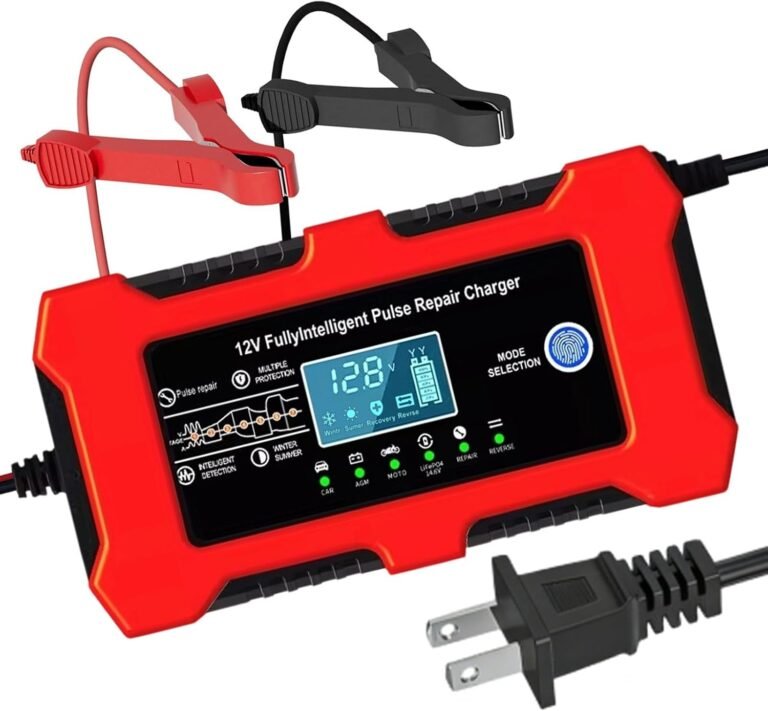
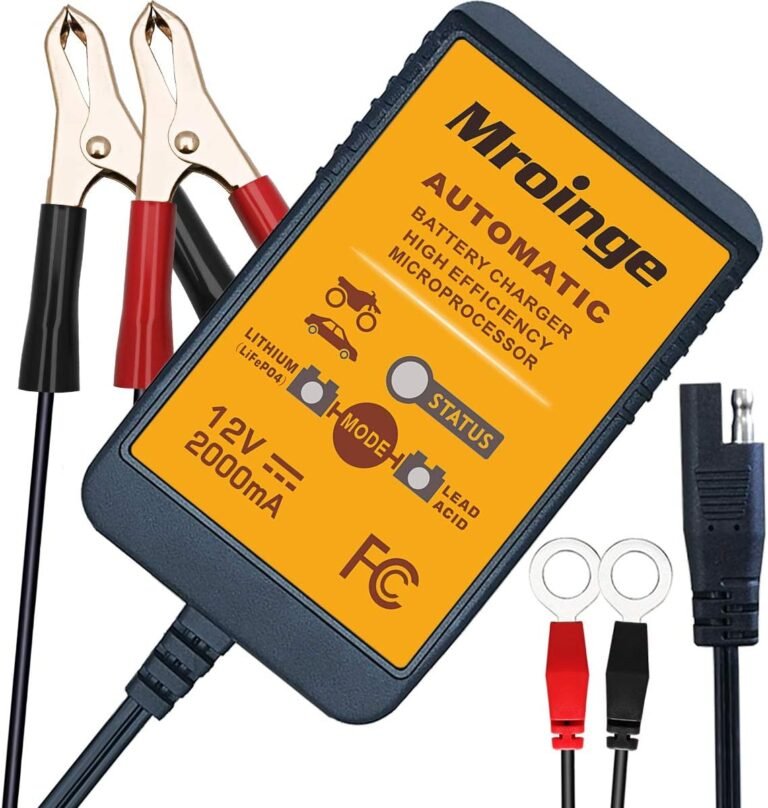
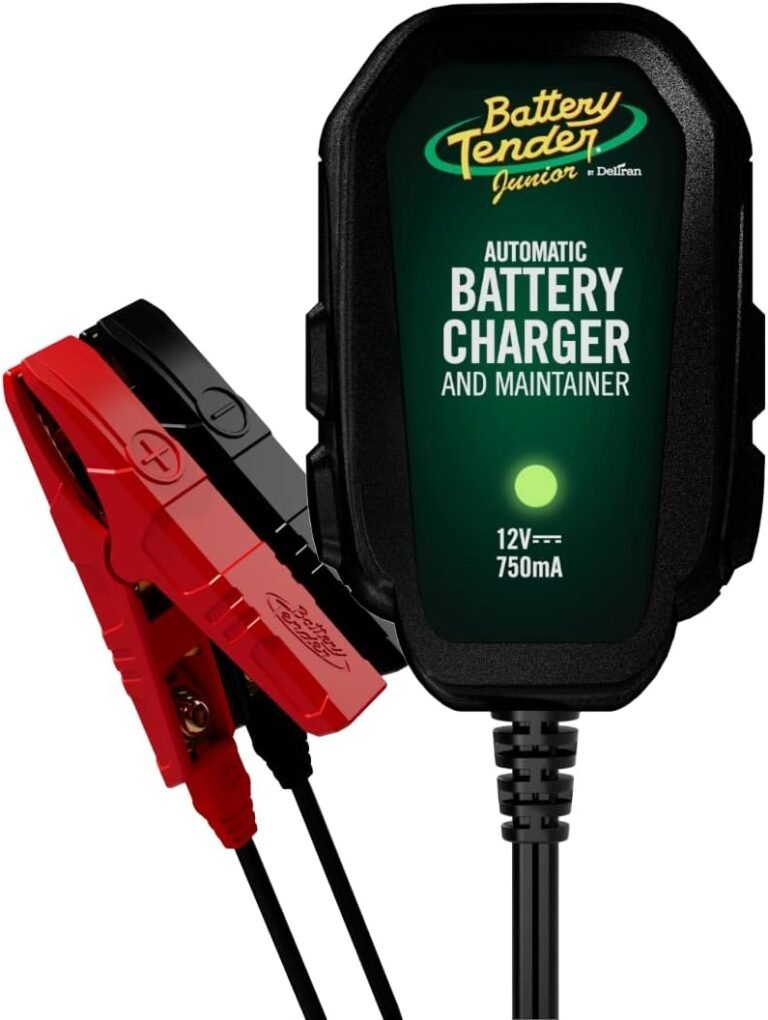
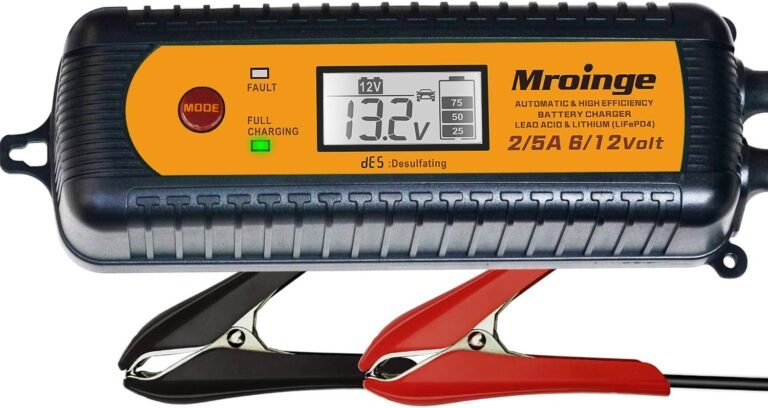
Some chargers in our product set are multi‑chemistry: for example the MBC022 2A and the listed 12V 10A charger state LiFePO4 compatibility. Others, like the Battery Tender Junior (750mA), are designed for 12V lead‑acid and are not lithium‑compatible per the manufacturer notes. Always read the charger’s supported chemistry list before use.
If you can’t find the battery chemistry marking on the battery itself, check the motorcycle owner’s manual or call the battery manufacturer before connecting an unfamiliar charger.
Charging current and the speed vs stress trade-off
Charging current (amps) determines how fast a charger returns a battery to full. Higher amps = faster bulk charging; lower amps = gentler, safer maintenance. That creates a key trade‑off:
- Low‑amp maintainers (0.5–2A): Best for long‑term storage and small motorcycle batteries. They keep batteries topped without overheating and can be left connected if the charger uses a float mode.
- Higher‑amp chargers (5–10A and up): Useful for rapid recharging of larger batteries or where you need a quick turnaround, but they require correct chemistry selection and often temperature compensation.
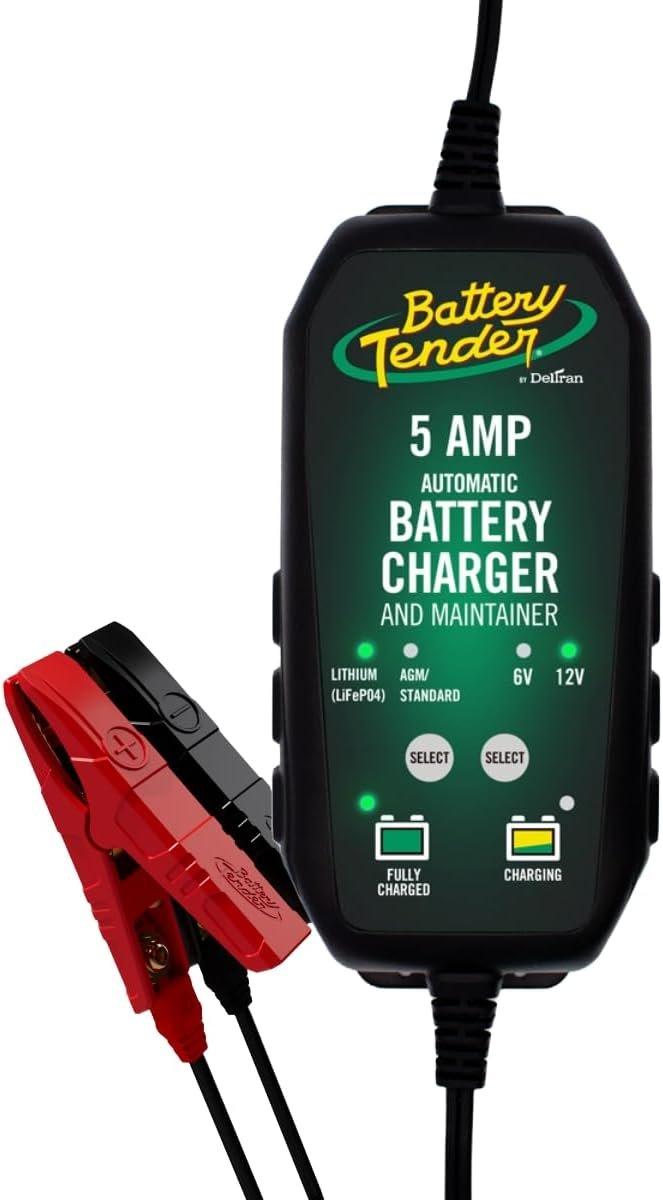
As a practical guide, the Battery Tender Junior is a purpose‑built 750mA maintainer for 3–30Ah motorcycle batteries, while the Battery Tender 5A is aimed at automotive use and larger batteries (and supports multiple chemistries per its listing).
Note: specific safe charge currents and voltages depend on the battery manufacturer and chemistry. Use any general ‘rule‑of‑thumb’ only as a starting point and verify the battery or motorcycle maker’s recommended charge current and maximum charging voltage before applying a higher‑amp charger.
Smart chargers, maintainers, trickle chargers and jump starters — pick the right tool
There are several device categories. Knowing the differences helps you buy the right one:
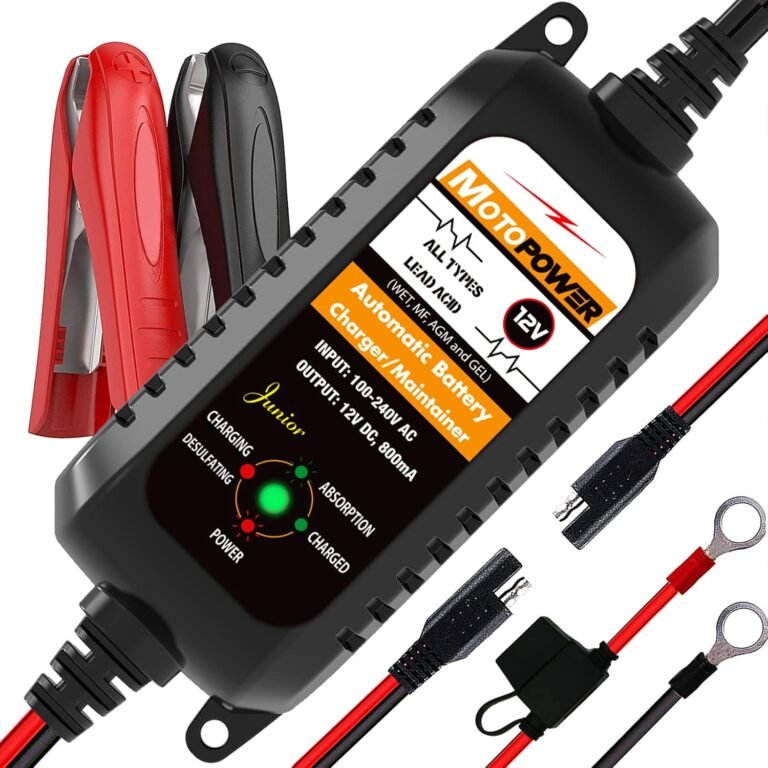
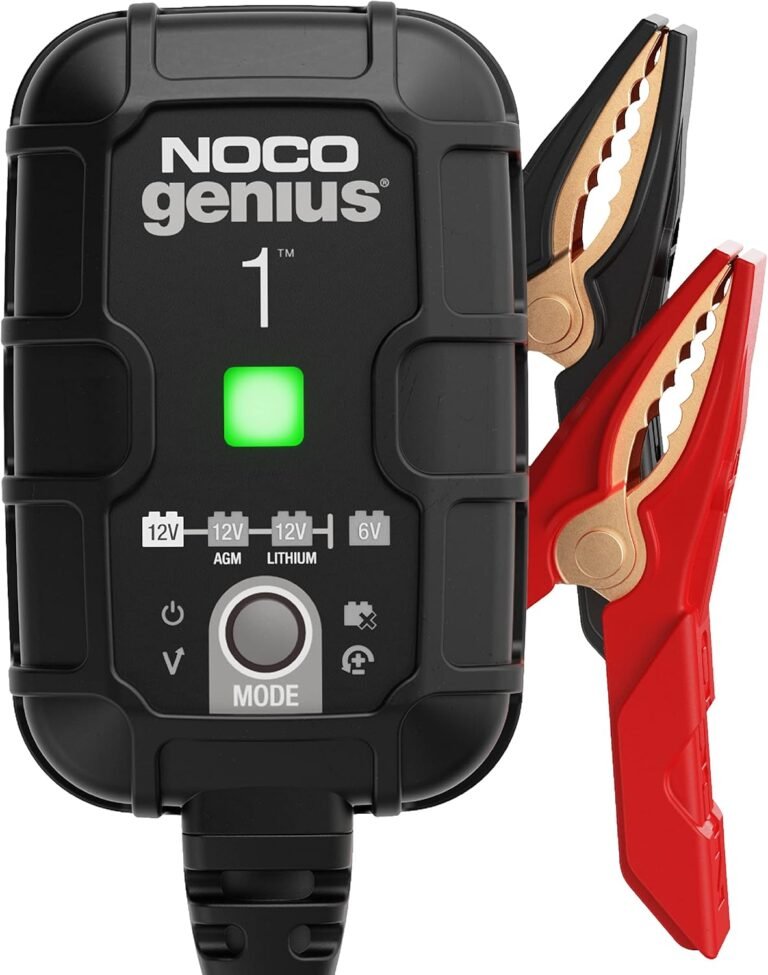
- Smart multi‑stage chargers / maintainers: These units run charge algorithms (bulk, absorption, float) and switch to maintenance mode when full. They are the best for storage. Examples: Battery Tender Junior (750mA) and MOTOPOWER MP00205A (800mA).
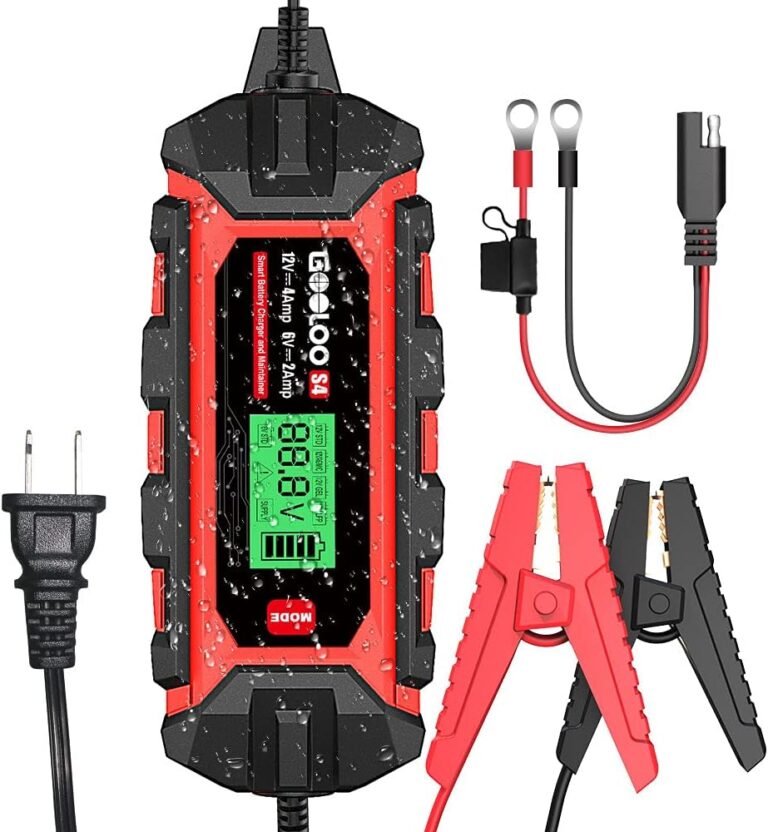
- Higher‑amp smart chargers: For faster recharging or larger batteries. The Battery Tender 5A and the 12V 10A chargers from our list fit this role; some support LiFePO4 and other chemistries — check the product page for supported chemistry and safety features.
- Trickle chargers: Older designs provide a constant low current and can overcharge if left connected. Prefer smart maintainers with float mode over simple trickle chargers for long‑term connection.
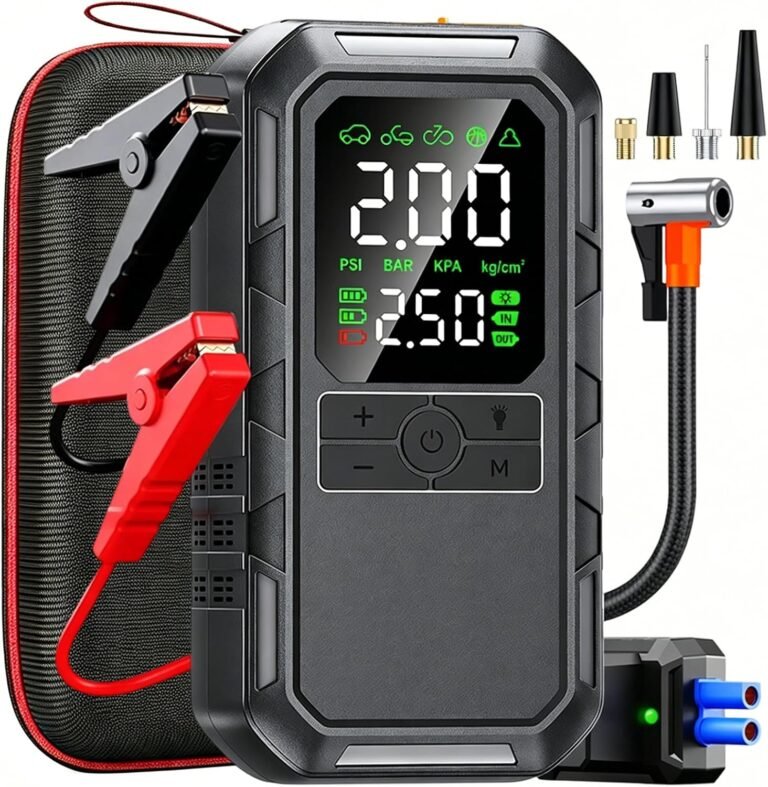
- Jump starters / multi‑function packs: Portable units that can provide starting current and sometimes include air compressors or USB outputs. They’re useful on tour; verify capacity and clamp quality before relying on them. See the listed 8000A portable jump starter with compressor — it combines starter, inflator and light but buyers should confirm battery capacity and warranty details.
For most riders the baseline combo is a small smart maintainer plus a portable jump starter (or roadside kit). If you manage multiple bikes or work on cars, add a higher‑amp multi‑chemistry charger.
Features that genuinely matter
Beyond amp rating and chemistry, these features materially affect safety and convenience:
- Multi‑stage charging & float mode: Prevents overcharging and is essential when leaving a charger connected for weeks. Battery Tender and MOTOPOWER units in our set provide these modes.
- Low‑voltage recovery / pulse desulfation: Useful for waking kits that have sat discharged for a while. The MOTOPOWER MP00205A includes pulse recovery down to 4V in the listing and timed desulfation.
- Reverse polarity, spark‑proof and short‑circuit protection: Safety features that reduce the chance of damage or fire during connection mistakes; present on many smart chargers in the supplied list.
- Temperature compensation: Adjusts charge voltage by ambient temperature to protect batteries in hot or cold climates. The 12V 10A charger listing mentions temperature compensation.
- Connector options and cable length: A fused ring terminal harness or SAE connector makes tidy, semi‑permanent installations easier; the Battery Tender Junior includes a fused ring terminal harness and clip cables.
- Display and diagnostics: LEDs or an LCD that show charge state and errors help diagnose bad batteries; some higher‑end units include clear readouts.
- Warranty and support: Longer manufacturer warranties and accessible customer service are worth paying for if you depend on the unit for long trips or frequent use (Battery Tender lists multi‑year warranties on some models).
Decide which features you need — a commuter storing their bike in a heated garage might prioritize a compact maintainer with float mode, while an adventure rider might need a robust jump starter and temperature compensation.
Fit, connectors and installation on motorcycles
Physical fit and connectors are practical, often overlooked issues. Consider:
- Battery access: Many modern motorcycles hide the battery under seats or luggage racks. Measure the space available and check cable lengths—some chargers include 12+ ft total reach.
- Terminal type: Top‑post, side‑post, and spade terminals require different clamp styles. A ring terminal harness lets you permanently attach a quick‑connect under the seat (Battery Tender supplies a fused ring harness with some models).
- Permanent SAE connector: A small SAE plug under the seat lets you connect and disconnect without removing panels; many Battery Tender and similar maintainers support this style via an accessory harness.
- Space and ventilation: Fast chargers generate heat and need space and airflow; avoid installing them inside sealed compartments while charging.
If you plan a semi‑permanent install, check that the charger includes appropriately fused rings or purchase a harness that matches your motorcycle’s battery posts. If in doubt, have a technician install a permanent quick‑connect with proper fusing.
Tools to keep battery connections healthy
Many starting failures stem from corroded terminals or loose clamps — inexpensive tools solve this. Useful items from our product set include:
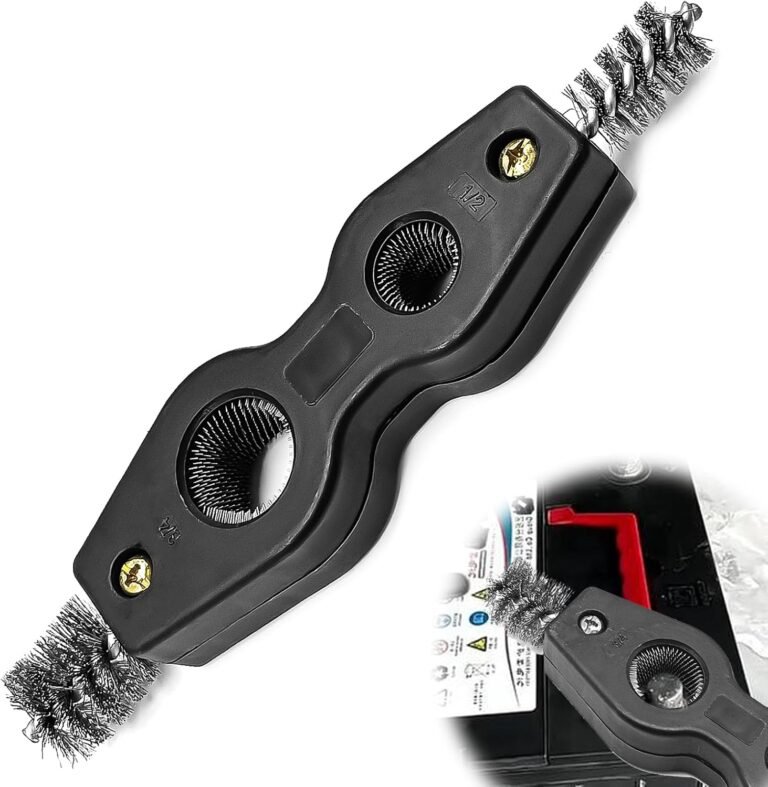
- 4‑in‑1 battery cleaning brush — gets into posts and clamp interiors to remove corrosion and acid residue.
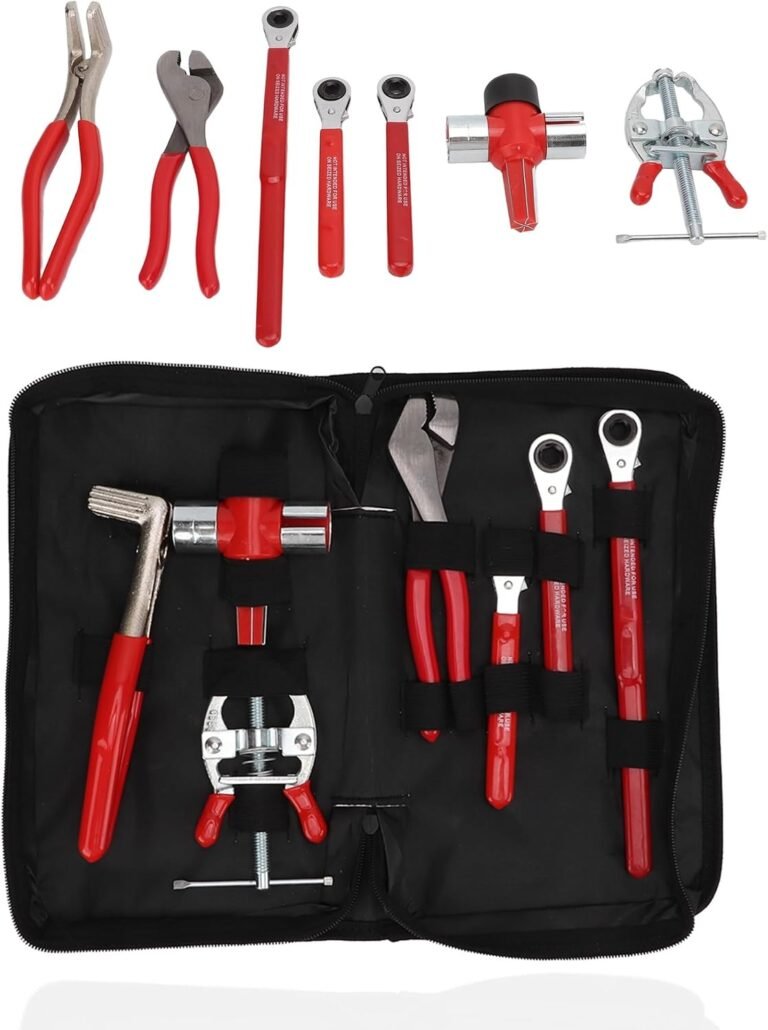
- Hapivida 7pc battery service kit — includes a terminal puller, pliers and double‑ended brush for safe removal and cleaning.
When cleaning: disconnect the negative terminal first, use protective gloves and eye protection, neutralize acid deposits with a baking soda solution (follow trusted repair guidance), and recheck torque on clamp fasteners. If a terminal is badly corroded, replacing the clamp or installing new ring terminals is often the safest fix.
Which battery care choices suit different rider profiles
Match solutions to how you ride.
- Commuter / daily rider: If you use the bike frequently, a small smart maintainer is good for occasional topping. The Battery Tender Junior (750mA) is designed for 3–30Ah motorcycle batteries and excels at keeping them at 100% for long storage, but it’s a slow bulk charger — fine if you rarely bring a battery fully depleted back to life.
- Weekend rider / seasonal storage: A maintainer with float mode plus terminal cleaning tools is the right combo. Consider the MOTOPOWER MP00205A (800mA) if you want budget pulse desulfation and low‑voltage recovery for difficult batteries, and add the Hapivida kit for terminal care.
- Tourer / multi‑bike household: You may need faster recovery and multi‑chemistry support. A 2–5A smart charger such as the MBC022 2A or the Battery Tender 5A (when you need to handle larger batteries) gives more flexibility. Verify lithium compatibility if you own LiFePO4 batteries.
- Adventure / remote travel: Add a portable jump starter and a compact compressor/light unit for roadside confidence. The listed 8000A jump starter with compressor offers many functions but verify battery capacity, clamp quality and warranty before relying on it far from help.
Each recommendation includes limitations: small maintainers are slow at bulk charging; higher‑amp chargers need correct chemistry and ventilation; multi‑function portable packs often omit full technical specs — confirm before long trips.
Buying, safety and verification checklist
Before you buy or connect a charger, verify these items:
- Charger supports your battery chemistry (lead‑acid vs LiFePO4/lithium).
- Charger’s maximum charging voltage and recommended current match the battery maker’s limits — consult the battery or motorcycle manual.
- Included connectors match your battery posts, or you can add a fused harness/SAE connector for a clean install.
- Required safety protections are present: reverse polarity detection, spark‑proof connection, and short‑circuit protection.
- For portable jump starters: confirm rated peak current, clamp quality and that runtime/charge capacity is documented.
- Check warranty length and manufacturer support, especially if you rely on the charger for travel.
When charging, work in a ventilated area, wear eye protection and gloves when handling battery acid or corrosion, and disconnect the negative terminal first when removing the battery. If you’re unsure about any specification, consult the battery manufacturer or a professional mechanic.