riderinstinct
Why choosing the right charging solution starts with your riding profile
Before you look at products, be precise about how you ride. Short urban hops, long-day touring, dual-sport riding in wet conditions and winter storage all create different requirements. Your riding profile determines the two core questions: how much power you need while riding, and how durable/weatherproof the solution must be.
Example trade-offs:
- Commuter: you probably need a single reliable USB port for a phone and possibly a GPS. A compact handlebar unit is quick to install and unobtrusive.
- Touring/riding with passengers: you may need multiple simultaneous ports and higher sustained charging capacity — a hard‑mounted multi‑port outlet or several wired ports is more practical.
- Adventure/off‑road: physical robustness and secure mounting matter most; smaller exposed units or loose cables are liability risks.
- Storage/winter: an onboard smart maintainer (float charger) preserves battery health while the bike sits — this is a separate category from on‑bike USB chargers.
Setting your priorities early — power, weatherproofing, mounting location and long‑term battery health — will make the product selection stage a lot more practical.
Understand your devices and real power needs
Inventory every device you want to charge on the bike: phone, GPS, action camera, heated gloves, Bluetooth comms, power bank, tablet. For each, note its typical charging draw or charging standard (e.g., a modern phone may accept USB‑C Power Delivery at 18–30W; heated gloves often need a dedicated 12V accessory supply or a high‑current USB adapter).
Why this matters: the charger must supply enough power at the right voltage/protocol. Two common contradictions crop up:
- Many low‑cost multi‑port outlets list PD and QC support but don’t document per‑port output when multiple ports are used. If you rely on fast charging for several devices simultaneously, confirm simultaneous output capability with the vendor.
- High-draw accessories (heated clothing, large tablets) can exceed the capacity of handlebar USB chargers. In those cases use a dedicated 12V socket or an onboard hard‑wired solution with proper fusing and wiring.
Practical step: make a conservative estimate of continuous current you’ll draw on a trip, and ensure the chosen solution — and the bike’s charging system — can sustain that without overtaxing the battery or alternator. When exact electrical values matter for safety-critical choices, verify them against manufacturer documentation or a qualified installer rather than guessing.
Charging technologies: USB‑C PD, Quick Charge and 12V outlets — what they actually mean
Not all fast charging is equal. Two technologies you’ll see most frequently are USB‑C Power Delivery (PD) and Qualcomm Quick Charge (QC). Here’s how to think about each:
- USB‑C Power Delivery (PD) — a modern standard that negotiates higher voltages for faster charging and is widely supported by new phones and accessories. If you want the fastest, most future‑proof plug for phones and USB‑C devices, PD is the better choice.
- Quick Charge (QC) — common on USB‑A ports and older Android phones; it’s still useful but less universal than PD for new phones.
- 12V sockets / hard‑wired outputs — necessary when you need continuous high current for accessories like heated gear, dedicated pumps or larger USB inverters.
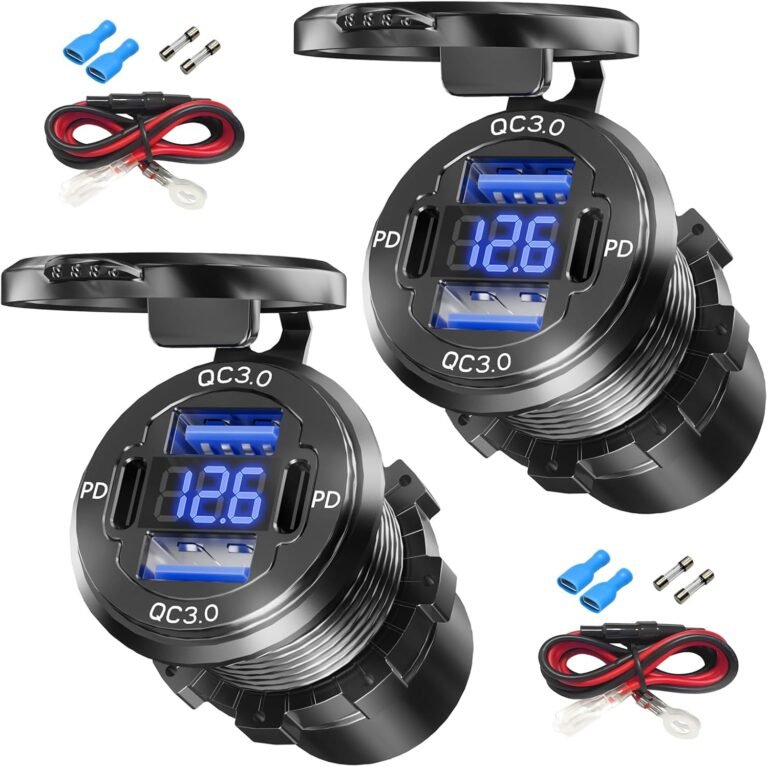
Example product facts from our reviews help illustrate the choices: the EXTRACTME Ultra‑Narrow charger gives a compact combination (USB‑C 30W PD and USB‑A 18W QC3.0) and ships with a 10A fused SAE cable — practical for riders who want PD speed in a tiny package. Hard-mounted multi‑port sockets such as the VANONE model offer several PD and QC ports at a low price, but listings sometimes omit simultaneous-per‑port output figures, so confirm before relying on them for multiple high‑draw devices.
Fitment and mounting: handlebars, fairings and compact spaces
Fit matters on a motorcycle. Unlike cars, handlebars and fairings have limited space and vibration; the charger must fit securely and not interfere with controls or cables.
Key fitment considerations:
- Handlebar diameter — some compact units are designed for narrow bars. For instance, the EXTRACTME unit is described as an ultra‑narrow design and recommends handlebar diameters of 0.75–0.87 in (1.9–2.2 cm). Measure your bar before buying.
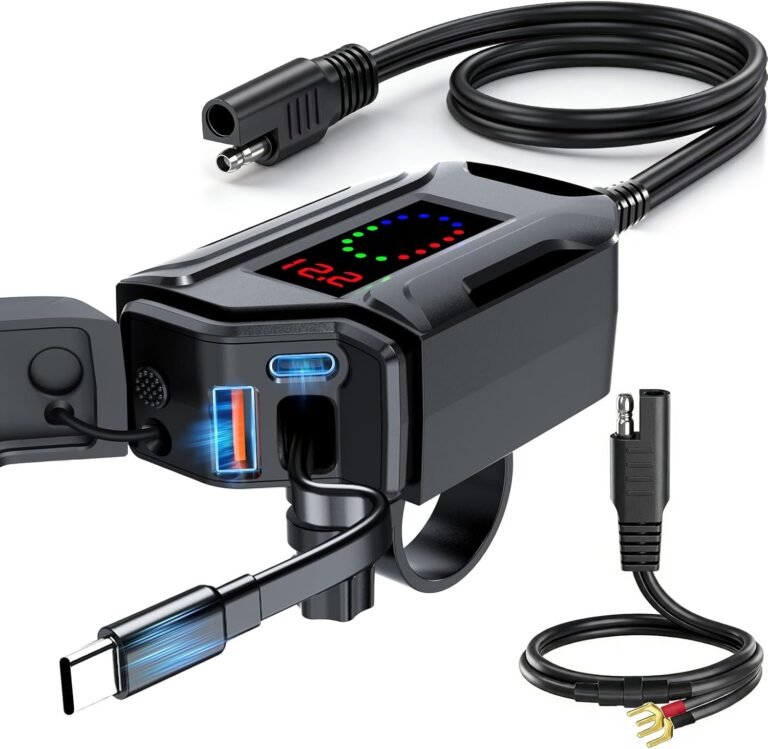
- Mounting options — handlebar clamp, mirror mount or fairing cut‑in? The Motorcycle USB Charger 3‑in‑1 includes both handlebar and mirror mounts and an extension cable to help fit in different layouts.
- Cable routing and strain relief — cables should be routed away from moving parts and hot surfaces, and use cable ties or protective loom. Avoid tight bends and keep connectors accessible but protected from road spray.
If the product requires a hole or panel mounting, check installation instructions and consider professional installation if you’re unsure. Hard‑mounted sockets generally provide cleaner installations but can require more time and wiring skill.
Weatherproofing, durability and real-world claims
Weather exposure is the most common cause of failure on motorcycle charging gear. Pay attention to verified ingress protection (IP) ratings and the difference between “water‑resistant” and a certified IP rating.
What to watch for:
- IP ratings — an IP56 rating (as listed for the Motorcycle USB Charger 3‑in‑1) means protection against dust and strong water jets, which is suitable for rain and splashes but not prolonged submersion.
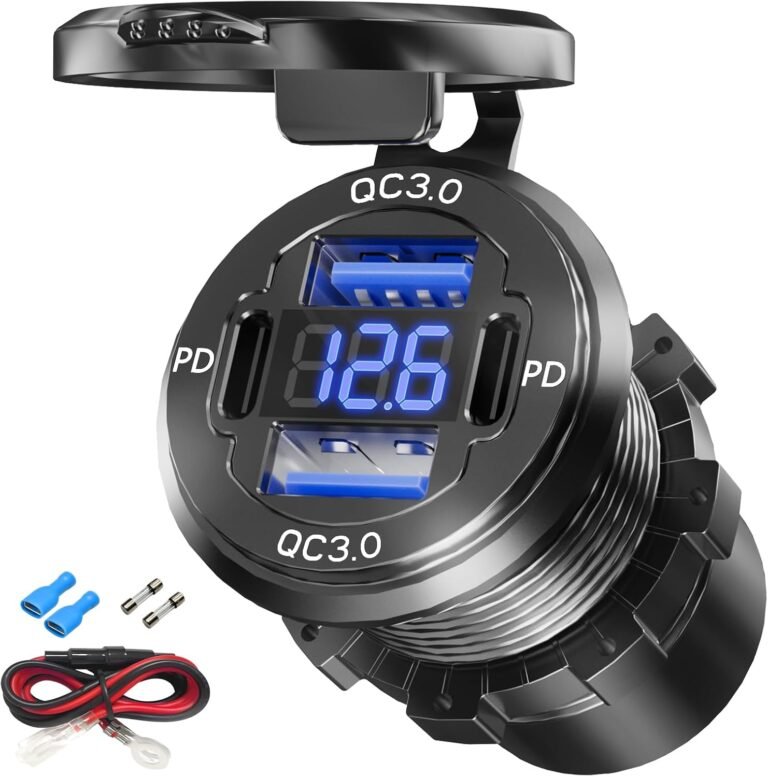
- Protective caps and seals — many hard‑mounted sockets include rubber caps. The VANONE unit uses a metal shell and a protective cap; the listing notes the cap offers waterproofing but does not provide a formal IP rating.
- Manufacturer guidance — some compact units are listed as water‑resistant but include a disclaimer to avoid heavy rain. If you routinely ride in stormy conditions, favour devices with a clear IP rating and robust sealing.
When a product listing lacks a formal IP rating, treat weatherproof claims conservatively and consider additional protection such as an ignition‑switched or waterproof inline switch or placing the unit in a protected fairing pocket.
Electrical safety: wiring, fuses, switches and parasitic draw
Electrical safety on motorcycles is non‑negotiable. Improper wiring or missing fuses can damage electronics, drain the battery or create fire risk. Follow these best practices:
- Use fused harnesses — products like the EXTRACTME charger include a 10A fused SAE cable; the Battery Tender maintainer includes a fused ring terminal and quick disconnect harness. Fuses protect wiring and devices against short circuits.
- Prefer ignition‑switched power or an on/off switch — independent on/off switches (the Motorcycle USB Charger 3‑in‑1 has one) prevent parasitic drain when the bike is parked. Some hard‑mount sockets may draw a small standby current (the VANONE unit lists up to ~30mA when the vehicle is off); if storage periods are long, that adds up.
- Respect wire gauge and routing — match wire gauge to expected current and keep wiring away from heat and moving parts. For safety‑critical values like minimum wire gauge and fuse sizing, verify the charger and motorcycle manufacturer documentation or consult a certified mechanic.
- Thermal and short‑circuit protection — many chargers list overload, overcurrent and short‑circuit protections. Still, only use equipment that states these protections and consider installing a switched relay or isolator for heavy‑draw setups.
When in doubt, have a professional electrician or motorcycle shop install higher‑capacity or hard‑wired systems.
Onboard maintenance charging vs on‑bike charging: different tools for different needs
Separate two functions: maintaining a battery while the bike is stored, and charging devices while riding. Each needs a purpose‑built tool.
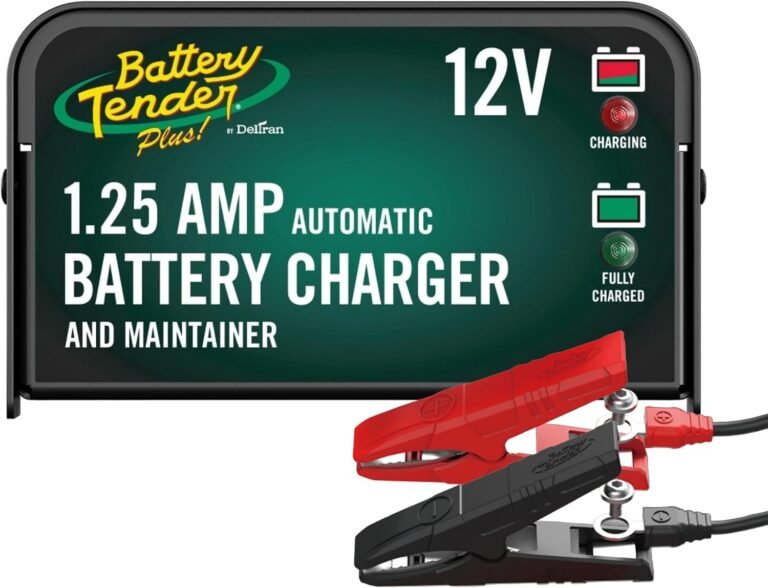
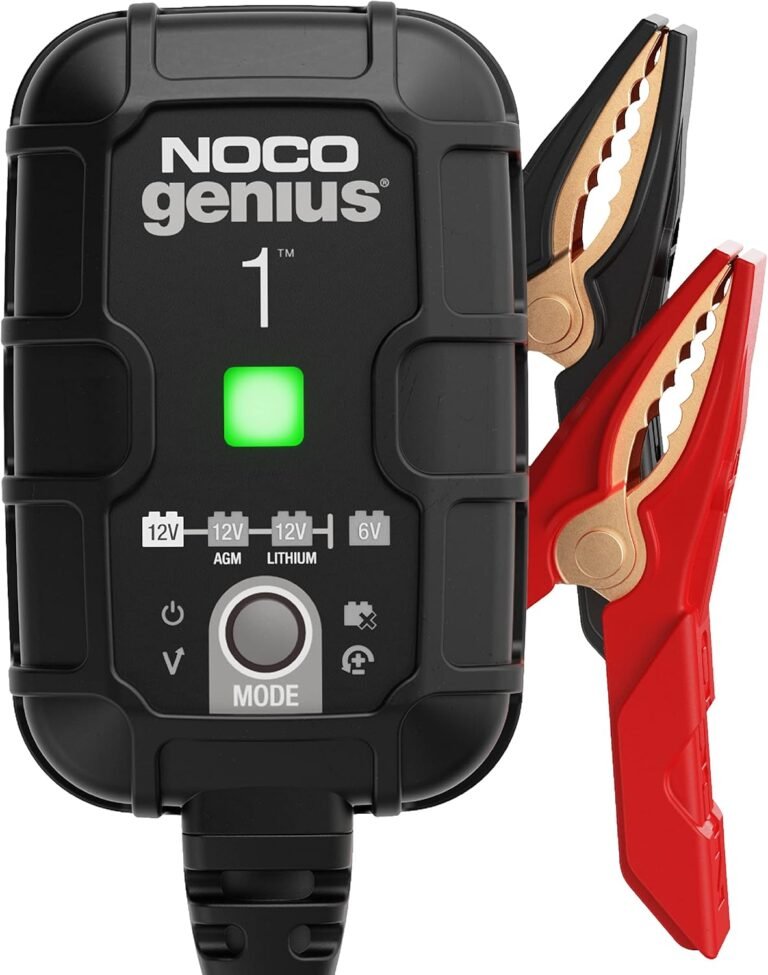
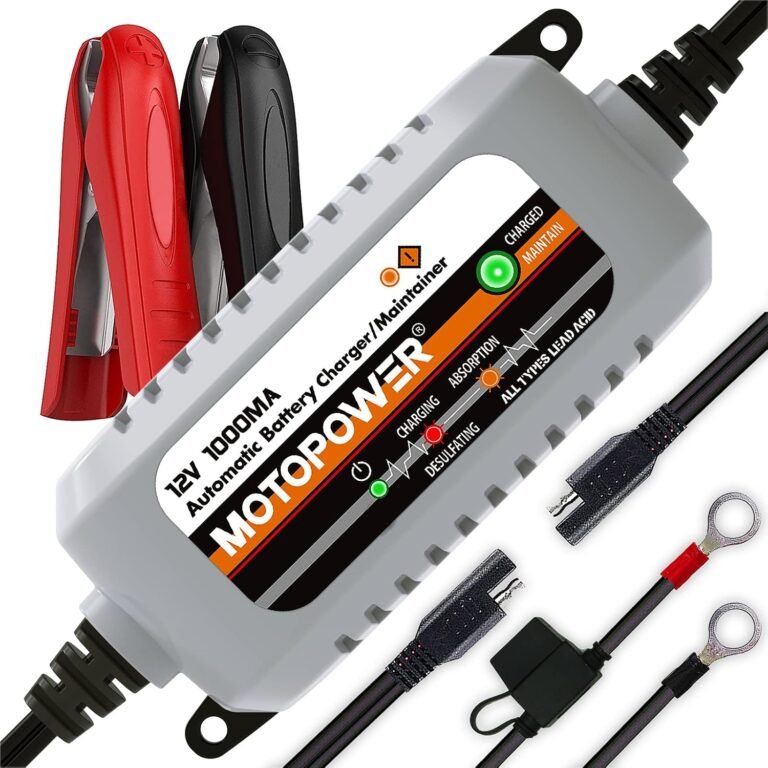
- Battery maintainers/float chargers (example: Battery Tender Plus 12V 1.25A) are designed for long‑term battery care. They use multi‑stage charging to top off and maintain charge without overcharging — ideal for winter storage or bikes that sit for long periods.
- On‑bike USB or multi‑port chargers (examples: EXTRACTME, Motorcycle USB Charger 3‑in‑1, VANONE) are designed to supply power on the move and provide accessible charging for devices. They are not substitutes for a maintenance charger when the bike is stored long‑term.
Practical approach: carry or permanently mount an on‑bike USB solution for trips, and use a Battery Tender or similar smart maintainer during storage. Many riders will find they need both: a smart maintainer in the garage and a weather‑resistant USB port on the bike.
Which solution suits which rider: matching products to use cases
Use these profiles to narrow choices. Below I draw directly on the product information available in our reviews and product facts.
- Daily commuter who wants simplicity: A neat handlebar unit such as the Motorcycle USB Charger 3‑in‑1 provides USB‑A, USB‑C and a built‑in retractable Type‑C cable, an LED voltmeter and an independent on/off switch. It’s IP56 rated and includes mounting options, making it a practical, low‑cost choice for phones and GPS. Verify per‑port current if you rely on fast charging.
- Compact-bar riders or ultra‑neat installs: The EXTRACTME Ultra‑Narrow charger is designed for narrow handlebars and delivers USB‑C PD (30W) and USB‑A QC3.0 (18W) with a 10A fused SAE lead. It’s well suited to riders who need PD speed in a tiny footprint; check handlebar diameter compatibility first and avoid heavy rain per manufacturer guidance.
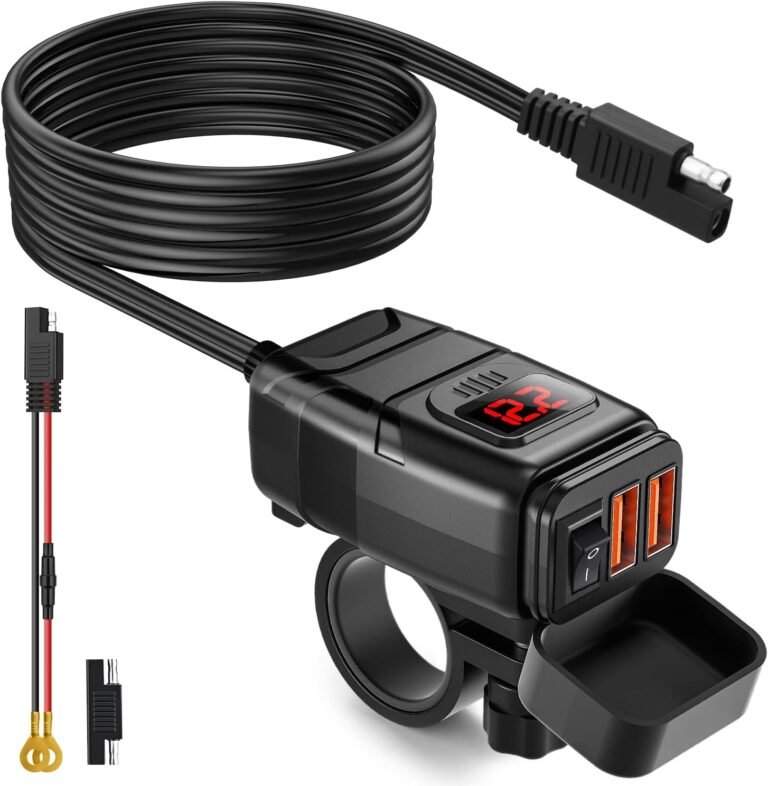
- Touring or multi‑device riders: The VANONE Dual PD & QC3.0 hard‑mounted socket offers four fast‑charge ports (2 PD + 2 QC3.0), a metal shell and an LED battery voltage readout. It’s a budget‑friendly way to give multiple charging points but confirm simultaneous output specifications and plan for its small standby draw if you leave devices connected.
- Storage and long‑term battery health: Use a smart maintainer like the Battery Tender Plus 12V 1.25A. It provides a 4‑step charging program, a quick‑disconnect harness, fused ring terminals and is intended for maintaining 12V batteries over long idle periods — not for on‑the‑road device charging.
Each of these solutions has strengths and limitations. The compact units balance convenience and space savings; hard‑mounted multi‑ports add capacity but sometimes omit simultaneous‑load specs; maintainers protect battery health off the bike. Choose the combination that matches both your riding and storage routine.
Installation and practical checklist before you buy
Before you buy or install, run through this practical pre‑installation checklist to avoid common pitfalls and costly rework:
- Measure handlebar diameter and mounting clearance; verify compatibility (e.g., EXTRACTME recommends 0.75–0.87 in).
- List devices and confirm each device’s charging protocol (PD, QC, or plain 5V USB) and approximate power draw.
- Confirm whether the product lists simultaneous per‑port output; if not, contact the vendor or plan conservatively.
- Check for included harnesses, fuses and any stated standby draw (VANONE lists up to ~30mA when switched off).
- Decide power source: ignition‑switched feed, dedicated fused circuit, or always‑hot battery with a dedicated on/off switch.
- Verify the product’s weatherproofing claims and any formal IP rating where relevant (Motorcycle USB Charger 3‑in‑1 lists IP56).
- For storage, plan a smart maintainer like the Battery Tender rather than relying on on‑bike USB chargers for long‑term battery health.
- If you’re not comfortable with electrical work, budget for a professional installer who can size wires and fuses correctly and add a switched relay if needed.