riderinstinct
Why picking the right glove matters — a quick decision framework
Gloves are small, but when things go wrong your hands are the first point of contact. The right glove must protect against abrasion and impact while letting you operate controls accurately. Start by answering three questions: 1) Where and how fast do you ride? (commute, canyon, highway, track, trail), 2) When do you ride? (hot summer, wet seasons, cold winters), and 3) What’s your budget and tolerance for trade-offs between protection and comfort?
Use those answers to prioritise: for high-speed or off-road riding, protection and certified armor should be primary; for urban commuting, dexterity, touchscreen access and breathability may be more important. No single glove is perfect. Your goal is a reasoned trade-off that matches your most common rides.
Glove types and basic anatomy — what to look for
Familiarity with glove types and construction helps you compare models.
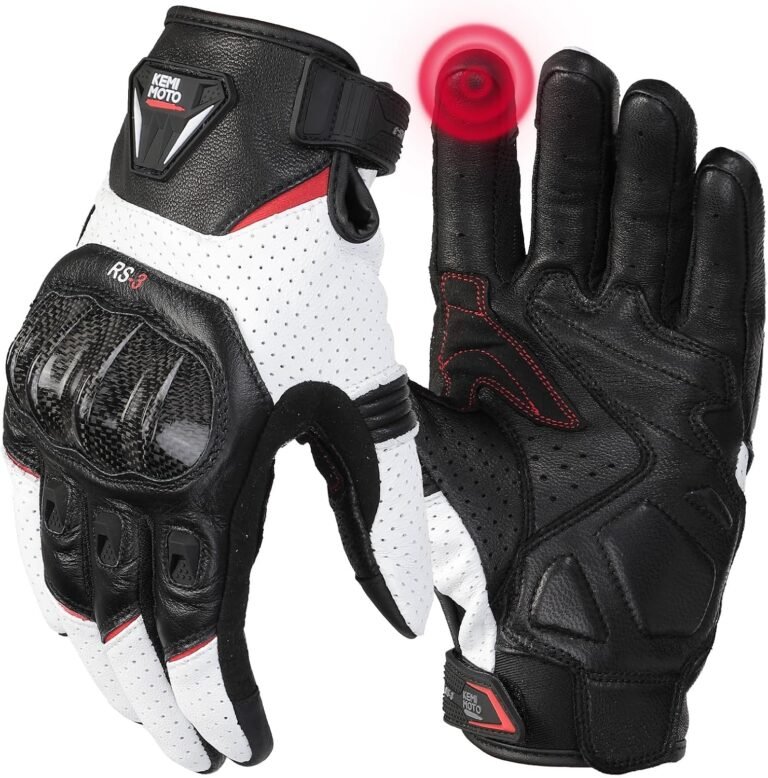
- Full-finger street/sport gloves — usually leather or mixed materials with hard knuckle armor; aimed at abrasion and impact protection.
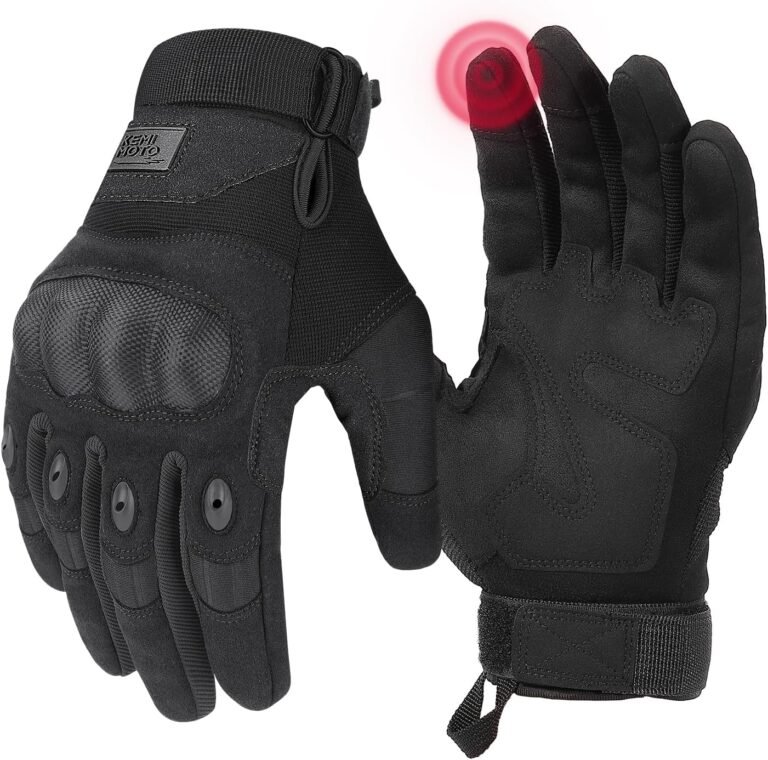
- Textile/tactical gloves — lightweight, breathable, often with synthetic palms and padding; good for commuting and light off-road work.
- Gauntlet gloves — longer cuffs that tuck under or over jacket sleeves for better weather sealing; common on touring and adventure gloves.
- Short-cuff/cruiser gloves — shorter and easier to remove, common for cruisers and casual urban riders.
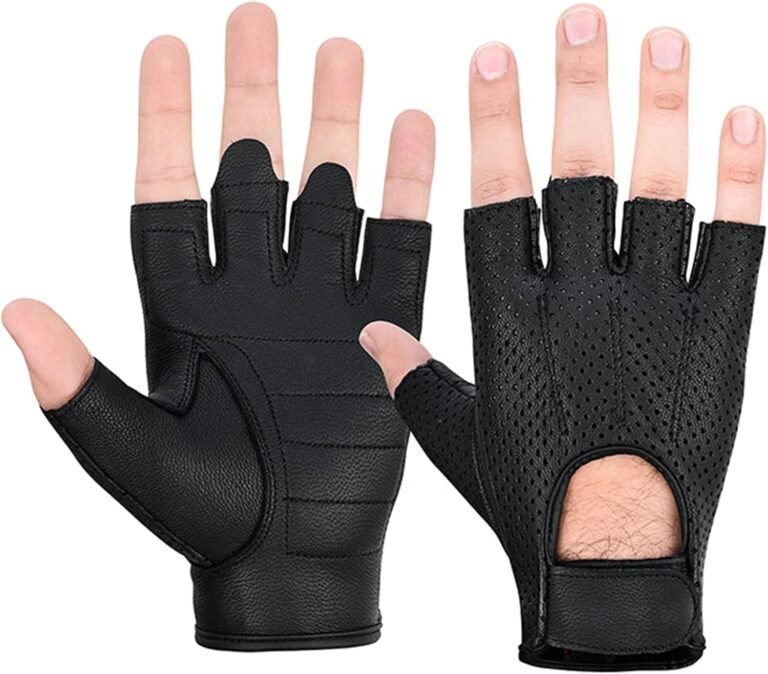
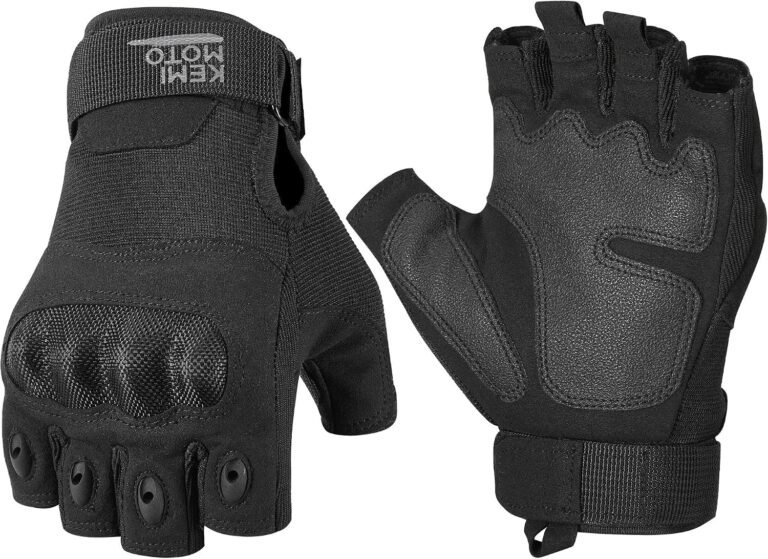
- Fingerless gloves — maximize ventilation and style but offer negligible crash protection; suitable only for low-risk use or style choices.
Key construction elements to read in descriptions: palm material and reinforcements, knuckle protection (hard shell, EVA, or soft padding), finger protection, stretch panels for fit, ventilation ports, and closure type (Velcro, strap, cuff). Each of these affects protection, feel and durability.
Protection standards and what to verify before you buy
When protection is important, look for documented standards. In Europe, CE certification to EN 13594 indicates gloves have been lab-tested for abrasion, cut and impact resistance. Other regions may use equivalent standards. If you plan on high-speed road, track days or aggressive off-road riding, a CE-rated glove is the safer choice.
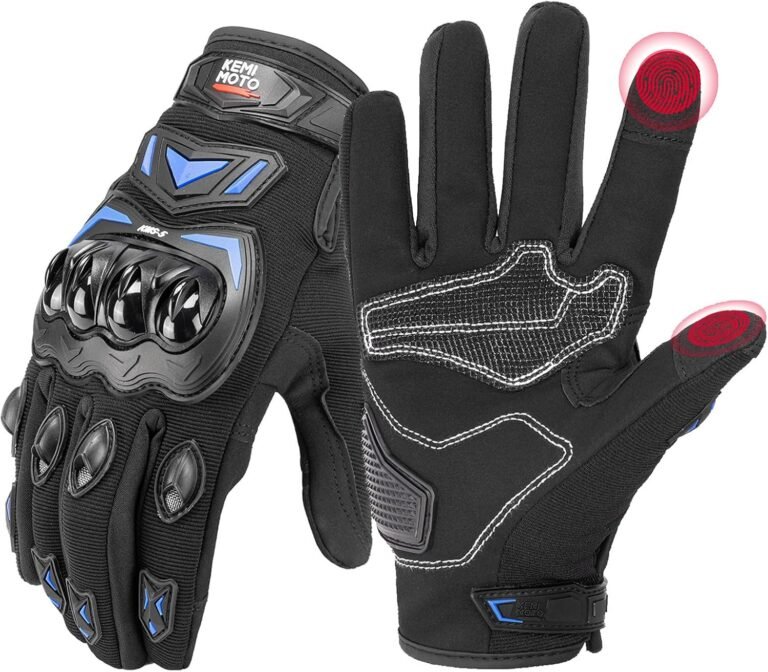
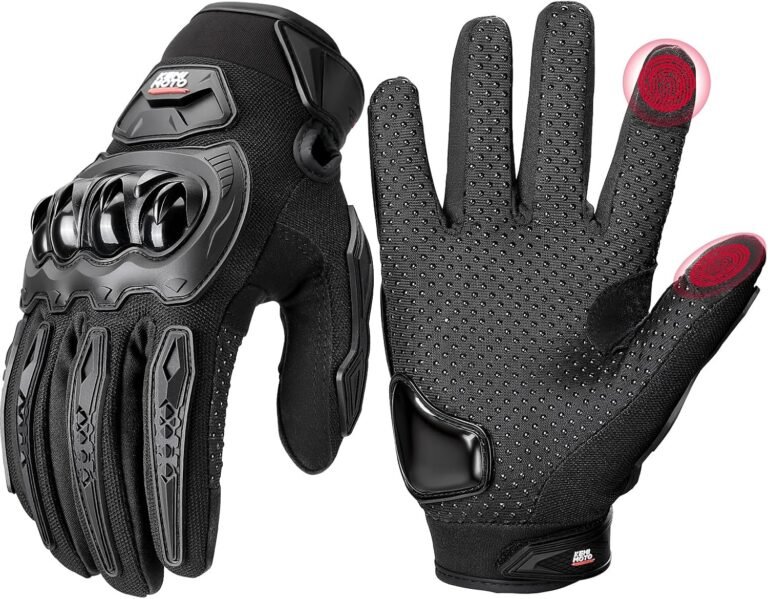
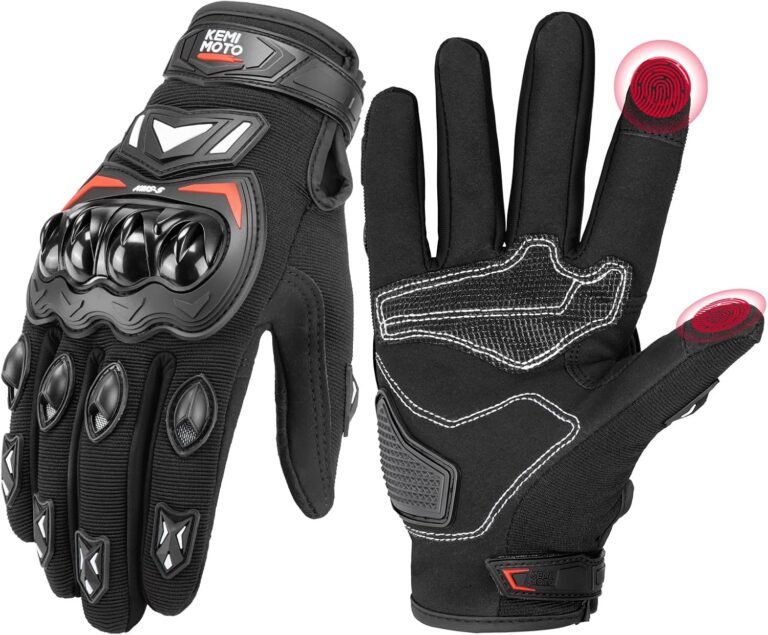
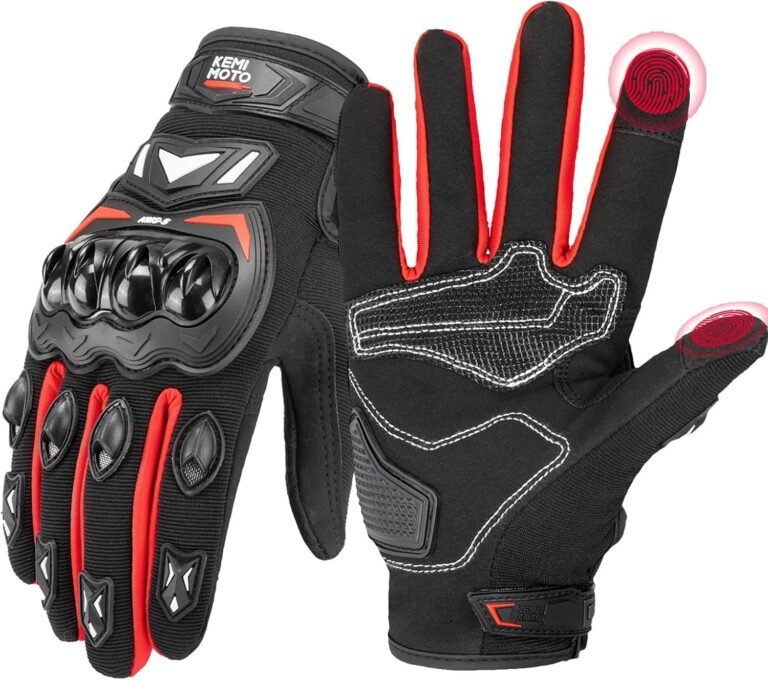
Many budget gloves make protection claims (“knuckle shells,” “reinforced palms”) without published lab test results. For example, several KEMIMOTO listings in our product set advertise abrasion-resistant palms, PVC/Palm padding and hard-shell or reinforced knuckles, but the supplied product facts do not show CE certification. That’s useful information for casual riders, but not a substitute for tested armor when you ride at speed. Always verify certification or lab-test documentation with the seller or manufacturer before relying on a glove for high-risk riding.
Fit, sizing and control — the most safety-critical considerations
Fit is as important as the glove’s protective features. Gloves that are too large bunch and reduce lever feel; gloves that are too tight restrict circulation and cause fatigue. Measure your dominant hand’s palm circumference across the widest part (excluding thumb) and compare to the manufacturer’s size chart. If a size chart isn’t provided, request measurements or be prepared to return.
- Look for pre-curved fingers or stretch panels — these reduce fatigue and improve grip.
- Check finger width and length independently if you have long or wide digits; return policies matter.
- Try the glove on with your typical gear setup (heated grips, handlebar guards, bar-end mirrors) to ensure no binding or interference.
If possible, test how the glove feels on the bike: can you feel levers, switches and the throttle with small corrections? That feedback often determines whether a glove is safe to ride in.
Seasonality and weatherproofing — matching gloves to conditions
Riding temperature and weather drive material choices and features.
- Summer/vented gloves — lightweight leather or textile with perforation and mesh panels for airflow; maximum dexterity but poor cold-weather protection.
- All-season gloves — moderate insulation with water-resistant membranes (Gore-Tex-style) or treated leather; balanced for milder weather.
- Winter and cold-weather gloves — insulated, often with removable liners or thicker insulation; can reduce control feel, so choose flexible designs for active riding.
- Waterproofing — important for touring and commuting; waterproof membranes help but add bulk. Decide whether breathability or total waterproofing is more important for your rides.
Product listings sometimes label variants as “fleece-lined” or “water-resistant” (see KEMIMOTO Tactical variants), but specifics (membrane type, insulation R-value) are not always provided — verify the exact variant’s weatherproofing claims from the seller before making a decision.
Features that matter — touchscreen, knuckle shells, palm reinforcements and trade-offs
Modern gloves come with many convenience features. Consider how important each is to you and what you’ll sacrifice to get it.
- Touchscreen fingertips — useful for phone/GPS without removing gloves. Many KEMIMOTO variants offer two- or three-finger touchscreen pads (thumb/index or thumb/index/middle). This is convenient for commuters, but confirm which fingers are covered on the specific variant.
- Knuckle protection — hard shells offer strong impact deflection but can reduce flexibility; soft armor is more flexible but may offer lower impact resistance. Budget gloves often have PVC or molded shells; verify construction if you need certified protection.
- Palm reinforcement — anti-slip, gel padding or double-layer synthetic leather reduce abrasion and increase comfort. Several KEMIMOTO models advertise reinforced, anti-slip palms and gel padding for grip and comfort.
- Closure and cuff style — gauntlet cuffs seal better with jacket sleeves; short cuffs are easier to use. Make sure closures are secure and won’t roll open in a crash.
Every added feature (waterproofing, hard knuckles, thicker insulation) increases bulk and can reduce feel. Choose based on which compromise you can tolerate for your typical rides.
Matching gloves to riding styles — practical recommendations
Below are practical pairings of glove types to rider profiles. These are starting points; always prioritise fit and, for high-speed riding, certified protection.
- Urban commuter/errands — breathable textile gloves with reinforced palms, touchscreen capability and a snug fit. Budget options like KEMIMOTO touchscreen/glove variants offer good value for casual commuting, but check size and materials for the exact model you choose.
- Touring and sport-touring — gauntlet or mid-cuff gloves with weather resistance and reinforced knuckles; comfort for long hours is key. Prioritise good palm padding and a reliable wind/water barrier.
- Sport/track riding — leather or mixed leather gloves with certified armor and good wrist retention. Don’t rely on budget models without lab-tested ratings for track or high-speed rides.
- Adventure/dual-sport — durable textile or leather hybrids with knuckle protection, good grip for off-bike tasks and gauntlet compatibility with your jacket. Look for reinforced palms and breathability for hotter off-road days.
- Off-road/motocross — lightweight tactical or textile gloves focused on grip, throttle control and venting; hard knuckles may be minimal on race gloves but some enduro gloves add knuckle protection and reinforced palms.
- Cruiser/café style — short-cuff leather gloves or fingerless options for style and comfort at low speeds; remember fingerless gloves provide almost no crash protection.
Examples from the supplied product set: KEMIMOTO Tactical and Anti-Slip models are practical, budget-friendly picks for commuters, light trail or utility use because of touchscreen capability, reinforced palms and ventilation. The Daniel Smart fingerless gloves prioritize style and comfort but should be avoided where crash protection is required.
Budget trade-offs and how to evaluate value
Lower-priced gloves can offer good features but often omit certification and durable materials. When evaluating value, inspect three things: 1) Material and construction details (what is the palm made of, how are seams handled), 2) Claimed protective elements (hard shell, gel padding) and whether those claims are supported by test data, and 3) Sizing guidance and seller support (returns and warranty).
For example, KEMIMOTO variants are consistently presented as budget options with abrasion-resistant palms, knuckle shells and touchscreen fingertips. RiderInstinct reviews note they offer strong feature value for commuting and multipurpose outdoor use, but the product facts lack certified ratings. That makes them a sensible value pick for casual riders but not a substitute for certified armored gloves on the track or in high-speed road use.
If you’re on a tight budget and want improved protection over minimal gloves, choose the best-constructed option you can afford, confirm sizing and keep a back-up pair for weather or wear.
Care, inspection and replacement — keeping gloves protective
Routine care extends glove life and ensures protection remains reliable.
- Follow manufacturer cleaning instructions. For leather gloves, use leather cleaner and conditioner and avoid machine washing unless the manufacturer says it’s safe. For textile gloves, hand-wash or use a gentle cycle if allowed and air-dry away from heat.
- Inspect seams, palm wear, and armor after long rides or any crash. Replace gloves with significant abrasion, exposed reinforcement or loose stitching — don’t repair crash-damaged gloves for further protective use.
- Replace gloves every few seasons depending on mileage and wear; if palm material is thin in areas that contact controls, replace earlier. There’s no universal mileage for replacement — inspect visually and by feel.
For safety-critical maintenance values (like secure wrist retention or armor fit), verify details in the motorcycle or product manufacturer documentation rather than relying on general rules of thumb.