riderinstinct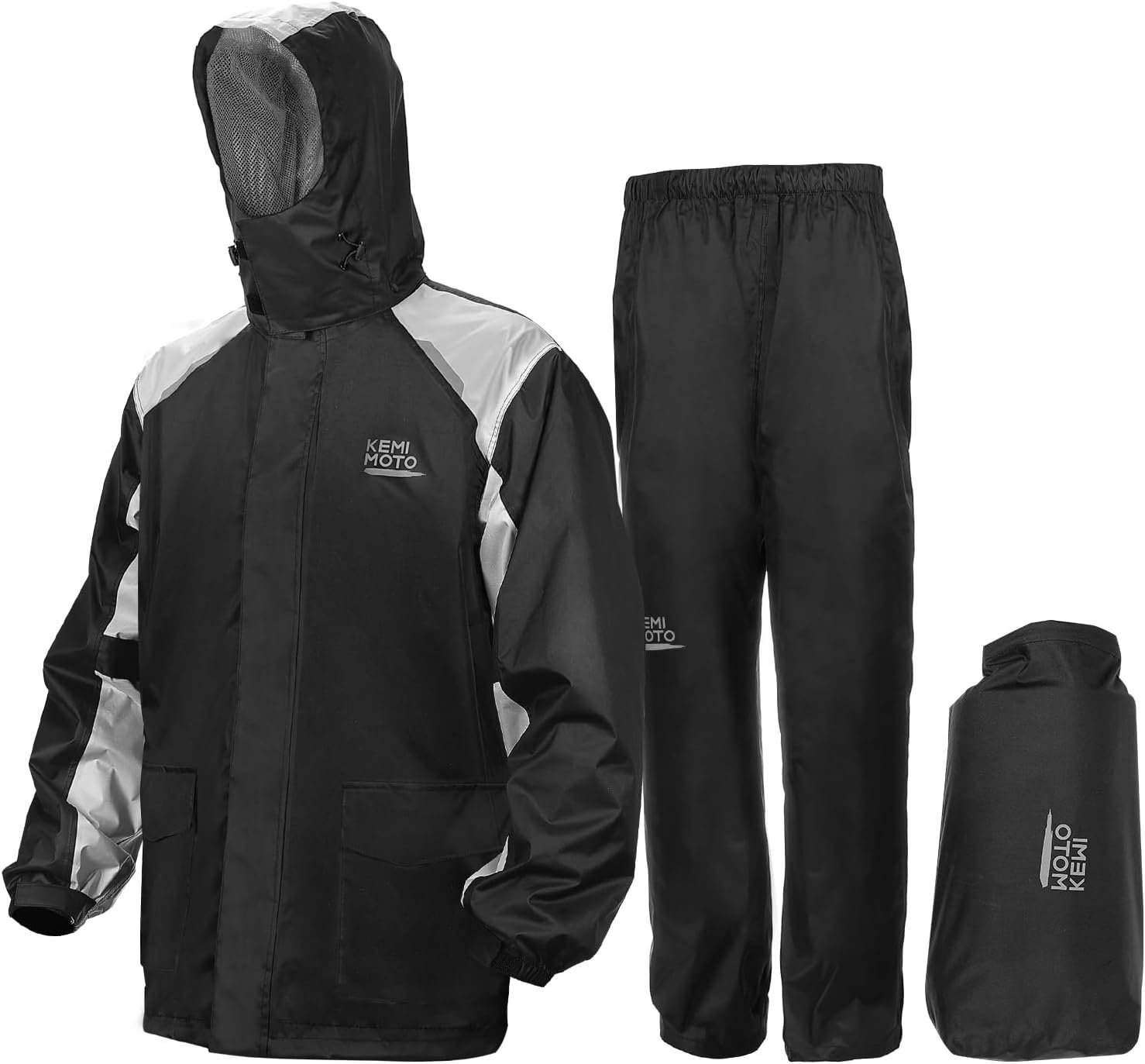
Why good rain gear is a safety and comfort choice — a decision framework
Riding in the wet raises multiple risks: reduced traction, impaired visibility and rapid cooling when you get soaked. The right rain gear does more than keep water off your skin—it preserves core temperature, lets you maintain control of the bike and keeps essential items (documents, phone) dry.
Think of the decision as three prioritized questions:
- What are your typical rides? Short urban commutes have different needs than all-day touring or off-road riding.
- Do you prioritize staying dry at all costs, or comfort during long sweaty rides? Waterproofness often trades off against breathability.
- Will the rain gear be worn over armored riding clothing or over street clothes? That dictates sizing and closure choices.
Start with those answers, then evaluate specific features (material, seams, zippers, ventilation and fit) rather than buying on price alone.
Key features to evaluate and why they matter
When comparing rain gear, focus on these rider-relevant items:
- Waterproofing: Look for a listed hydrostatic/headwater rating or manufacturer claims. Equally important are sealed seams (taped or glued) and protective storm flaps over zippers—these keep water out where it matters most.
- Breathability & ventilation: Breathable membranes or internal mesh plus vents (back vents, pit zips) reduce internal condensation. If you ride hard or in warm weather, breathability prevents you from getting damp from sweat.
- Fit & adjustability: Adjustable cuffs, hems and waist help seal water out and accommodate layers or armor. Make sizing decisions for the largest clothing/armor combo you’ll wear.
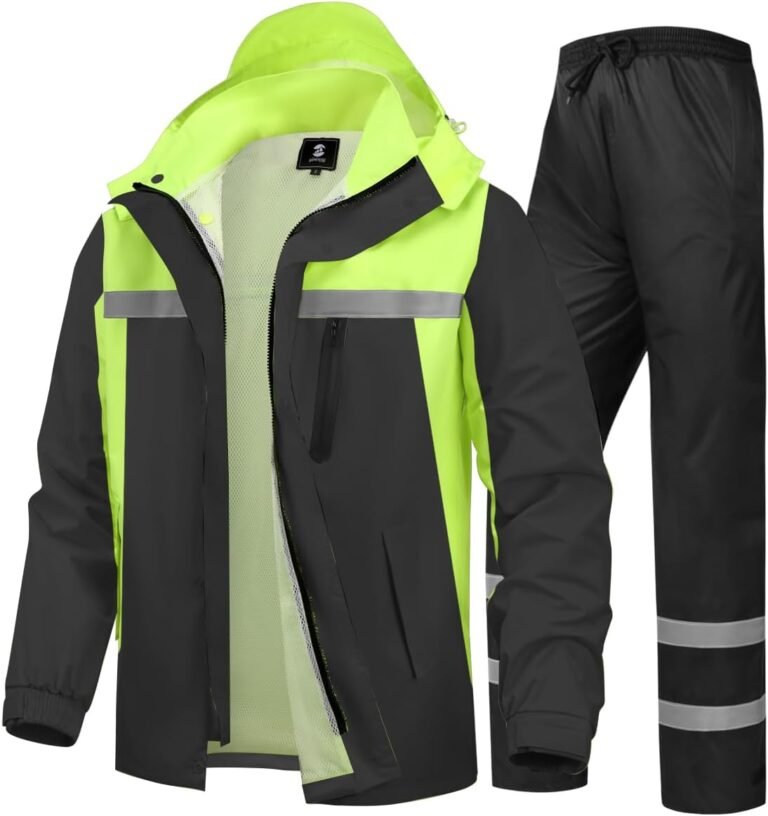
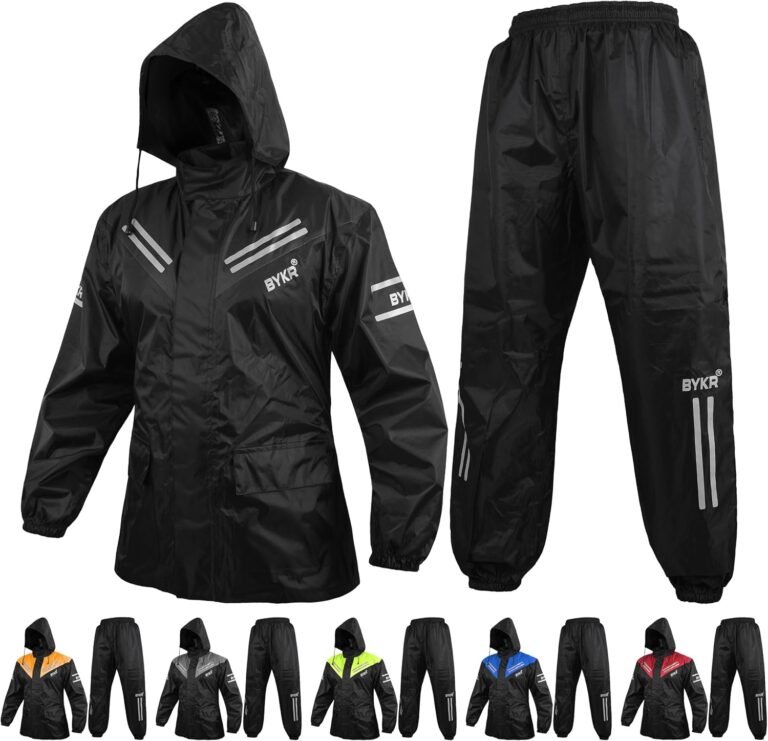
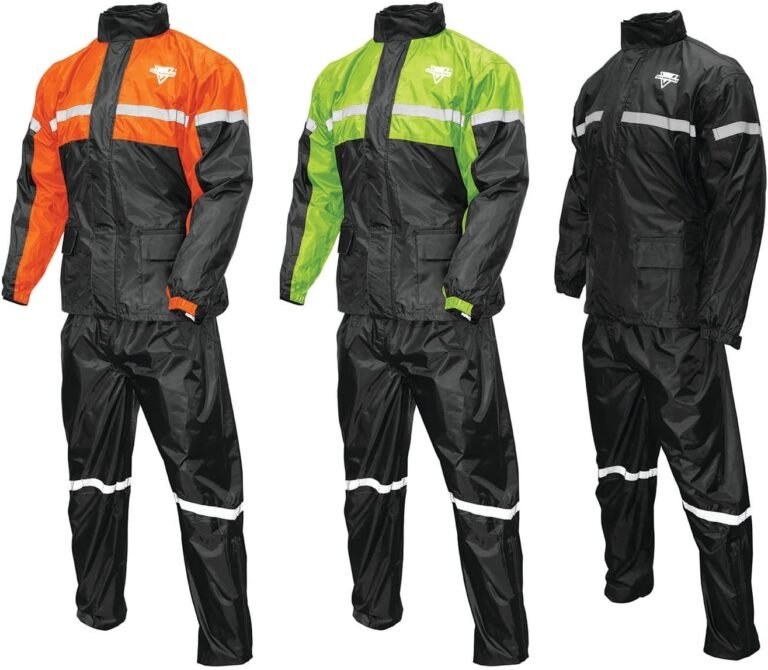
- Visibility: Reflective panels or bright colors are a safety feature in low visibility rain; confirm placement and coverage.
- Pockets and closures: Zipped or flap-covered pockets keep small items dry. Evaluate whether the pockets are accessible while seated.
- Packability & weight: Commuters often prefer lightweight, compact suits that stow easily. Touring riders may accept heavier, more breathable shells for comfort on long rides.
- Durability/abrasion resistance: Rain-specific over-suits often use PVC or coated fabrics that are highly waterproof but less abrasion-resistant than leather or textile riding jackets. If you need impact/abrasion protection, look for certified protective layers or wear armored outer garments under the rain shell.
Material and construction trade-offs: PVC, PU, membranes and laminates
Materials commonly used in rain gear include PVC-coated fabric, PU-coated polyester, and technical membranes (e.g., Gore-Tex or other waterproof/breathable laminates). Each has trade-offs:
- PVC-coated fabrics: Very waterproof and affordable. Often heavier and less breathable; can feel clammy on long rides. Many budget motorcycle over-suits use PVC or PVC/polyester composites.
- PU-coated fabrics: Typically lighter and more flexible than PVC. Breathability varies by construction and laminate. PU is commonly used on higher-quality, affordable shells.
- Technical membranes (laminates): Offer a balance of waterproofing and breathability but are more expensive. Breathability specs (g/m²) and third-party testing matter here.
Construction matters as much as material. Taped or glued seams are essential for real waterproofing, and zipper quality (waterproof vs standard with storm flap) affects long-term leakage. If a listing lacks seam and zipper details, ask the seller or verify in the product documentation.
Fit, layering and compatibility with armor and boots
Bad fit makes even a waterproof suit fail: a too-tight jacket won’t layer over armor, and a too-long pant can catch on footpegs. Follow these practical steps:
- Measure for the largest outfit: Try on (or size for) the rain gear while wearing the typical layers and any back/chest/shoulder armor you use.
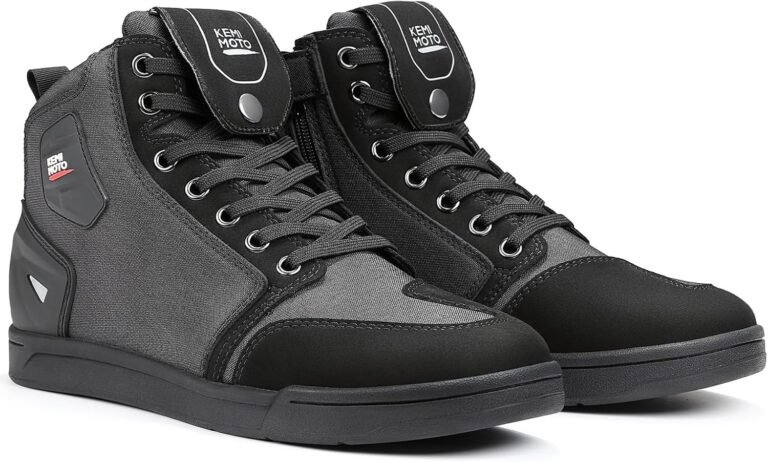
- Check adjustability: Look for cuffs, hems and waist adjustments as well as ankle closures so pants tuck into boots and stay secure.
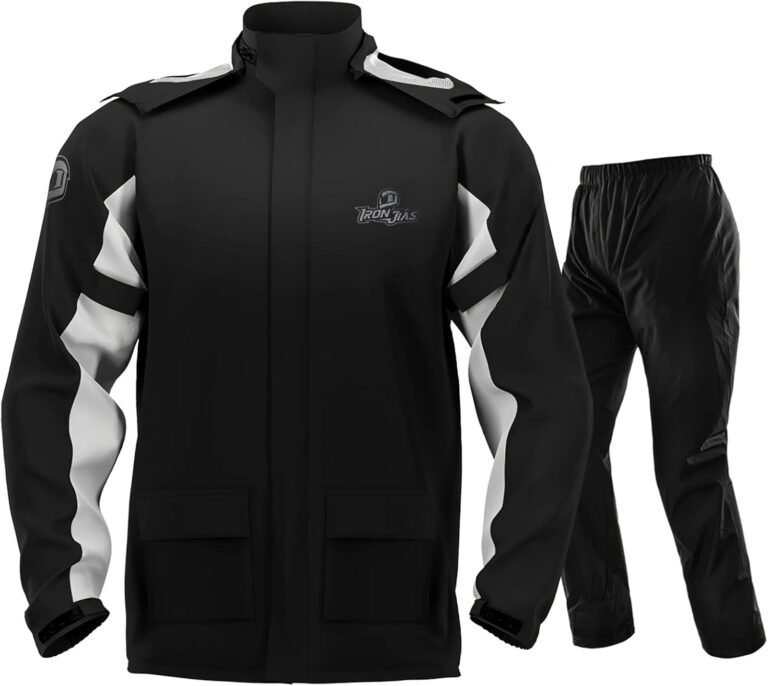
- Consider overlap: A two-piece suit (jacket + pants) should overlap at the waist or have a connecting system to prevent water ingress when leaned over the bars.
- Helmet compatibility: Removable brims or hoods sound useful but can interfere with helmet movement—most riders use a hood only when off the bike; on-bike, a helmet rain visor or helmet with a peak is a better option.
If precise sizing charts are shown, record your body measurements and match to the chart. If charts are absent, verify return policies before buying.
Ride-style guide: which rain gear suits different riders
Different riding styles demand different priorities. Use this short guide to map your rides to gear choices.
- Urban commuters: Priorities: packability, quick on/off, high waterproofing and visibility. A lightweight two-piece packable suit or waterproof over-suit with reflective strips usually fits best.
- Long-distance tourers: Priorities: breathability, comfort for hours on the bike, effective ventilation. Look for membrane shells with pit zips or multi-panel ventilation, or multi-layer systems (breathable shell + waterproof overlayer) for longer, variable conditions.
- Adventure/off-road riders: Priorities: abrasion and impact protection plus quick-dry breathability. Off-road rain gear is usually worn over protective jerseys and armor; choose gear designed for movement and rapid drying rather than heavy PVC over-suits.
- Sport riders: Priorities: minimal flapping at speed and low bulk. Low-profile shells cut close to the body and worn over armored leathers or textile jackets are best; avoid loose, billowing over-suits.
- Multi-season riders: Priorities: layering options and insulation. Choose designs that allow thermal layers underneath and that include removable liners if needed.
Practical spotlight: KEMIMOTO rain suits for riders on a budget
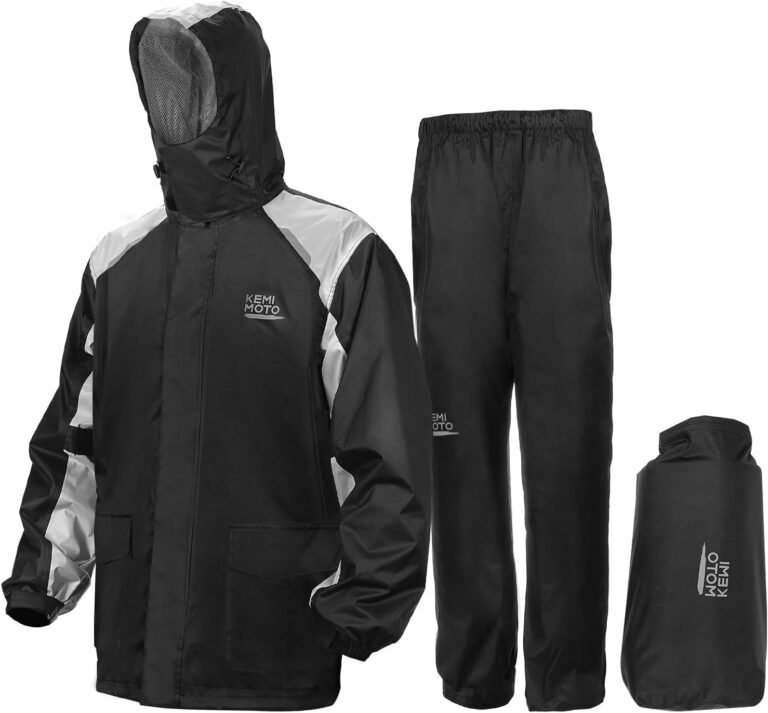
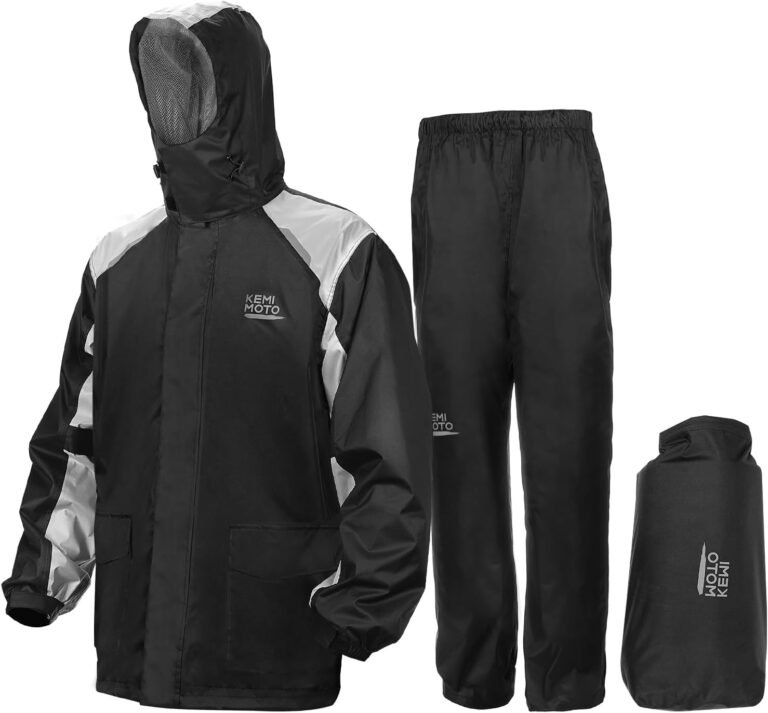
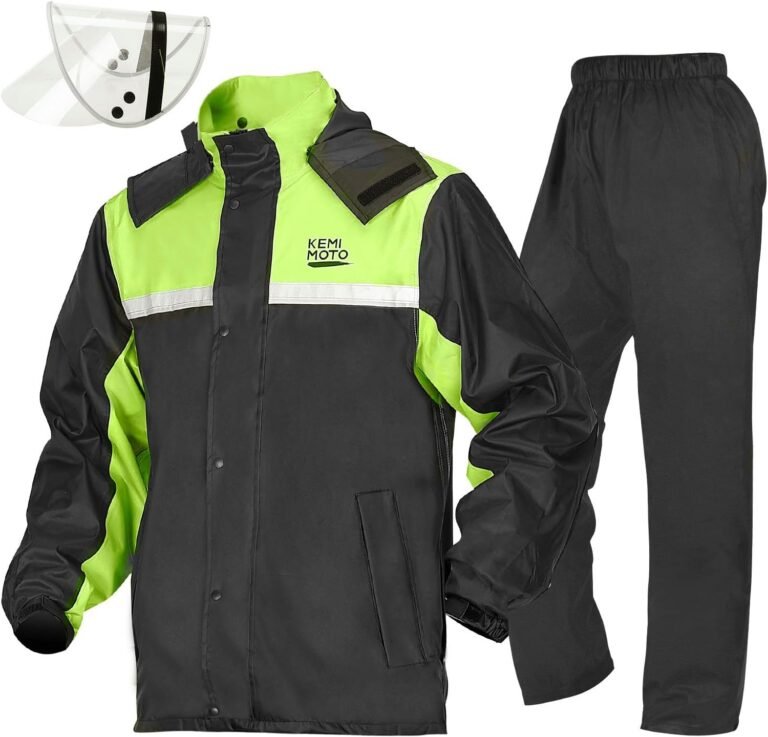
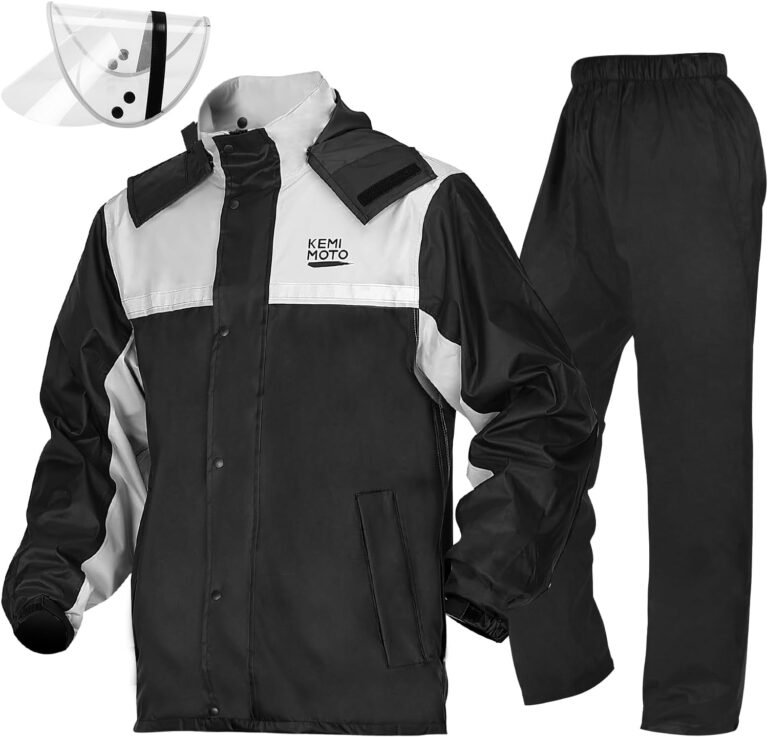
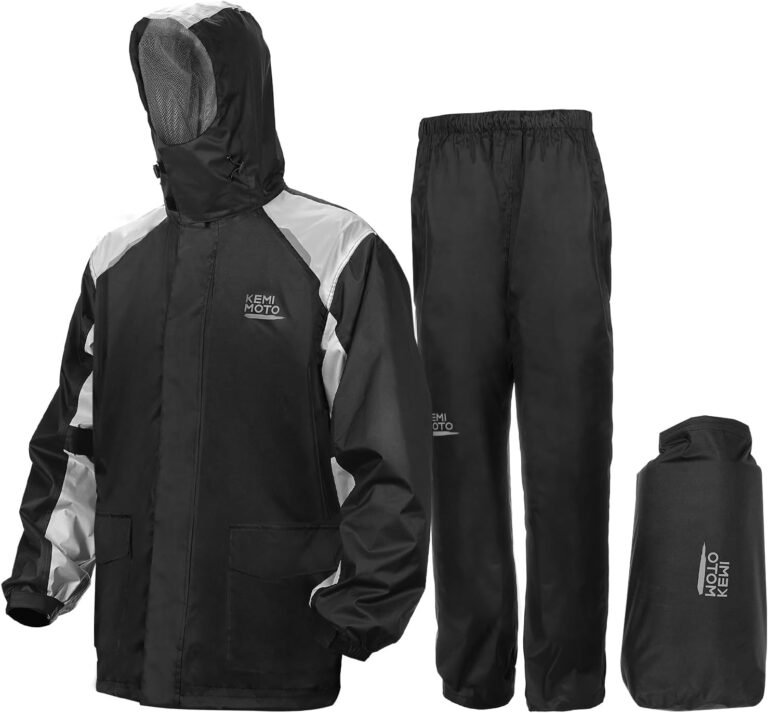
The supplied product facts include several KEMIMOTO two-piece rain suits that focus on heavy-rain protection and rider convenience. Common, verifiable product claims across the listings include:
- A claimed waterproof rating around 15,000 mm hydrostatic pressure (manufacturer claim on multiple listings). Verify the exact number and testing method with the seller if that metric is critical to you.
- Glued or sealed seams—listed as “all seams glued” in some listings—which is important for preventing seam leakage.
- Mesh linings in jacket and pants plus two back airflows for ventilation (described as a “dual breathable system”).
- Reflective strips on front and back for increased night visibility.
- Rider-focused extras: detachable transparent brim / removable rain hat, large side pockets with flaps, hook-and-loop cuffs and ankle closures, full-length zippers with storm flaps.
Why these suits can suit many riders: they provide strong water resistance on paper, useful visibility features and practical adjustability at an affordable price—good for commuting and packable wet-weather protection. RiderInstinct product notes caution that PVC/polyester constructions often trade off breathability and may not offer certified abrasion protection; the KEMIMOTO listings do not include independent certification data in the supplied facts.
If you’re considering a KEMIMOTO suit, review the RiderInstinct reviews and full product page for sizing and warranty details: KEMIMOTO Motorcycle Rain Suit Review: 15,000mm Breathable PVC and KEMIMOTO Motorcycle Rain Suit Review: Dual-Breathable, 15,000 mm. Always verify size charts, seam sealing and return policy before purchase.
Care, maintenance and practical tips to extend service life
Proper care keeps rain gear waterproof and functional:
- Follow manufacturer washing instructions: Many waterproof coatings and taped seams are sensitive to heat and harsh detergents—use gentle, gear-specific cleaners where possible.
- Dry fully before storage: Store your gear dry and away from direct sunlight to avoid coating breakdown and mildew.
- Re-seal seams if needed: Over time, glued or taped seams can degrade; reapply seam sealant recommended by the manufacturer if leaks appear. Verify product guidance before using any chemical on the garment.
- Fasten closures before washing: Close zippers and Velcro to reduce abrasion and preserve storm flaps.
- Inspect regularly: Check for seam splits, failing zippers or reflective strip delamination and repair promptly to maintain performance.
How to decide right now — a short checklist to choose the rain gear that fits your riding style
Use this decision checklist before you buy:
- Identify your primary use: commute, tour, off-road, or mixed.
- Choose the type: two-piece shell/over-suit for packability, membrane shell for breathability, or heavy PVC suit for maximum short-term waterproofing.
- Confirm critical construction details: are seams taped/glued? Is the zipper waterproof or protected by a storm flap?
- Size for the largest layers/armor you’ll wear and check adjustment features (cuffs, ankles, waist).
- Look for visibility features (reflective panels or bright accents) and accessible, waterproof pockets.
- Check the return policy, warranty and seller-provided sizing charts; verify care instructions.