riderinstinct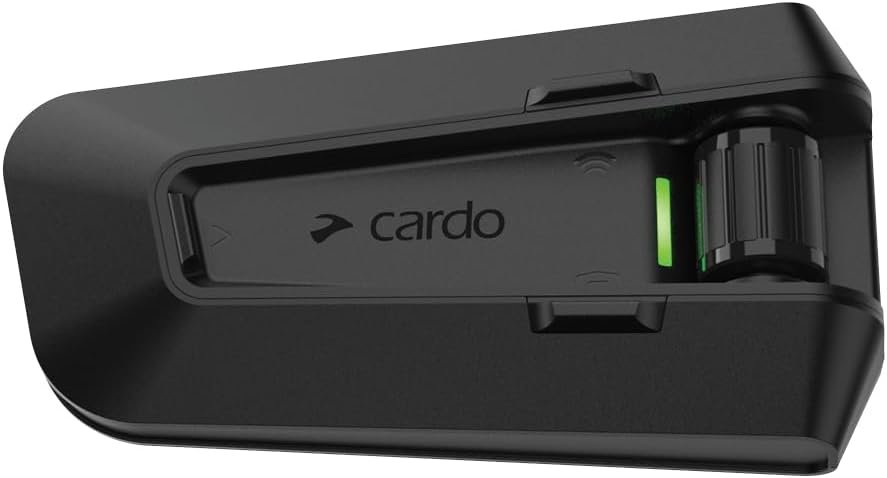
Why an intercom matters: what it actually gives you
An intercom does more than let you gossip on group runs. It’s control: live navigation instructions without glancing down, clear calls, music and rider‑to‑rider commands for safety. For touring, reliable group comms keeps a pack together; for commuting, a simple rider/passenger link and phone pairing may be all you need. Knowing what you actually want simplifies choices and avoids paying for features you won’t use.
Start by deciding the primary relationships you need to support: rider↔passenger, rider↔rider (pair), small group (3–6), or large organised groups (10+). That mapping determines whether a basic Bluetooth headset or a mesh/hybrid system is appropriate.
How intercom technologies differ—trade‑offs and behaviour
There are a few technical approaches you’ll see in product specs. Each has strengths and trade‑offs:
- Classic Bluetooth (point‑to‑point): Simple and cheap, works well for rider↔passenger or two riders. Limited for multi‑rider full‑duplex conversations and can require manual pairing.
- Bluetooth multi‑pair / multi‑party: Some headsets extend Bluetooth with multi‑party modes; useful for small groups but typically less stable than mesh at scale.
- Mesh networks: Designed for stable multi‑rider full‑duplex conversations. Mesh maintains group voice comms without a single point of failure—good for clubs and tours.
- DMC / cloud / hybrid systems: Proprietary group systems (for example DMC used by Cardo or cloud/5G hybrids) aim to allow larger groups and cross‑brand connections. They can add functionality (auto healing, cloud talk) but increase dependence on firmware, apps and network modes.
Trade‑offs to expect: Bluetooth systems are simpler and often cheaper but less robust in large groups; mesh/cloud add stability and scale but usually cost more and sometimes need app setup and firmware upkeep.
Key features that actually matter (and what to check)
Headlines like “5 mi range” are tempting, but real‑word performance depends on environment, noise and device pairing. Focus on these practical features:
- Audio and noise cancellation: Large speaker drivers and ENC/DSP/CVC noise reduction make conversations intelligible at speed. Systems that list speaker size (for example 40mm or 45mm) and explicit noise‑cancelling tech are easier to compare.
- Duplex type and group size: Is the intercom full‑duplex (both parties talk at once) or half‑duplex? What maximum group size is supported? For example, some Cardo DMC systems support 15 riders; mesh products like the ASMAX F1s support up to 10 riders in Mesh and even CloudTalk for 50 riders (as supplied).
- Battery runtime and charging: Look for published talk/music/standby figures and fast‑charge spec if you need quick top‑ups. Some manufacturers list talk times (for instance ASMAX F1s lists ~22h talk, Novamente V6 claims 18h talk/25h music) but verify with official docs if runtime is critical.
- Weather protection (IP rating): An IP65 vs IP67 rating is meaningful—IP67 implies dustproof and temporary submersion protection. Some listings state IP67 (Cardo PACKTALK PRO, Novamente V6 Pro+ claims it, ASMAX F1s lists IP67) while others say waterproof without a specific IP number—verify the exact rating from the manufacturer.
- Mounting and helmet compatibility: Magnetic mounts (Cardo Air Mount) or quick‑release mechanical mounts have different ergonomics. Check whether the system fits your helmet and whether speakers/mic kits for modular/open faces are included.
- App & OTA support: OTA updates and a usable app can keep the unit current and fix bugs. Cardo and ASMAX provide app updates; over‑the‑air updating is a practical advantage.
- Special safety features: Crash detection is offered as a built‑in chip in some units (e.g., Cardo PACKTALK PRO) but understand how it works and what emergency actions it triggers—don’t treat it as a medical or legal guarantee.
Fit, installation and helmet compatibility: how to avoid surprises
Physical fit matters more than you might expect. Speakers must sit close to your ear within the helmet padding; boom vs internal microphones suit different helmet shell types. Before buying:
- Confirm the intercom’s mounting method is compatible with your helmet (adhesive pads, clamp, magnetic or quick‑release). For example, Cardo uses an Air Mount magnetic system on several models; ASMAX uses a mechanical quick‑release.
- Check whether the product includes both internal and boom microphone options if you plan to use different helmet types. Some two‑packs include multiple mic options and mounting accessories (Novamente V6 Pro+ lists two mic options and mounting accessories).
- Plan wiring/speaker placement—if you want to move the unit between helmets, a quick‑release mount or modular wiring makes life easier.
- Measure clearance for the unit on your helmet’s side and be aware of any aerodynamic or snag hazards when you clip a box to the shell.
Safety, legality and sensible operating limits
Intercoms are tools—used well they increase safety, used poorly they can distract. Keep these practical safety points front of mind:
- Volume vs hearing situational awareness: Set volumes so you can still hear ambient traffic cues. Overly loud music or intercom levels can mask sirens and tire noise.
- Don’t rely solely on crash detection: Some units include crash detection (Cardo PACKTALK PRO lists a built‑in crash detection chip). Treat these features as secondary safety aids—verify how alerts are sent and whether they rely on a connected phone or subscription service.
- Legal considerations: Laws about helmet audio and use of devices while riding vary by jurisdiction. Check local rules on hands‑free devices and audio volume.
- Battery safety: Use only manufacturer‑approved chargers and cables to avoid electrical or fire risk. Verify replacement/repair options and warranty coverage.
How to choose by riding style—practical rider profiles
Match product capabilities to your primary use case. Below are common rider profiles and the features to prioritise.
- Commuter / solo rider: You probably want reliable phone pairing, simple controls and long battery life. A compact Bluetooth unit with universal connectivity (like Cardo PACKTALK Edge that emphasises universal pairing and fast charging) is sensible if you also want weather resistance.
- Rider + passenger: Full‑duplex 2‑way intercom and easy pairing are the basics. Dual‑packs (FREECOM 4X Dual Pack or Novamente V6 Pro+ two‑packs) provide two units in the box for convenience.
- Small group / club rides (3–6 riders): Mesh or multi‑party Bluetooth systems are preferable. Novamente V6 Pro+ and several FODSPORTS/Novamente listings offer multi‑rider pairing modes; verify whether it’s true full‑duplex group talk or sequential switching mode.
- Large organised groups and touring: Mesh and cloud hybrids scale better. ASMAX F1s advertises Mesh for 10 riders and CloudTalk for up to 50—useful for clubs and organised tours. Cardo’s DMC systems support auto‑healing multi‑rider groups (PACKTALK PRO supports up to 15 riders via 2nd‑gen DMC).
- Off‑road / ATV / snowmobile: Rugged IP67 water/dust protection and secure mechanical mounts matter. ASMAX F1s and Novamente V6 Pro+ list IP67 in some places—verify the exact rating and test conditions before relying on it for extreme exposure.
- Budget buyers: Low‑cost headsets (the ultra‑budget motorcycle Bluetooth headset listing included in our examples) can add intercoms affordably but often have inconsistent range claims, unknown support and variable build quality. Only buy budget units if you’re prepared to accept uncertain long‑term performance and limited warranty support.
Product shortlist and who each one suits (practical notes)
Below are representative products from RiderInstinct’s saved facts. These examples show how different systems map to rider needs. Use them as starting points and verify missing technical details directly with the manufacturer prior to purchase.
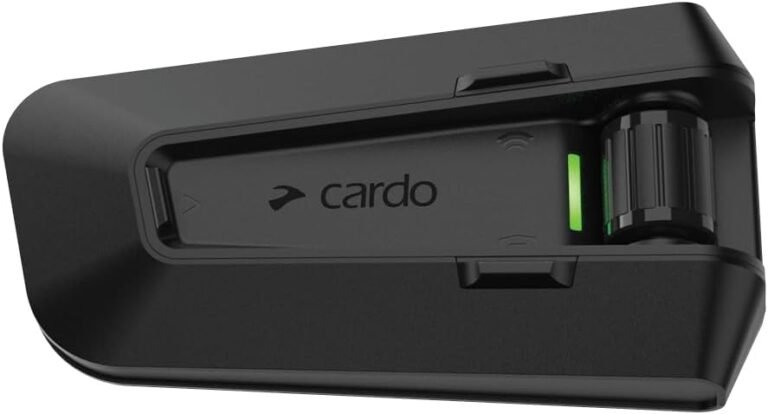
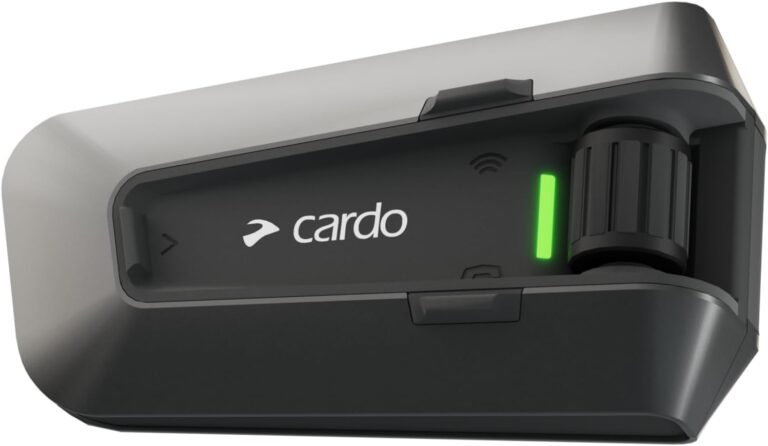
- Cardo PACKTALK PRO (single pack): Feature‑rich: built‑in crash detection chip, 45mm JBL speakers, Air Mount, Auto On/Off, 2nd‑generation DMC supporting up to 15 riders and an IP67 design is stated. Best for riders who prioritise audio quality, group DMC networking and crash‑detection capability. Verify published battery runtime and full compatibility details before buying. (See our full review: Cardo PACKTALK PRO Review.)
- Cardo PACKTALK Edge (single pack): Heavy on touring features—natural voice control, FM with RDS, OTA updates, USB‑C fast charging (20 minutes → ~2 hours talk time stated), magnetic air mount and a 3‑year warranty listed. Good for touring riders who want universal pairing and convenient charging; confirm battery runtime figures and IP specifics if critical. (See review: Cardo PACKTALK Edge Review.)
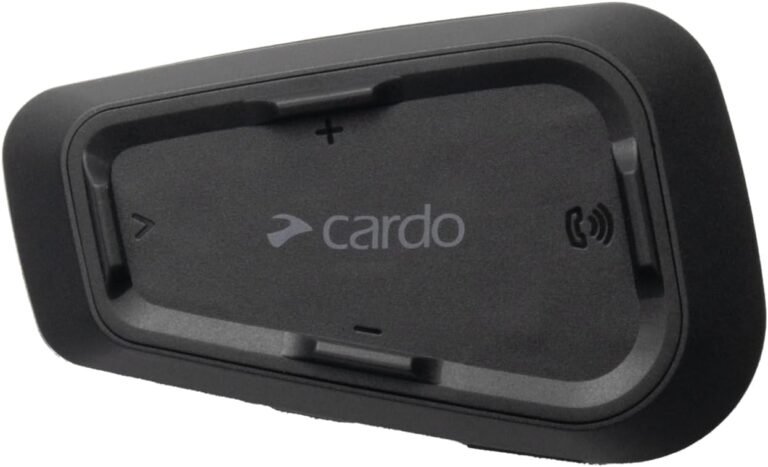
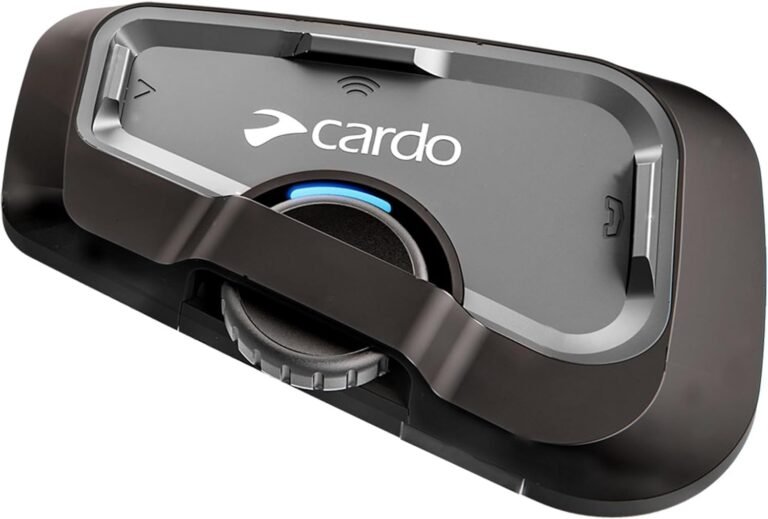
- Cardo FREECOM 4X (dual pack): A two‑unit option with 4‑way intercom, waterproof listing, 40mm speakers and OTA updates via Cardo Connect App. Practical for two‑up riders who want larger speakers and a bundled dual pack—verify battery life and range with the manufacturer. (See review: Cardo FREECOM 4X Dual Pack Review.)
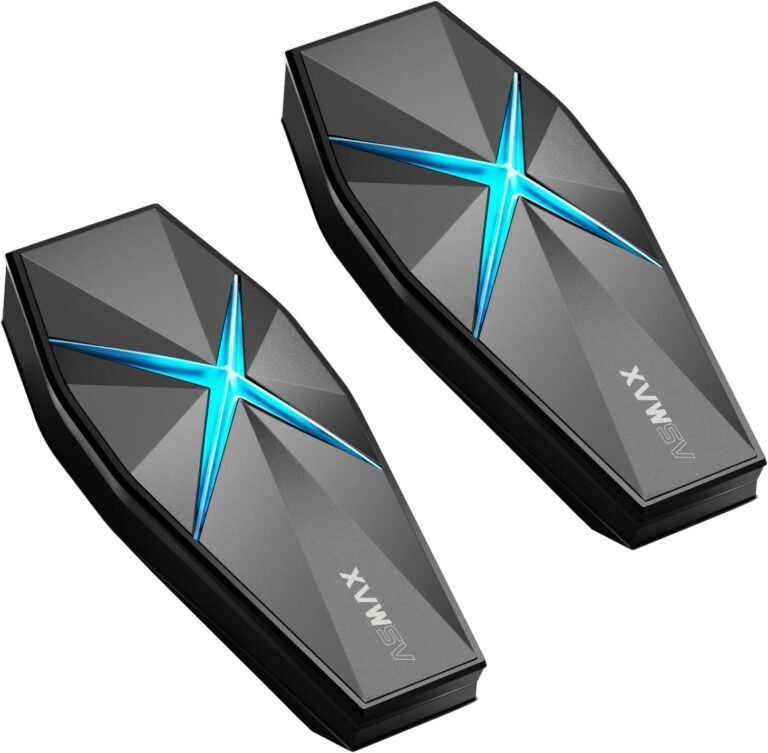
- ASMAX F1s: Mesh for 10 riders, CloudTalk for 50 riders and an ASMAX 5G+Mesh hybrid. Includes ENC noise cancellation, 40mm speakers, IP67 and long published runtimes (1250mAh: ~22h talk/35h music). Suited to organised group and touring riders who want advanced voice control and long battery life; expect an app/firmware learning curve. (See review: ASMAX F1s Review.)
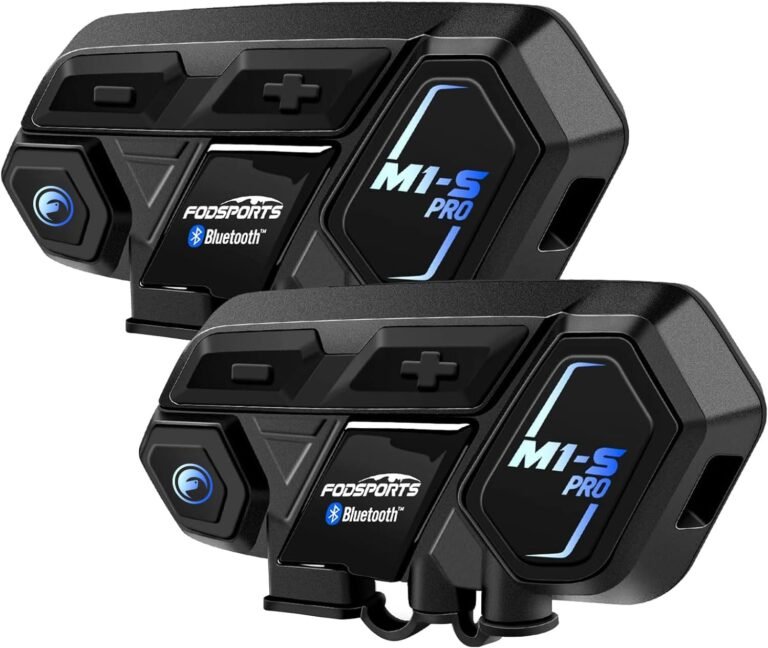
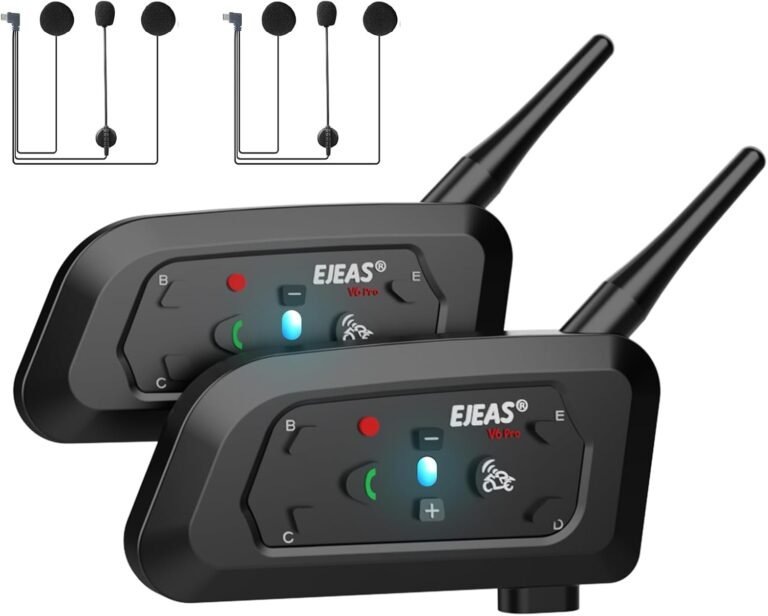
- Novamente V6 Pro+ (2‑pack): Budget two‑pack with dual‑chip audio multitasking, claimed long battery life (850mAh: up to 18h talk/25h music) and support for up to 6 paired riders. Good value on paper for paired touring or off‑road use—verify the waterproof rating (listing inconsistent between IP65/IP67) and confirm manufacturer support.
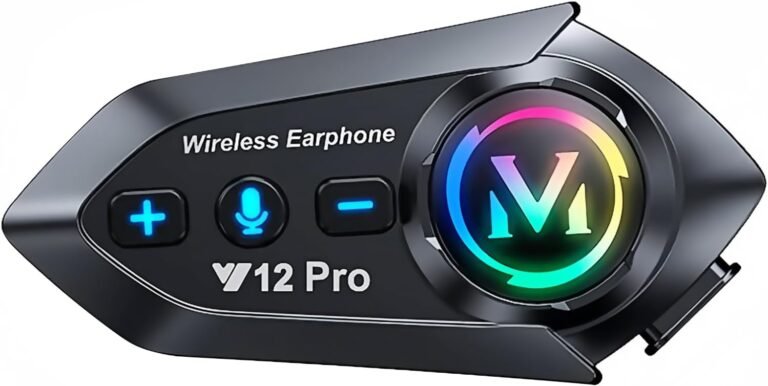
- Budget and generic headsets (example listings): Ultra‑low‑cost headsets can include music sharing, FM and large batteries but often have inconsistent range and unclear brand/warranty support. Best for riders who accept uncertainty and want a cheap entry point; avoid relying on them for critical group comms without independent verification.
How to evaluate claims and what to verify before purchase
Many listings omit the details that matter in practice. Ask the seller/manufacturer for documented answers to these questions:
- Exact battery specs and real‑world talk/music/runtime figures under typical use (not just standby).
- Official IP/waterproof rating and what that rating was tested for (rain, submersion, dust).
- Helmet compatibility: mounting method, included speaker/mic options, and whether the unit fits your helmet model.
- Intercom behavior in mixed‑brand groups and whether advertised group sizes are full‑duplex mesh/DMC or sequential Bluetooth links.
- Warranty terms and repair/parts support in your country.
- How crash detection works (what sensors are used, whether it requires a phone connection to notify contacts, and any subscriptions).
If a listing doesn’t include basic specs, treat it as incomplete and confirm before you purchase.
Putting it together—a practical buying process
Use this stepwise approach to decide and buy:
- Define your primary use case and minimum required features (group size, runtime, waterproofing).
- Shortlist products that match those needs from reputable brands—use RiderInstinct reviews and manufacturer pages for primary facts.
- Check the six verification points listed above with the seller or manufacturer.
- Consider ergonomics: try fitting a demo if possible or measure mounting clearance on your helmet.
- Factor in warranty, firmware update policy and available spare parts.
- Buy and install according to the manufacturer’s instructions; test intercom operation in a safe, stationary setting before riding.
This process reduces surprises and helps match actual performance to your priorities.