riderinstinct
Why this comparison matters for riders — the decision framework
Motorcycle riders looking for action cameras rarely only care about headline specs. They want reliable mounting, usable stabilization for bumpy roads, audio that survives wind, predictable battery/runtime for rides, and a workflow that matches how they edit and publish (straight POV clips vs. creative reframes). This comparison uses those rider‑centric criteria: capture format and creative flexibility, stabilization and motion handling, mounting and helmet compatibility, audio and wind mitigation, battery/runtime & waterproofing for real rides, and bundled accessories and workflow tools.
Before we compare product details, decide what you actually want to shoot: straightforward helmet POV clips you can edit and upload quickly; or immersive 360º footage you plan to reframe into cinematic angles and use subject tracking? Your answer will usually determine the better choice more than price or megapixels alone.
How we’re evaluating these two cameras
We compare the AKASO 360 Action Camera Creator Combo and the Insta360 GO 3S In‑Helmet POV Bundle across dimensions that matter to riders:
- Capture format & creative workflow — 360º reframe versus single forward POV and how that affects post‑production work.
- Stabilization and horizon control — claimed performance and how it behaves on a helmet/road.
- Mounting, accessories and helmet suitability — included mounts, mic options, and any safety or magnetic cautions.
- Battery, water resistance and durability — supplied specs or gaps you must verify.
- Audio, controls and usability — wind muff, preview screens and app features.
We only use supplied RiderInstinct product facts and saved review data. Where AKASO’s supplied facts omit a practical spec (battery runtime, IP rating, included mounts), we explicitly call that out and tell you what to verify.
Quick side‑by‑side summary
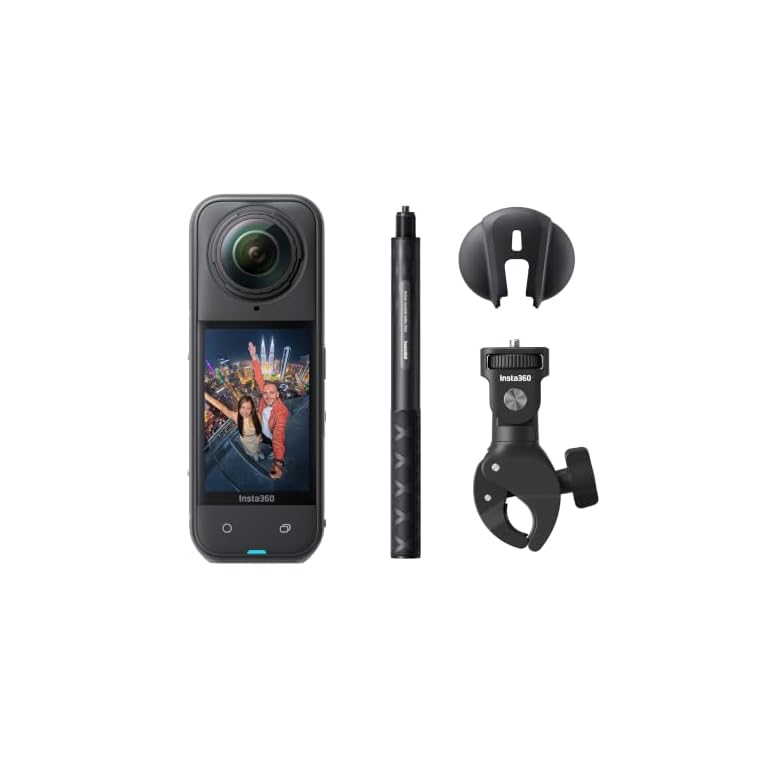
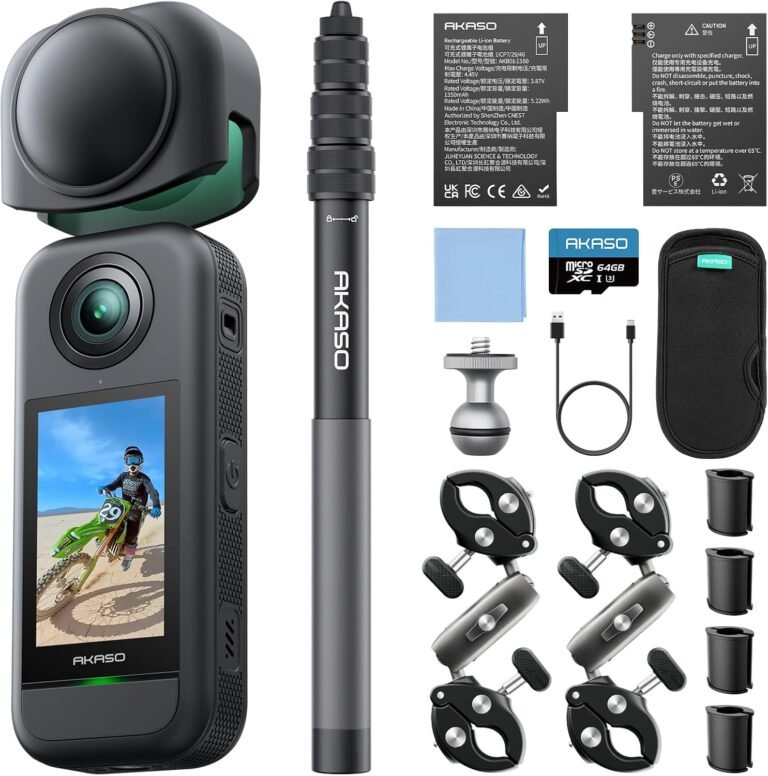
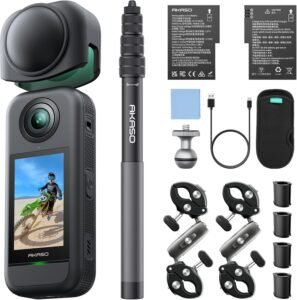
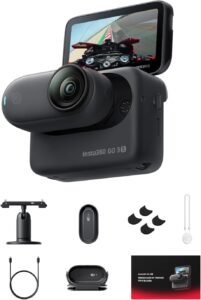
At a glance: AKASO 360 (≈$279.99) is a 360º creator‑style camera that emphasizes high resolution (5.7K video, 72MP photos, dual 1/2″ 48MP sensors), AI subject tracking and a “shoot first, reframe later” workflow. The Insta360 GO 3S bundle (≈$399.99) is a tiny 4K POV camera sold as a motorcycle‑centric kit — it includes an Action Pod (2.2″ flip screen), in‑helmet mount, mic wind muff and claims a 140‑minute battery life for the system, plus IPX8 camera water resistance.
Put simply: AKASO gives you more pixels and creative reframing latitude; Insta360 gives you a low‑profile, mount‑ready POV kit with practical motorcycle accessories and clearer water/battery specs in the supplied facts.
AKASO 360 Action Camera — strengths and practical limits for riders
Strengths (from supplied facts): AKASO’s key selling points are high image specs and creative tools. It claims 5.7K 360º video, 72MP 360º photos using dual 1/2″ 48MP sensors, DNG8 RAW photo support, AI subject tracking and an in‑app “shoot first, reframe later” workflow. The camera includes a 2.29″ touchscreen and AKASO 360 Studio for editing and reframing.
Why a rider might choose it: If you want immersive ride footage and the flexibility to choose framing and subject tracking in post rather than committing to a single POV at capture time, a 360º workflow is powerful — you can create helmet POVs, third‑person replays and subject‑tracked highlight clips from a single recording.
Practical limits and things to verify: The supplied product facts do not list battery runtime, an IP/waterproof rating, included mounting accessories or warranty details. Durability/crash resistance is not specified. Claims of “360º SuperSmooth” and “Horizon Lock” are software features rather than mechanical gimbals. For motorcycle use you should verify battery life under continuous recording, whether any weatherproofing meets your riding needs, and exactly which mounts (helmet adhesives, sticky pads, helmet mounts, selfie sticks etc.) are included or sold separately.
Insta360 GO 3S In‑Helmet POV Bundle — strengths and practical limits for riders
Strengths (from supplied facts): The GO 3S bundle is explicitly targeted at helmet POV creators. It captures 4K video with FlowState (gimbal‑like) stabilization and Horizon Lock, and the Action Pod adds a 2.2″ flip touchscreen for preview, remote control and live framing. The bundle includes an in‑helmet POV mount and a GO 3S mic wind muff to help with motorcycle audio. The supplied facts list a 140‑minute battery life claim for the Action Pod/camera system and show the camera body as IPX8 (camera waterproof) while the Action Pod is IPX4. The bundle includes 128 GB storage and several mounting accessories.
Why a rider might choose it: If you want a very small, low‑profile helmet installation with reliable stabilization, included helmet mount and a purpose‑built mic wind muff, the GO 3S bundle removes a lot of guesswork. The Action Pod’s flip screen makes framing and live preview easier than using a camera that requires post reframing.
Practical limits and things to verify: The Action Pod has a lower IP rating (IPX4) than the camera body (IPX8) — consider how you’ll protect the pod on longer wet rides. Magnetic mounting is central to Insta360’s ecosystem; the product facts include a safety note advising that the Magnet Pendant should not be used by people with pacemakers. Also note the Dive Case and deeper waterproofing are mentioned but not listed as included accessories in the bundle; verify what additional cases you may need for specific use cases.
Mounting, helmet fit, audio and safety considerations
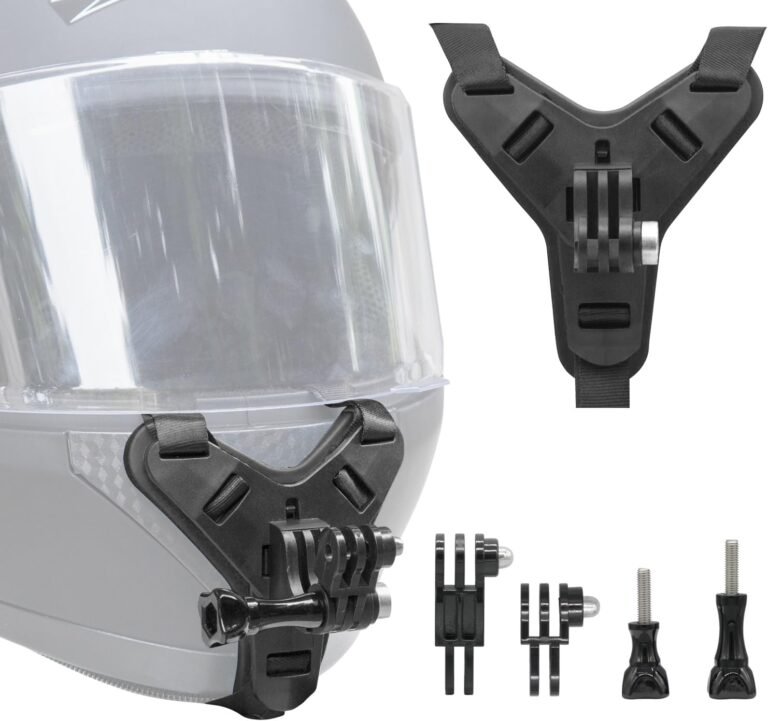
Helmet mounting and audio are often the difference between a usable ride clip and something you delete. The GO 3S bundle explicitly includes an in‑helmet POV mount and a mic wind muff — two practical inclusions for motorcyclists that reduce accessory hunting. The camera’s tiny form factor minimizes wind drag and reduces perceived helmet weight in many mounts.
AKASO’s supplied facts do not list included helmet mounts or a wind muff; you may need to purchase mounting accessories separately. For either camera, test any helmet mount for secure adhesion and unobstructed field of view before riding at speed. If you use magnetic mounts (Insta360’s approach), heed the supplied Magnet Pendant warning for people with pacemakers and follow the manufacturer’s guidance for magnet placement and strength.
Stabilization and horizon control — what the claims mean on the road
Both systems claim electronic stabilization and horizon correction. AKASO: “360º SuperSmooth” and “360º Horizon Lock” (in‑app). Insta360 GO 3S: “FlowState” stabilization described as gimbal‑like plus Horizon Lock.
Interpretation for riders: Electronic stabilization can be highly effective for smoothing helmet jitter and small vibrations, but results depend heavily on mounting stiffness, sensor capture rate and the motion profile (high‑frequency helmet buzz vs. large bike‑body lean and banking). AKASO’s advantage is that 360º capture lets you reframe and keep horizons steady in post even when the camera rotates; Insta360’s advantage is a small dedicated POV camera with FlowState tuned for single‑camera perspective and the Action Pod preview that helps you confirm framing before you leave the ride.
Neither product’s supplied facts include independent lab stabilization measurements. Expect to test mounts and compare real footage for your bike and helmet combination to judge which stabilization approach produces the result you prefer.
Battery, waterproofing and ownership considerations
Battery and water resistance are practical ride factors.
- Insta360 GO 3S (supplied): The bundle lists a 140‑minute battery life claim for the Action Pod/camera system, IPX8 rating for the camera body and IPX4 rating for the Action Pod. The bundle includes 128 GB storage. The supplied facts also note the camera supports charging while shooting.
- AKASO 360 (supplied): The product facts do not list battery runtime, an IP/waterproof rating or the exact mounts included. AKASO claims “long battery life” in marketing text but does not supply a numeric runtime in the provided facts.
What to do before buying: For AKASO, verify the camera’s continuous recording runtime at your chosen resolution and whether the unit and any remote/pod components have a rated IP or ruggedness standard. For Insta360, keep in mind the Action Pod’s lower IP rating — if you plan to expose the pod to heavy rain or frequent washes, consider how you’ll protect it or if an accessory case is required.
Which camera is right for which rider — practical scenarios
To make a real choice, match the product to the common scenarios below:
- You want cinematic reframe capability and subject tracking: AKASO 360 — capture everything in 360º, reframe in post, and use AI tracking to keep riders or subjects centered.
- You want low‑profile helmet POV with included helmet mount and wind muff, plus easy preview/control: Insta360 GO 3S Bundle — out‑of‑the‑box helmet solution with Action Pod and mic accessory.
- You prioritize maximum still‑image resolution from ride shots: AKASO — 72MP 360º photo capability and dual 1/2″ 48MP sensors.
- You want the easiest mount and minimal fiddling on the bike: Insta360 GO 3S Bundle — includes helmet mount and practical accessories for moto use.
- Budget‑conscious but creative: AKASO is lower priced in the supplied facts (~$279.99) but may require extra accessory purchases; factor that into total cost.
If you still can’t decide, think about how much post‑production you enjoy: 360º workflows add editing time but unlock creative angles. If you want fast uploads of POV clips with minimal editing, the GO 3S bundle is closer to a plug‑and‑play solution.