riderinstinct
Why rain gear matters, and what it can’t do
Rain gear does three essential things: keep water out, let body moisture escape, and help you be seen. That sounds straightforward, but reality is more nuanced. Waterproof garments vary in how long and how hard they can keep you dry. Breathability varies by material and construction and determines how much your sweat stays inside—an immediate comfort and safety concern in active riding. Visibility features (color, retroreflectivity) are often undervalued but crucial in low-light rainy conditions where drivers’ reaction times are reduced.
What rain gear cannot do: it won’t make your motorcycle any less slippery, it won’t stop fogging or pooled water on the road, and it won’t keep you comfortable in every temperature. Expect trade-offs: a fully sealed, heavy suit might be waterproof but hot; a very breathable shell might accept occasional seepage at high pressure points. The right kit is the one whose trade-offs you understand and accept for your typical rides.
Core decisions: waterproofing, breathability and fit
When choosing rain gear, focus on three connected attributes.
- Waterproofing: This covers the fabric membrane/coating and how seams and closures are handled. Manufacturers often quote a hydrostatic head (mm) rating—higher numbers indicate greater resistance to water pressure—but construction quality (taped seams, waterproof zippers) is equally important. If a precise weather performance is safety-critical for you, verify the manufacturer’s claims and look for independent reviews or lab data.
- Breathability: Measured in g/m²/24h or implied by membrane type, breathability affects how well sweat vapor escapes. If you ride at low speeds, commute, or do long distance touring in mixed weather, breathability matters a lot. For short wet rides, breathability is less critical.
- Fit and mobility: Rain layers must fit over your riding jacket and pants without pulling on armor or restricting movement. Look for articulated cuts and adjustable cuffs/waists. A rain suit that compresses your armor compromises protection.
Decision framework: match the level of waterproofing and breathability to your typical ride length, climate and speed. For city commutes, a lightweight, packable suit may be best. For cross-country wet touring, invest in a durable, highly waterproof suit with taped seams and high breathability.
Types of rain gear and when to use them
There are several common rain-gear formats—each has strengths and weaknesses depending on riding style and conditions.
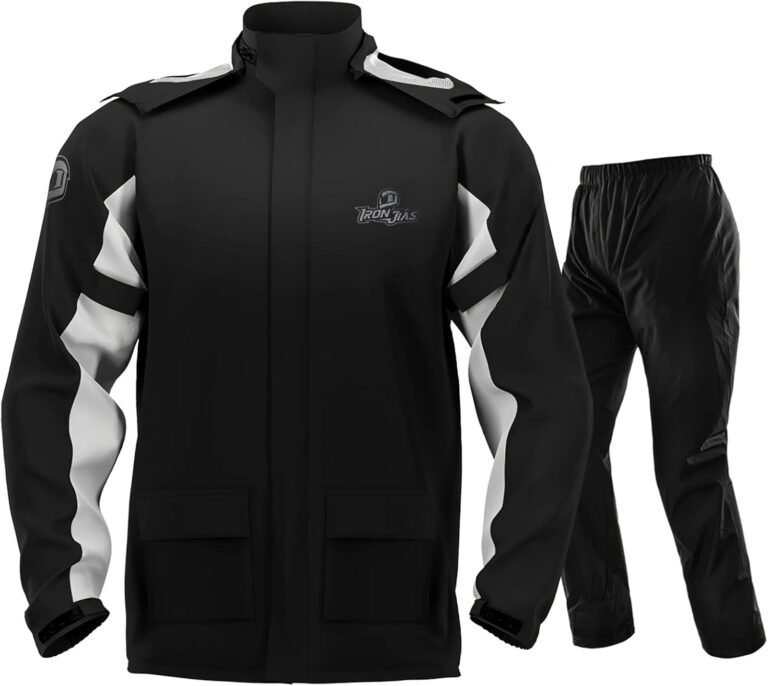
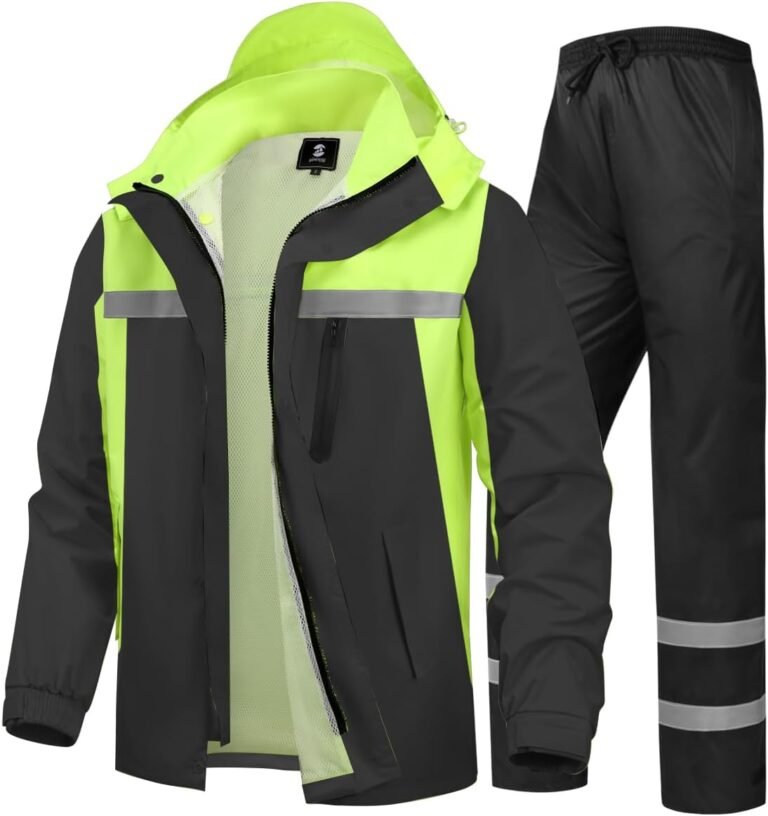
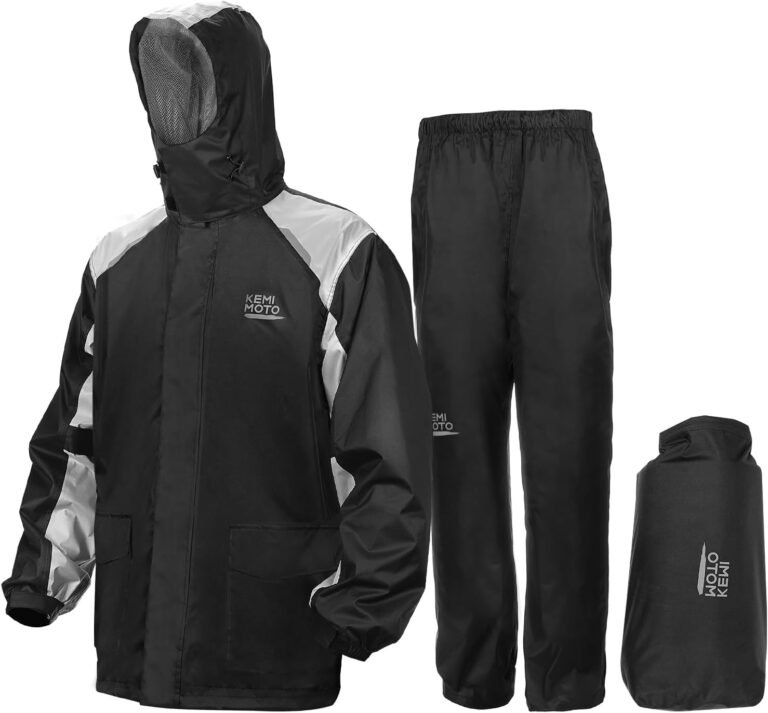
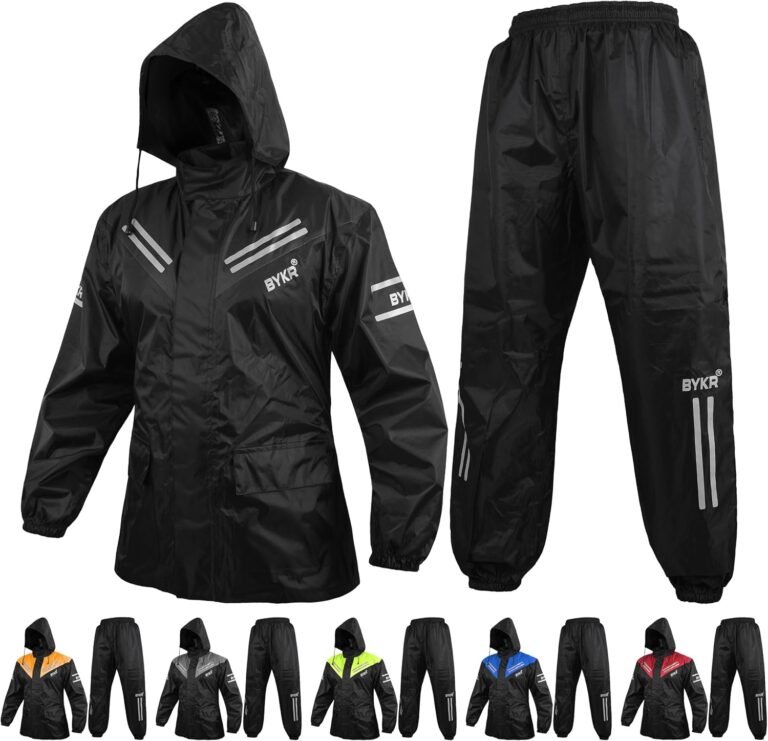
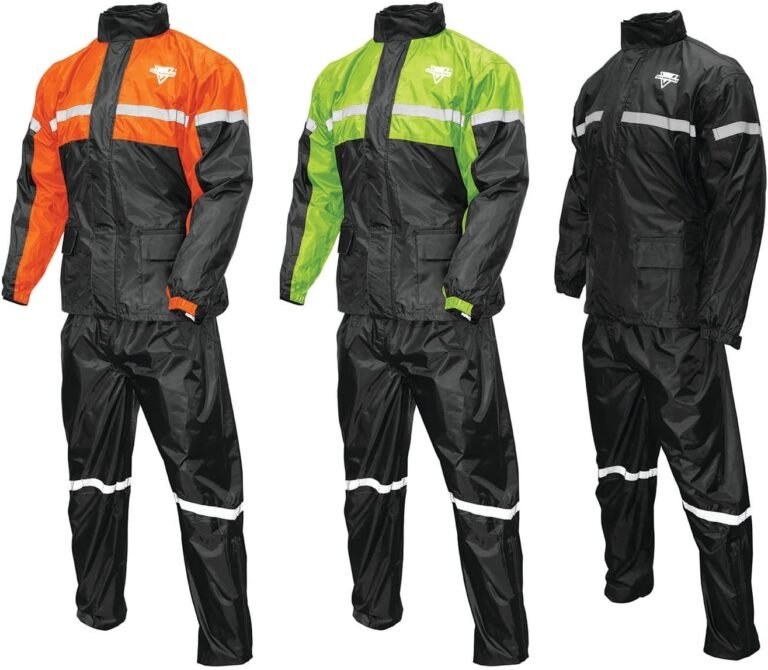
- Two-piece rain suits (separate jacket and pants): Versatile for mixed riding; easier to ventilate and go to off-bike activities. They can be more economical and let you mix sizes for better fit.
- One-piece rain suits: Provide the best protection against wind-driven spray and keep water from entering at the jacket–pant interface. They can be hotter and harder to put on/off, and check how they accommodate body armor.
- Overpants and overshells: Lightweight layers designed to fit over textile or armored gear for short-duration rides in wet weather. Good for commuting and quick showers; less durable for long exposure.
- Hardshell jackets with waterproof membranes: More durable and breathable than simple raincoats; meant for frequent use and multi-season riding. These often require a larger budget but deliver better long-term performance.
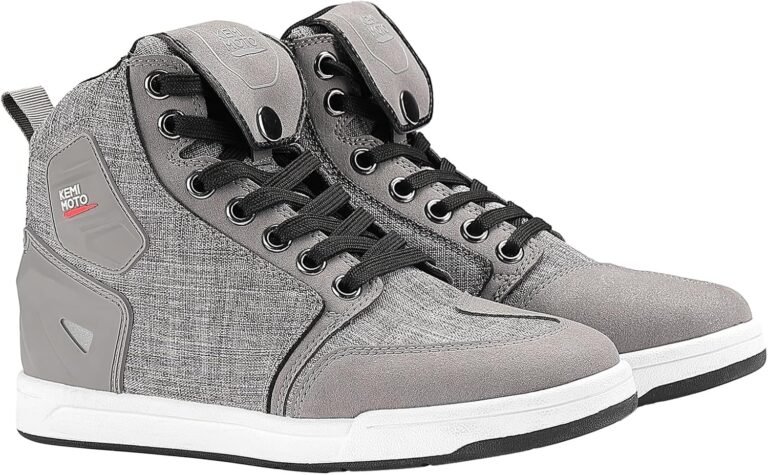
- Dedicated waterproof boots and gloves: Often overlooked, these complete the system. Waterproof footwear with good sole grip and gauntlet-style gloves that seal at the wrist are preferable for true rain riding.
Choose the type that balances protection, packability and how often you expect to be in the wet.
Construction details that actually affect performance
Marketing focuses on fabric names and mm numbers, but construction details are the practical differentiators.
- Taped seams: Seams are common failure points. Fully taped seams prevent water entry where panels are sewn together—check whether seams are taped inside, and whether the tape covers all critical areas.
- Waterproof zippers and storm flaps: Non-waterproof zippers with a protective storm flap can keep most water out, but waterproof zippers add security. Pay attention to zipper placement (front chest, pockets) and whether they have covers.
- Cuffs and closures: Adjustable cuffs, stretch gaiters or gauntlets that seal properly reduce water ingress at the wrists and ankles. Elastic ankles can ride up and let water in; a gauntlet that fits over your boots is preferable.
- Sealing interfaces: Look for designs that integrate with your boots and collar so water doesn’t funnel in at the neck or top of the pants.
- Reflective and hi-vis panels: Waterproofing doesn’t matter if drivers don’t see you. Large reflective stripes and bright colors significantly improve conspicuity in rain when headlights are reflected by wet surfaces.
Inspect these features closely—spec sheets might not highlight how well a zipper is finished, but product photos and reviews can reveal it.
Practical layering system for wet-weather comfort
Think in layers rather than expecting a single garment to be perfect for all conditions. A simple, adaptable layering system:
- Base layer (moisture-wicking): Polyester or merino blends that move sweat away from skin.
- Insulation (as needed): Lightweight fleece or thin synthetic mid-layers for cold rides; removable so you can dump heat when needed.
- External waterproof shell: Your rain jacket or suit. Should be large enough to fit over the insulating layers without binding armor.
- Footwear and glove shell: Waterproof overshoes or dedicated waterproof boots; glove shells or fully waterproof gloves with good grip.
Practical tips: wear thinner layers that dry faster; avoid cotton as it retains water and chills you. If you expect long periods in rain, prioritize breathability so sweat doesn’t soak your insulating layers and reduce thermal effectiveness.
Visibility, color choices and night rain considerations
Wet roads reduce contrast, and reflections from headlights create glare. You need to be seen before a driver reacts to you.
- Choose bright colors and reflective panels: High-visibility yellow, orange or fluorescent panels paired with retroreflective strips increase detection distance in rain and low light. Consider rain suits with both large color panels and reflective piping.
- Positioning of reflectives: Reflective material on upper arms, shoulders and torso is more useful than on lower legs—drivers spot upper-body movement earlier.
- Helmet visibility: Bright or contrasting helmets help; add a reflective sticker or rain-specific helmet cover if necessary.
- Avoid relying solely on passive visibility: Active measures—running lights, additional blinkers or a high-mounted flashing beacon—improve conspicuity further in heavy rain or spray conditions.
Many products in the marketplace emphasize high-visibility—review product imagery and spec sheets to confirm coverage and placement of reflective materials.
Real-world riding techniques in rain (beyond the gear)
Even the best rain gear can’t compensate for poor technique. Modify how you ride to match slick conditions:
- Slow down and be smooth: Reduce speed and smooth out throttle, brake and steering inputs to avoid upsetting traction. Braking distances increase on wet surfaces.
- Increase following distance: Allow extra space for braking and to see hazards earlier.
- Avoid sudden lane changes and painted surfaces: Painted lines, metal plates and manhole covers are significantly slipperier when wet—treat them as hazards.
- Visibility management: Use your headlights, and consider a pinlock insert or anti-fog treatments for your visor. Lift your visor briefly if it’s safe to reduce fog build-up, but prioritize splash protection.
- Watch for standing water: Hydroplaning can occur at relatively low speeds on deep water—swerve slowly to avoid puddles when safe, and if you must ride through them, keep steady throttle and avoid braking mid-puddle.
Combine improved technique with appropriate gear to reduce risk in wet weather.
Care and maintenance: keep your rain gear working longer
Waterproof membranes and DWR (durable water repellent) coatings degrade over time. Regular care restores performance and extends life.
- Cleaning: Follow the manufacturer’s washing instructions. Typically, use a gentle detergent, cool water and avoid fabric softeners which clog membranes. Machine wash on gentle cycles if permitted, rinse thoroughly, and air-dry away from direct heat.
- Reproofing: DWR coatings can be refreshed with spray-on or wash-in treatments designed for technical outerwear. Reapply when water starts to soak into the fabric rather than bead up.
- Repair: Small seam failures and zipper issues can often be fixed with seam tape or specialist repair services. Replace failing waterproof zippers or use storm flaps as a temporary measure.
- Storage: Store dry and loosely folded—avoid long-term compression which can damage membranes. Don’t leave wet gear in sealed bags for long periods.
Regular maintenance reduces the need to replace expensive gear and preserves breathability and waterproofing.
Choosing the right product and verifying claims
Marketing will highlight fabric brand names and big mm numbers. Use a pragmatic verification approach:
- Check the construction: Look for taped seams, waterproof zippers or effective storm flaps, and gauntlet cuffs that seal over gloves and boots.
- Read multiple reviews: Independent rider reviews and long-term reports reveal how gear behaves after repeated wet exposure.
- Confirm sizing and fitment: Make sure the rain garment fits over your armored layers. If buying online, consult manufacturer size charts and check return policies.
- Be skeptical of absolute claims: When a product title or listing makes a bold claim (for example, an mm rating or ‘100% waterproof’), verify that claim in the detailed spec sheet and, if necessary, contact the manufacturer or seller for clarification.
- Consider warranty and repair options: For heavy use, a brand with accessible repair services and a warranty is a safer long-term investment.
For related product options and a deeper supplier comparison, see our longer overview: The Complete Rain Gear Guide for Motorcycle Riders.
Packability, commuting tips and quick fixes
For commuters, practical considerations outweigh certification numbers.
- Packability: A lightweight, compressible two-piece suit or a small overshell that stows in a backpack or tailbag is often best for unpredictable weather.
- On-the-road fixes: Duct tape can temporarily seal ripped seams, and common spray-on DWR is useful for wet visors. Carry a small towel or microfiber cloth to wipe your visor and drains in your boots.
- Boot protection: Overshoes or gaiters extend life of your regular riding boots. For frequent rain, invest in waterproof motorcycle boots rather than relying on overshoes long-term.
- Gloves: Keep a thin pair of waterproof glove shells for short rides and a warm pair for cold, wet days—humid palms are a comfort issue even when outer layers are dry.
Practical convenience will dictate whether you carry heavy, highly protective gear or keep a light backup for unexpected showers.