riderinstinct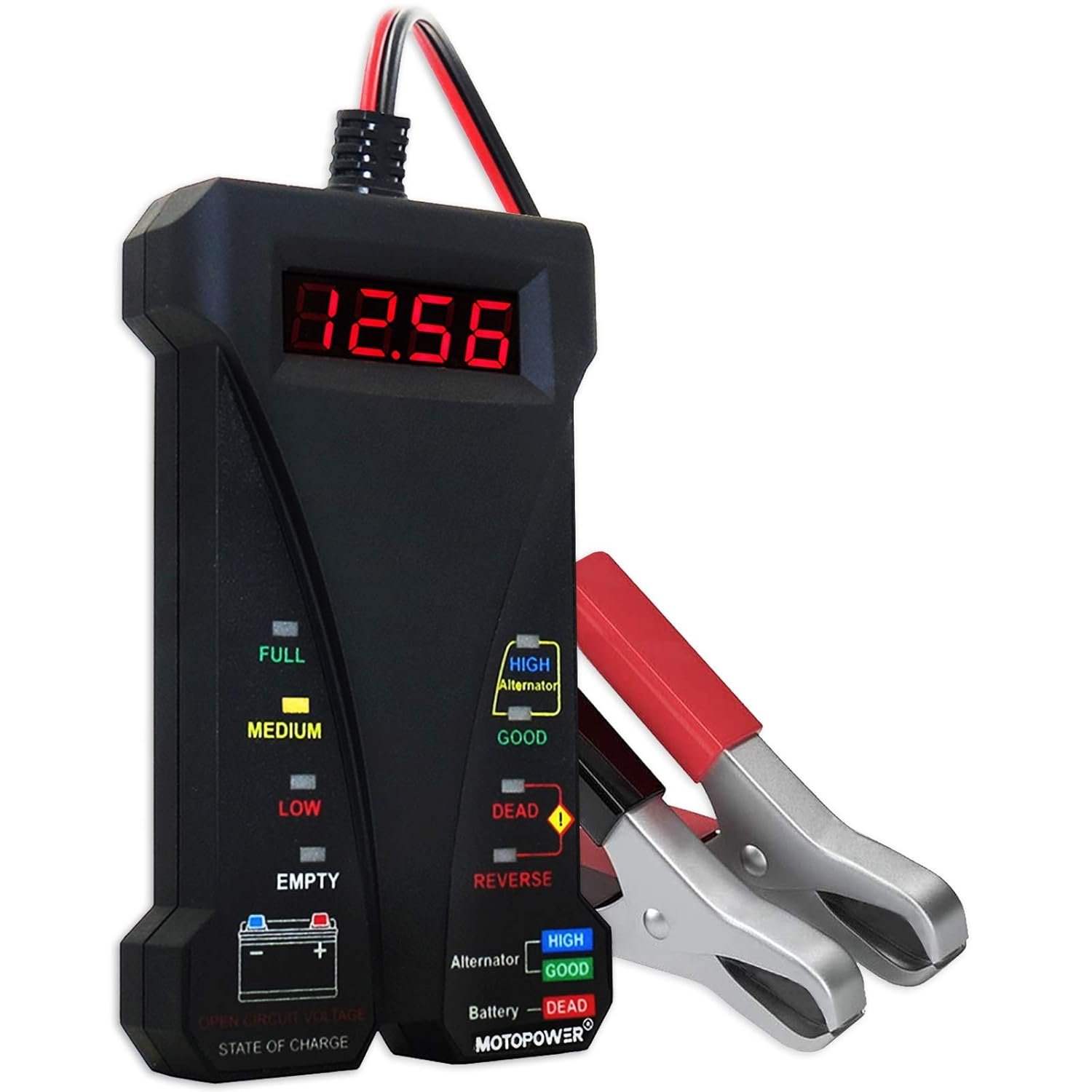
Why focused battery care matters for riders
Battery failures are a top cause of roadside no‑starts and can shorten a battery’s useful life if poorly managed. Motorcycles often sit unused for longer periods than cars (commuting vs seasonally stored bikes), and smaller motorcycle batteries are more vulnerable to deep discharge and sulfation. Proper battery care—regular testing, cleaning terminals, and using the right charger or maintainer—keeps your bike ready to ride and avoids premature replacement.
This guide helps you choose the right gear and routines so you get reliable starts without overcomplicating the task. Start by deciding what you need the device to do: keep a battery topped while in storage (maintainer), bring a low battery back to usable volts (charger with recovery), or diagnose battery and charging system health (tester).
Product categories and when to use them
There are four practical product types to consider:
- Maintainers / trickle chargers: Low‑current, smart units that hold a battery at safe float voltage for weeks or months. Best for bikes in storage.
- Smart chargers (higher amps): Multi‑stage chargers that restore discharged batteries faster and then switch to maintenance. Use when you need a quicker recovery.
- Battery testers / voltmeters: Tools to check voltage, alternator output and broadly gauge battery health before deciding to charge or replace.
- Maintenance tools: Terminal brushes, wrenches, terminal pullers and pliers to clean and secure connections. Clean contacts are essential for accurate testing and effective charging.
Choosing the wrong category is the most common beginner error—don’t buy a 10A fast charger if you only need to keep a seasonal bike topped up, and don’t expect a cheap tester to fully diagnose a weak battery.
Features that actually matter when choosing a charger or maintainer
When comparing units, focus on these practical features rather than brand hype:
- Supported chemistries: Confirm the unit explicitly supports your battery type (flooded, AGM, GEL, SLA vs LiFePO4 or other lithium). Using an incompatible charge profile risks damage.
- Charging current (amps): Lower currents (0.5–2A) are ideal for motorcycle batteries and long‑term maintenance; higher currents (5A+) charge faster but aren’t needed for routine storage.
- Multi‑stage charging and float mode: Look for chargers that use multi‑stage charging (bulk, absorption, float) and can remain connected indefinitely in float to prevent overcharging.
- Low‑voltage recovery/desulfation: If you have older or frequently deep‑discharged batteries, a charger with pulse recovery/desulfation and low‑voltage activation can sometimes restore capacity.
- Safety protections: Reverse‑polarity protection, spark‑proof connections, over‑temperature, short‑circuit and over‑voltage protection are musts.
- Temperature compensation and timers: Temperature compensation is useful in climates with extremes; timers can prevent prolonged high‑current desulfation cycles.
- Connectors and reach: Ring terminals vs alligator clips—ring terminals are better for a permanent hookup in storage; clip leads are convenient for occasional use. Check cord lengths for your storage setup.
These features guide the decision more than raw price or marketing terms.
Understanding trade‑offs: speed, safety and battery life
There are no free lunches—every charger choice involves trade‑offs:
- Fast charging (higher amps) vs battery longevity: Faster charge speeds reduce downtime but increase heat and stress on cells. For motorcycle batteries, gentle charging is usually better for cycle life.
- Smart multi‑chemistry units vs dedicated chargers: Multi‑chemistry chargers add flexibility (e.g., lead‑acid + LiFePO4), but verify they handle the chemistry safely and provide the correct charging profiles.
- Desulfation and recovery: Pulse desulfation can help recover lightly sulfated lead‑acid batteries, but it’s not a guaranteed fix for badly damaged cells. A charger that promises recovery may still fail on batteries with internal cell damage or water loss.
- Cost vs features: Budget maintainers can be excellent for basic storage, but if you need lithium support, fast recovery, or robust workshop use, invest in a unit with explicit specifications and protections.
Decide which trade‑offs matter for your use: a commuter who charges occasionally needs different gear than a winter‑stored classic.
Compatibility and sizing: matching the charger to your battery
Before buying, check three things in your motorcycle manual or on the battery label:
- Nominal voltage (most bikes use 12V systems—rare older or small machines may be 6V).
- Battery chemistry and any manufacturer charging recommendations.
- Battery capacity in amp‑hours (Ah). This helps choose an appropriate charging current—maintainers are typically 1–5% of Ah for safe long‑term float; faster charging can be 10–50% of Ah for short periods depending on the charger and battery.
If the exact manufacturer values aren’t listed here, verify them in your motorcycle or battery maker documentation before charging. Also verify connector type: top‑post vs side‑terminal and whether you prefer a permanent ring‑terminal lead for storage.
Safety considerations and practical precautions
Charging batteries involves explosive gases, electrical hazards and acid risk. Follow these safety practices:
- Charge in a ventilated area and keep sparks/open flames away. Even sealed batteries can vent under charge.
- Wear basic PPE: eye protection and gloves when handling battery acid or cleaning corrosion.
- Always observe correct polarity; many smart units include reverse‑polarity protection but never rely on that alone.
- When changing charging modes or installer connections, some products require the battery be disconnected first—follow the product manual. The MBC022 unit’s supplied facts highlight that “When you select the charging mode, you must disconnect the battery.” Always follow such instructions exactly.
- Don’t assume a damaged battery is safe to charge—if you see cracks, swelling, heavy leakage or missing vent caps, replace the battery instead of charging.
For any safety‑critical values (float voltage, max charge current for your battery), verify the motorcycle or battery manufacturer documentation if the required value is not supplied here.
Practical buying shortlist: what suits different riders
Below are practical options from the supplied product facts with why they fit particular riders. These are examples—not exhaustive—and you should verify compatibility with your battery.
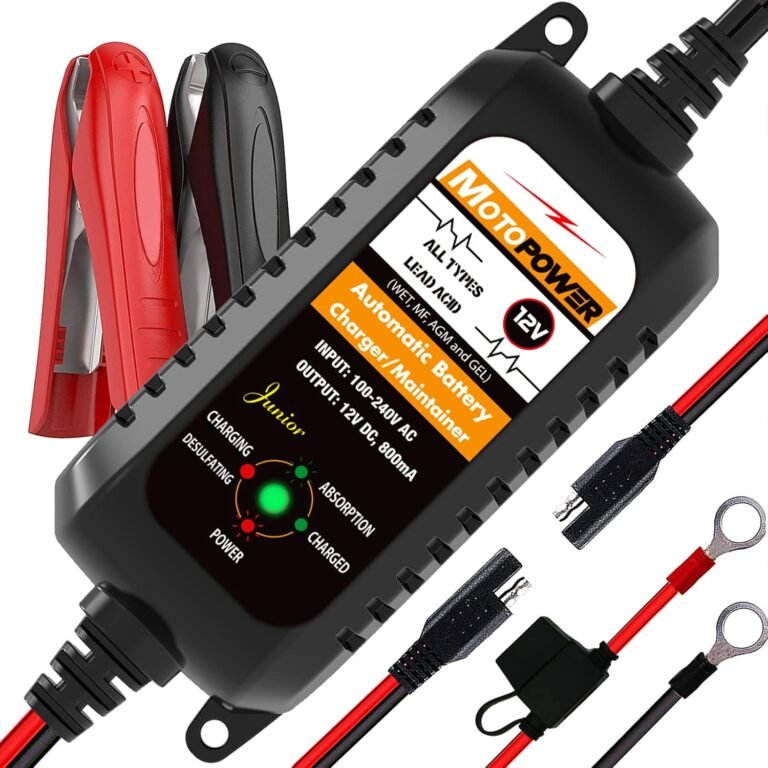
- MOTOPOWER MP00205A 12V 800mA Charger & Maintainer — Best for: riders who store a bike or want a low‑amp, gentle maintainer. Supplied facts: 12V DC @ 800mA output; 5 charging stages with pulse recovery and low‑voltage activation down to 4V; maintains at 13.6V ±0.2V; includes alligator clamps and fused SAE eyelet. Strengths: designed for motorcycle batteries, indefinite float maintenance, pulse desulfation. Limitations: 800mA is slow for large batteries or quick recovery. (See full product page: MOTOPOWER MP00205A.)
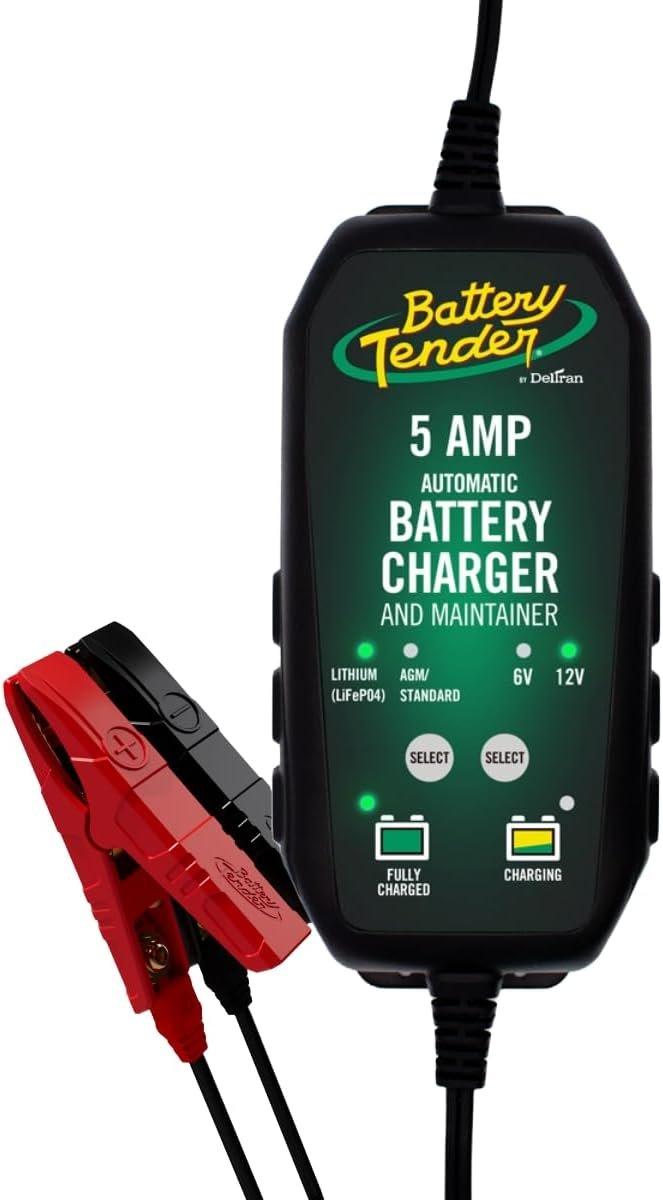
- Battery Tender 5 AMP 12V Charger & Maintainer — Best for: riders who need faster charging and multi‑chemistry support, including some lithium types. Supplied facts: 5A output; multi‑stage (4 stages), ISM adaptive charging, float mode for long maintenance; UL/CSA/CE approvals and spark‑proof/reverse polarity detection. Strengths: faster recharge for larger or deeply discharged batteries; good for users who want to recharge quicker before a ride. Limitations: higher current than typical maintainers—ensure your battery and manufacturer allow 5A charging. (See product page: Battery Tender 5 AMP.)
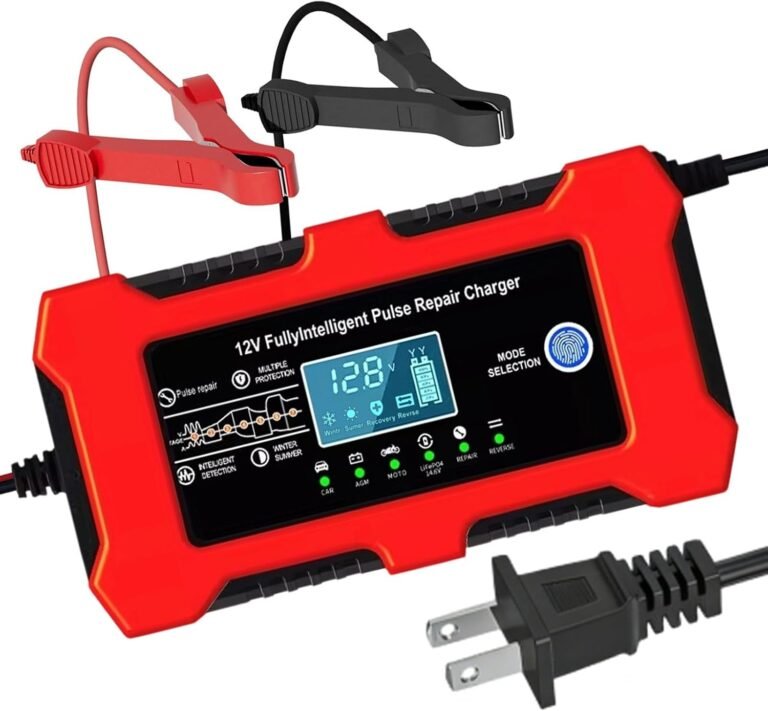
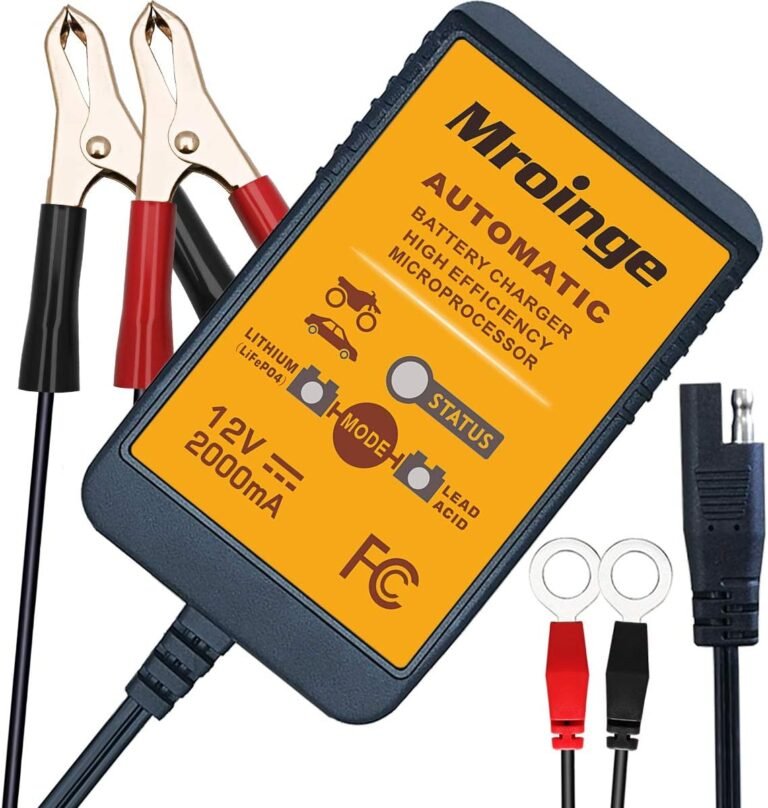
- MBC022 12V 2A Automatic Trickle Charger — Best for: riders who want a middle ground—faster than 0.8A but gentler than 5A and explicit LiFePO4 compatibility. Supplied facts: 12V 2A output; supports 12V lead‑acid (AGM, GEL, WET) and 12V Lithium (LiFePO4); 4‑stage charging and LED indicators; includes alligator clips and ring terminal cable. Strengths: 2A speed works well for many motorcycle batteries, and explicit LiFePO4 support is helpful for riders with modern lithium batteries. Limitations: verify the unit’s LiFePO4 charging profile matches your battery maker’s requirements, and note manufacturer instruction to disconnect battery when switching modes.
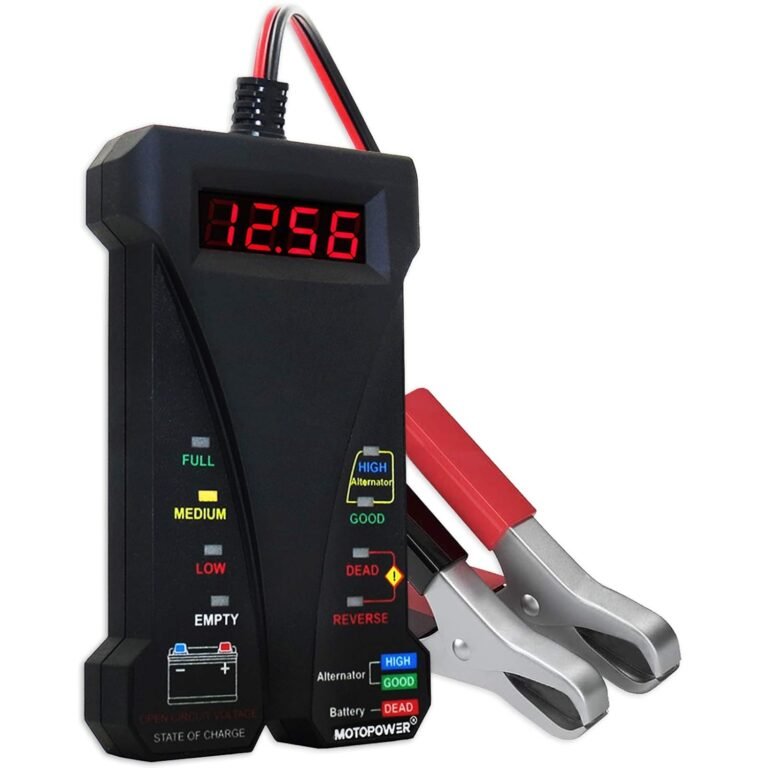
- MOTOPOWER MP0514A 12V Digital Battery Tester — Best for: quick checks on battery and charging system health. Supplied facts: reads 4–20V DC, digital LCD to 0.01V accuracy, 30A alligator clips, reverse‑polarity and over‑voltage protection, 50cm extension cable. Strengths: fast voltage checks and alternator status after start. Limitations: it’s a simple tester—comprehensive battery internal resistance analysis may require a dedicated load tester. (See product page: MOTOPOWER MP0514A.)
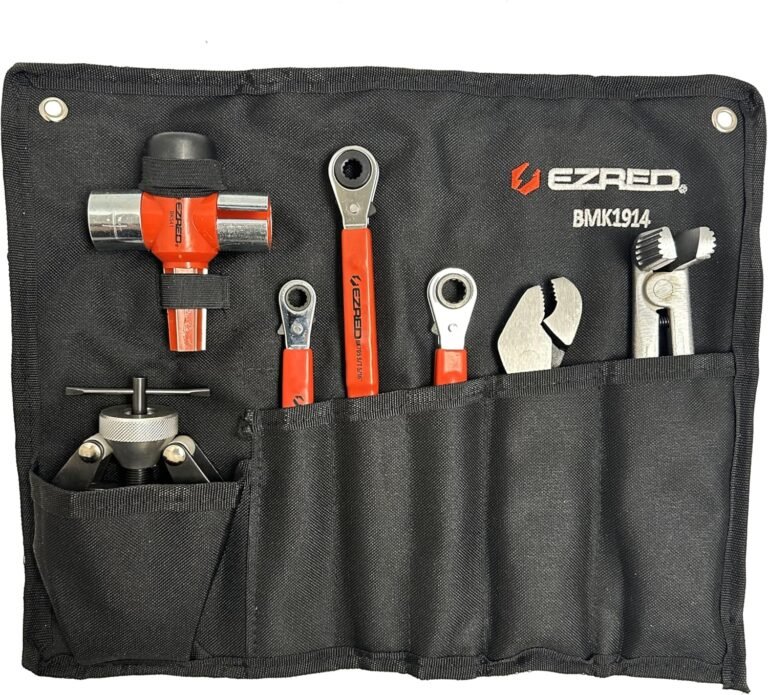
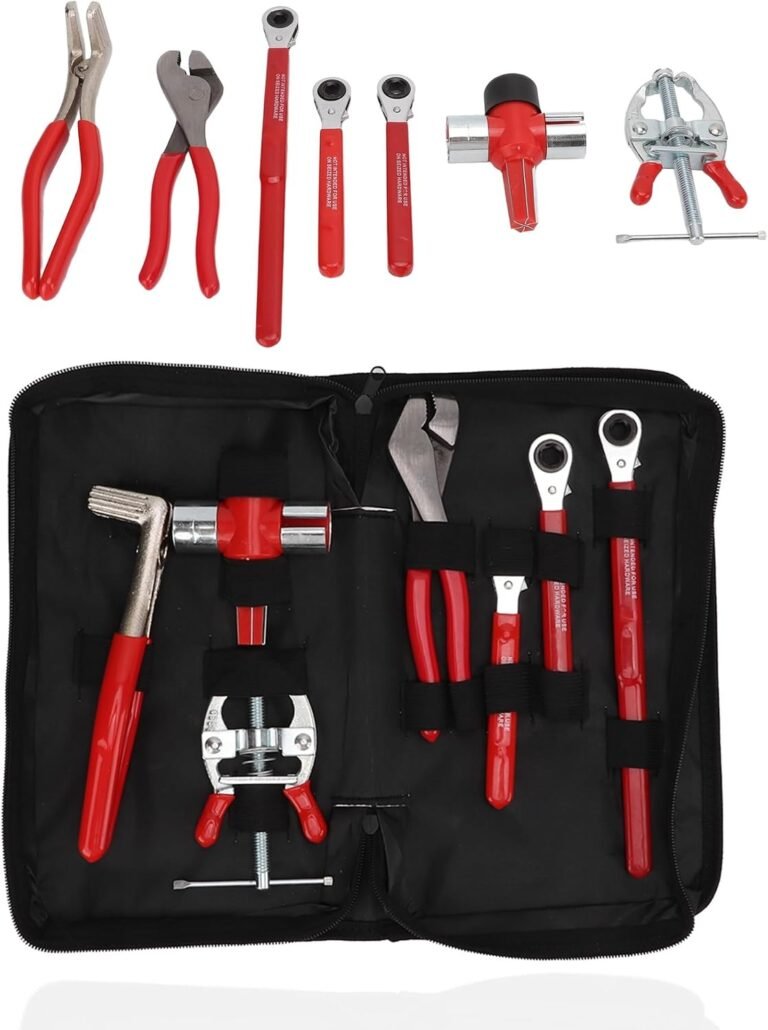
- EZRED BMK1914 and Hapivida 7pc battery tool kits — Best for: riders who want a compact set of hand tools to remove terminals, clean posts and install ring terminals. Supplied facts: EZRED kit includes a 4‑in‑1 terminal cleaner, ratchets, plier and spreader; Hapivida kit includes terminal puller, spreader pliers, double‑ended brush and wrenches. Strengths: these kits cover the common tools for safe battery removal and terminal cleaning. Limitations: material specs and warranties are not fully detailed in the supplied facts—shop for durable, corrosion‑resistant finishes where frequent use is expected.
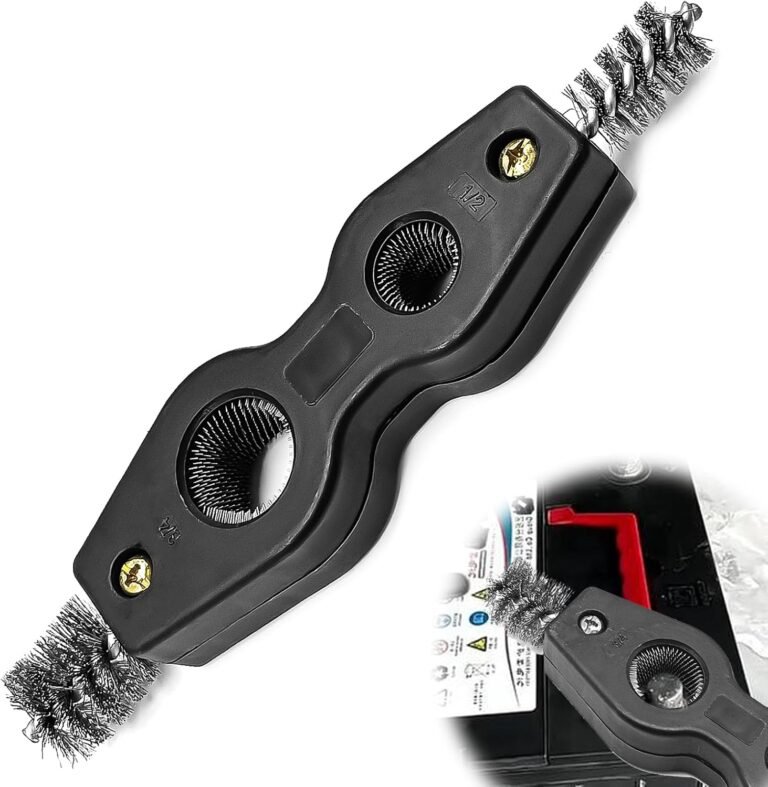
- 4‑in‑1 battery cleaning brush — Best for: quick removal of corrosion and restoring good contact area for clamps. Supplied facts: multi‑head brush design for clamps and posts, ABS handle and steel wire brushes. Strengths: small, inexpensive and effective for cleaning. Limitations: take care not to damage terminals or protective coatings—work gently and use protective gloves.
Internal product pages and further reading: Battery Care Maintenance Guide for Motorcycle Owners and How to Choose the Right Battery Care for Your Riding Style.
How to set up and use a maintainer or charger safely (basic steps)
Follow these generic steps and always check the product manual and your bike/battery manufacturer guidance for any model‑specific requirements.
- Inspect the battery: Look for cracks, swelling, leakage or missing vent caps. If any are present, replace the battery—do not charge a visibly damaged battery.
- Clean terminals: Remove corrosion with a wire brush or the 4‑in‑1 brush. Use basic terminal cleaner tools if needed; tighten loose clamps and ensure good metal contact.
- Choose correct connector: Decide whether to use ring terminals (for a permanent hookup during long storage) or alligator clips for occasional use.
- Confirm chemistry and choose charger mode: Set the charger to the correct chemistry (lead‑acid vs LiFePO4/lithium) if the unit supports multiple chemistries. Some chargers require the battery to be disconnected when switching modes—follow that instruction exactly.
- Connect and monitor: Connect positive (+) first then negative (−) or follow the charger manual. Power on the charger and watch the indicators. For smart units, allow the automatic multi‑stage cycle to complete; for manual units, monitor voltage and temperature.
- Finish safely: When finished, power down the charger (if instructed) and disconnect the negative lead before the positive. Store the charger cables neatly and check the battery terminals again for tightness.
Note: If your charger documentation is missing a safety or charging detail you need (float voltage, max allowed current for your battery), verify the exact value with the motorcycle or battery manufacturer before use.
Storage routines and maintenance schedule that work
Set a realistic routine based on how often you ride and where you store the bike:
- Riders who ride weekly: A full ride cycle usually keeps the battery topped; add a tester check every 3 months to catch slow drains.
- Riders who store for a season: Use a smart maintainer designed for indefinite float and desulfation (like the MOTOPOWER MP00205A) connected via ring terminals or the battery removed and maintained on a shelf. Check voltage monthly.
- Riders with lithium batteries: Follow the battery manufacturer’s recommended storage state of charge and use a charger designed for that chemistry (the MBC022 notes LiFePO4 support—verify the exact profile requirement with your battery maker).
- If a battery reads low: Test with a voltmeter/tester to ensure it’s not a charging system problem. Use a suitable charger with a recovery mode, but understand that badly sulfated batteries or batteries with internal damage may need replacement.
Keeping a simple log (date, resting voltage, charger used) helps spot a declining battery before it leaves you stranded.